The two series have always been talked about in the same conversations and have held a loose degree of association with one another – but how similar are the games themselves?
Although it’s an era well in the rearview mirror, the legacy of the Console Wars of the 1990’s can still be seen in the gaming industry today, as the sales battle primarily pitted Nintendo consoles and the Super Mario series against Sega consoles and the Sonic the Hedgehog series.
While Sega’s commercial success faded after the Genesis’ lifespan before dissipating entirely in the Dreamcast era, the void was filled in the mid-to-late 1990’s by Sony, who crashed the video game industry with the PlayStation, turning heads for its compatibility with CDs.
The entrance into the gaming world by Sony was emphatic to say the least, with the PlayStation blowing the Nintendo 64 and the rest of its home console competition out of the water in sales, becoming the first system ever to eclipse 100 million units sold worldwide.
Despite the widespread success and seemingly endless catalogue of titles, games that were exclusive to the PS1 didn’t quite have the same killer app reputation that Super Mario 64 had for the N64, with that title still standing out as the best-selling game of the fifth generation despite the N64 being outsold by the PS1 at a near 3:1 pace.
Sony’s response, in some ways, was actually a bit of a first strike, as the original Crash Bandicoot hit North American shelves on Sept. 9, 1996, 20 days before the release of Super Mario 64 and the Nintendo 64 console.
The first Crash game helped set the tone for what made its original trilogy so popular and well-regarded by fans and critics alike over the past 30 years. Taking on more of a 2.5-dimension approach, the game primarily puts Crash moving through levels from a third-person, head-on perspective, which switches to a more familiar side-scrolling style at times as well.
While the gameplay and camera work itself was innovative, Crash made a name for itself thanks to its unforgiving difficulty – a trait that was slightly nerfed in the next two games of the trilogy in efforts to make the games more playable by a wider audience.
That’s ultimately what happened, as both of the game’s successors, Crash Bandicoot 2: Cortex Strikes Back and Crash Bandicoot: Warped maintain the precise, 2D Mario-esque platforming while introducing new powerups and ways to move through a level to help vary the gameplay and make the title more approachable to kids.
As Crash’s popularity exploded upon the 1997 and 1998 releases of the two aforementioned sequels, Crash Bandicoot blossomed into somewhat of a mascot for Sony and the PlayStation, filling the Mario and Sonic-sized void on a console that was mostly marketed to adult gamers who were straying away from the family-friendly titles that had dominated the gaming world up until that point.
Just as the original Crash trilogy was wrapping up, a new Sony mascot was born as Spyro the Dragon made its way onto North American shelves in September 1998. On the surface, the similarities between Crash and Spyro were immediately apparent to the point where marketing the two games together was born as a tactic that is still seen by the series’ developers and publishers to this day.
Yet a seasoned Crash player who booted up Spyro for the first time likely began to notice the immense differences immediately – and it only played to the benefit of both series.
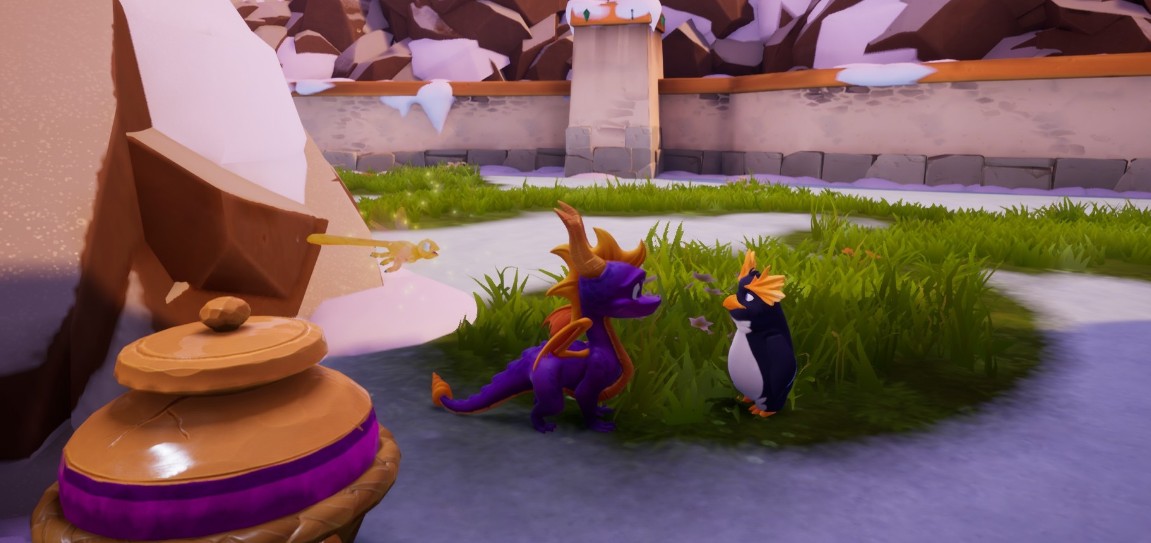
Differing greatly from the extremely linear, precise platforming approach of the Crash games, Spyro appears to take inspiration from the more open-ended sandbox environments introduced to gamers in Super Mario 64, while utilizing Spyro’s dragon wings to create more expansive, immersive levels that reward exploration.
With only that, the two series diverged into entirely different directions all within the platforming genre – gamers who want precision and trial-and-error to be rewarded are likely to have a more fun time with the Crash games, whereas those who are seeking escapism, exploration and an overall more tranquil gaming experience are probably leaning towards Spyro.
To this day, I absolutely love the original trilogies of both series, which were thankfully revived late last decade as part of ground-up remakes – Crash Bandicoot: N. Sane Trilogy and Spyro Reignited Trilogy, which both serve as excellent blueprints for what a remaster of an older game should look and feel like.
As someone revisiting both trilogies right now, it really is incredible how different the games are while maintaining much of the same audience. This is far from a new phenomenon as well, dating all the way back to the first Spyro the Dragon, with the game including a demo for Crash Bandicoot: Warped, and vice versa.
The partnership was capitalized on once again in the mid 2000’s once both franchises shifted to handheld platforms, leading to the releases of Crash Bandicoot Purple: Ripto’s Rampage and Spyro Orange: The Cortex Conspiracy – crossover titles that pitted the enemies of one series against the hero of the other.
While these games and most of the post-trilogy titles are rather forgettable, the precedent set in the original trilogies and their corresponding remasters have maintained a loyal audience that has simply not gotten tired of games that are nearing their 30th birthdays.
Sometimes, I wonder myself what it is that I enjoy and take away from when I play either of these series – the appeal certainly feels more straightforward when playing Spyro games. Beyond the limitless nostalgia and just how incredible the remastered trilogy looks on PC, they are remarkably relaxing games to play that mostly avoid difficult, frustrating moments while focusing on exploring every nook and cranny in each level to ensure all gems are collected.
While Crash games are infinitely more frustrating and difficult, they are also much more rewarding. As a lifelong fan of 2D Super Mario games, I’ll always have a penchant for going after difficult platforming sequences – which Crash games consistently deliver on with impeccably timed hazards and appropriately scaled difficulty that makes a full clear of any of the original three games a truly outstanding achievement.
With a brand-new Spyro game on the way next year, the legacy for both of these series will continue to grow, as a fresh audience gets introduced to the same intoxicating tranquility and immersiveness that struck me and millions of other kids around the turn of the century.
These games will continue to thrive, even if it’s just doubling down on the same audience that has gifted the titles their success over the past three decades. In perfect harmony, the two series serve completely different purposes while still appearing to be tangentially related.
Leave a Reply