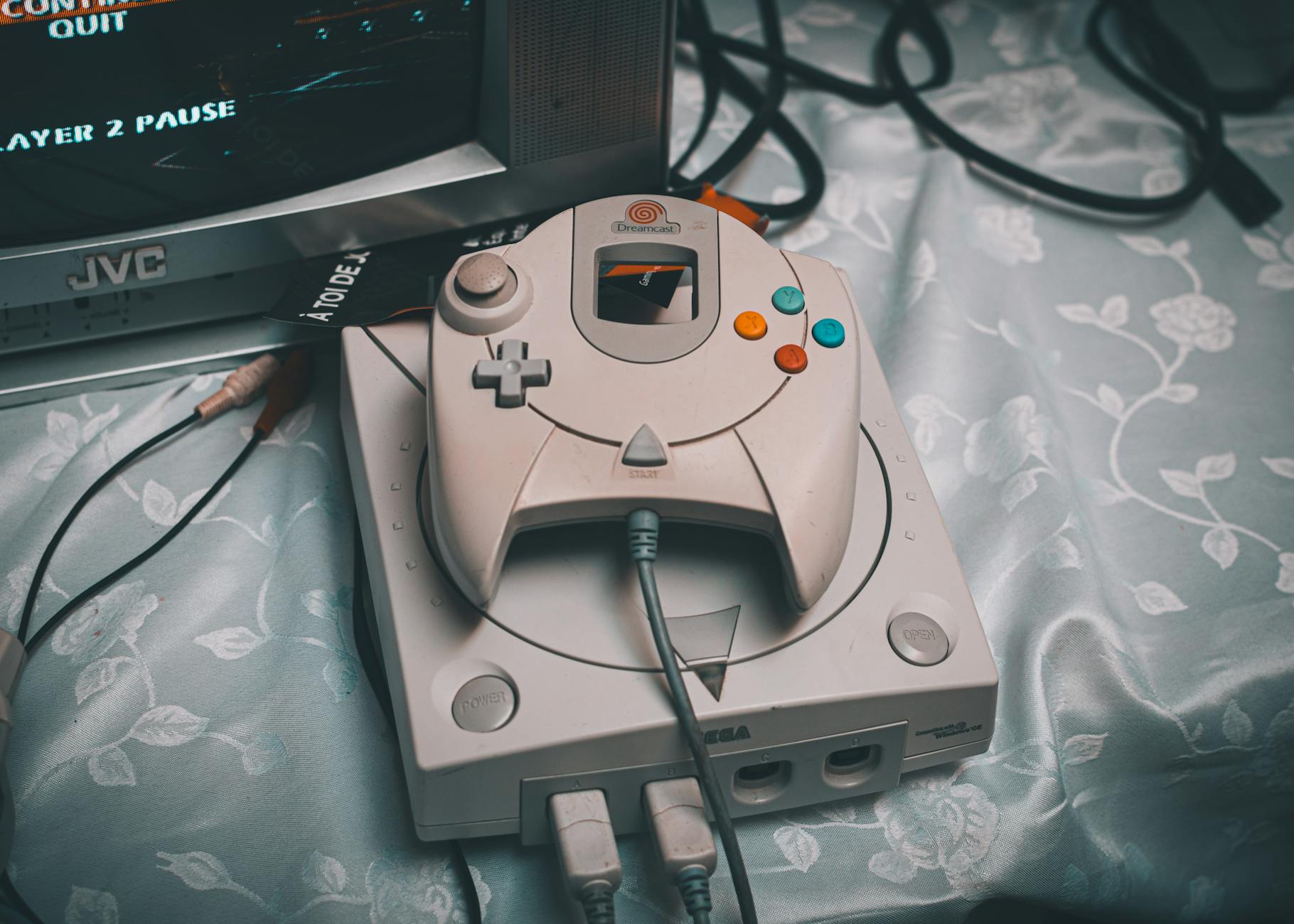
While my and wife and I’s video game collection spans through multiple generations and covers most of the major systems, there remain a few notable absences.
Although gaming was a predominant interest and passion of mine as a young child, I’d be lying if I said that interest progressed in the same way that my passion for watching and following baseball and other sports did.
I was heavily involved in extracurricular activities during high school, and devoted much of my free time after that to following hockey and baseball, leaving little time on the side to play the games that were a pivotal part of my formative years.
So at the outset of the COVID-19 pandemic lockdowns in March 2020 that forced everybody indoors, I reacquainted myself with the games I had remaining from my childhood, which I miraculously held on to all of.
Somehow, despite several years of seldom using my multiple childhood video game consoles and the dozens of games that accompanied them, I never seriously considered selling or otherwise parting ways with them, maybe subconsciously envisioning my eventual pursuit of collection.
I decided to actively begin collecting after gathering all of the consoles and games from my childhood in one place, believing I had a decent launching pad to add further from there.
Beginning our collection with all of the Nintendo home consoles at the time sans the Wii U, a PlayStation, PlayStation 2 and Xbox 360, it felt like it was both more than enough to start with while having plenty of routes available to add gratuitously to the library.
In the nearly six years since we began actively collecting, we’ve added a Wii U, PlayStation 3, Xbox One and Xbox Series X, while even grabbing seconds on a few consoles that are just too cool-looking to pass up.
While we’ve been rather sluggish with adding consoles from newer generations, a seasoned gamer reading this so far would likely notice my total omission of Sega systems, an unfortunate truth to our collection that persists to this day.
I grew up as a Nintendo kid through and through, only familiar with Sonic the Hedgehog from seeing his likeness on advertisements and other promotions. My interest rested solely with the Super Mario series, only interrupted by the PlayStation with Crash Bandicoot and Spyro games.
Even to this day, I can’t say I’m overall the most eager to dive into aimlessly collecting games released on Sega consoles while trying to hunt all four of the major ones down – even acknowledging the irreplaceable impact the Genesis left on gaming and the underrated charm of the Saturn that deeply intrigues me.
Yet Sega’s last effort at making a console is the one that allures me the most, a system with a uniquely short lifespan that was nonetheless incredibly influential to gaming beyond the turn of the century.
That’s of course the Sega Dreamcast, the first of the four major consoles to be released in the sixth generation of video games, getting over a full year head start on Sony’s PlayStation 2 with a September 1999 release date in North America.
Despite strong sales early on in the system’s lifespan, a decline that began shortly after a honeymoon phase with the console was cemented after the October 2000 release of the PlayStation 2. Just months later in January 2001, the discontinuation of the Dreamcast was announced, with the final official North American games for the console being released early the following year.
Although the sixth generation is the console generation I most associate with my childhood, the Dreamcast was in and out before I even turned five years old, leaving it as a system that not only I never owned as a kid, but one that I wouldn’t find at a friend’s or cousin’s house either.
In November 2001, Microsoft and Nintendo released the Xbox and GameCube, respectively, the two consoles that would join the PS2 as the three primary systems of the generation, though the PS2 absolutely walloped its competition when it came to sales and market share.
This left the Dreamcast as more of an outcast, resigned to a fate that is only comparable to that of Nintendo’s Wii U just over a decade later. Yet even then, Nintendo simply ironed out the Wii U’s blemishes to release one of the most successful consoles in gaming history.
For Sega, the Dreamcast’s commercial failure meant the end of the company’s status as a mascot-bearing icon of the video game industry. Less than 10 years after the stunning heights of the Genesis that saw it compete toe-to-toe for multiple years with the Super Nintendo Entertainment System, Sega was left as a third-party developer.
This fate was solidfied in a brutally ironic twist of fate, with a sequel of the Dreamcast’s best-selling game and one of the Dreamcast’s best-selling titles itself – Sonic Adventure 2, was released for the GameCube just months later as Sonic Adventure 2: Battle. While the original Dreamcast version sold 500,000 copies worldwide and was the console’s 10th-best-selling game, Sonic Adventure 2: Battle sold 1.7 million copies as a GameCube game, ranking 14th among the system’s releases in all-time sales.
Despite the tough ending for the console, it still feels like a conspicuous absence in our collection that heavily focuses on the fifth, sixth and seventh generations of video game consoles.
The Dreamcast was ridiculously ahead of its time upon its release, proving to be a pioneer in the beginnings of online console gaming while boasting graphics that were a crystal-clear improvement upon that of its predecessor, the Nintendo 64 and PlayStation.
If I’m being completely honest with myself, the allure of the system is to get a taste of what the console must have been like before the release of the PS2, a trendy new gadget in a sea of PlayStations and Nintendo 64s that were quickly becoming outdated to gamers intent on having the latest consoles.
With Y2K futurism at the forefront of design style at the time, Sega leaned heavily into the idea with its advertising campaign, completed with an absolute slam dunk of a release date – 9/9/99. The corresponding ads made it clear – the appropriately named Dreamcast was to be an inventive, trailblazing gaming experience.
Now don’t get me wrong – I don’t at all think I’d feel some sort of unattainable Y2K nostalgia from playing Crazy Taxi or NHL 2K on the Dreamcast. But to have what in many ways was an intergenerational console that bridged the gap between two eras with easily discernible improvements in changes would feel like filling a missing void into what is otherwise a cohesive journey of the history of video games in the physical media era.
Furthermore, there are a handful of exclusive titles (or at least console-exclusive at the time of original release) that would provide a gaming experience I haven’t really had yet. Soulcalibur, widely regarded as one of the greatest fighting games of all-time, was a multiplayer blockbuster for the console and provides an easy path to quick fun with a classic system.
The system’s third-best-selling game, Shenmue, is also rather notable and unique, receiving incredibly high acclaim at the time of its release for its graphics and gameplay, with the title remaining deeply influential for its lifelife atmosphere and detail. Even as a gamer who struggles to jump into a long-winded action adventure game, Shenmue‘s reputation has fascinated me for years. Getting to play it alongside its contemporaries of the turn of the century would undoubtedly be an incredible rewind through gaming history.
Though adding a Dreamcast would certainly introduce the slippery slope of feeling the need to eventually add all of the Sega home systems, Sega’s final effort is a remarkbly unique one, deeply intertwined into the history of video games and how we arrived to where we are today.
Leave a Reply