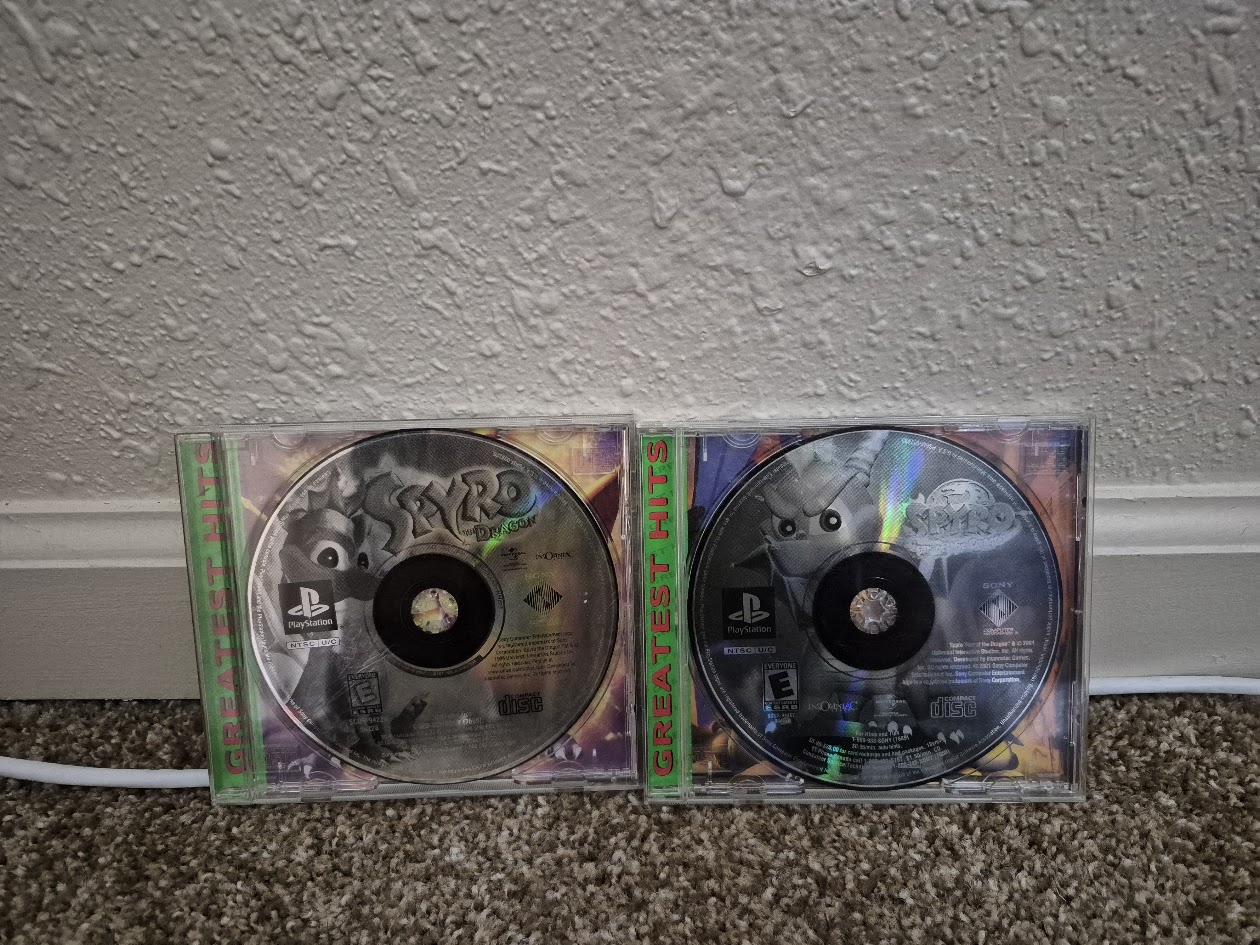
Primarily known for his work as the drummer of The Police, Stewart Copeland composed an incredibly immersive and fitting score for the original Spyro trilogy at the turn of the century.
Of the media mainstays in the American cultural landscape, it’s no secret that video games lag a bit behind in terms of prestige and artistic respect when compared to music or film, something that ultimately shouldn’t be too surprising for the relatively young media form.
It was 40 years ago in October when Nintendo’s release of the original Super Mario Bros. paved the way for video games to become an accessible form of media that would make its way to the forefront of American pop culture over the past four decades.
While games often speak for themselves in terms of what they present and offer to the player, it’s clear that the music in video games was vital in helping to establish the medium as legitimate to a wider audience – including to those that maybe would never purchase a home console themselves.
The Super Mario series was the first to capitalize on this relationship and connection between the game and its associated music, with themes from the original game becoming widely recognized from the general public – expanding far beyond the reaches of the video game itself.
The 1990’s were an incredible decade of advancement in the video game industry, with the emphasis on accompanying music only growing throughout the decade. Any millennial kid will tell you about cherished underwater memories to Aquatic Ambience from the original Donkey Kong Country and Dire Dire Docks from Super Mario 64, or the excitement of an open-ended adventure in The Legend of Zelda: Ocarina of Time to the Hyrule Field soundtrack.
Nintendo had clearly carved out a niche for both immersive video game music and family video games, with Sony’s PlayStation preparing a punch back. While the Crash Bandicoot series was already on its third game in 1998, the Insomniac Games creation of Spyro the Dragon that same year gave the PlayStation another family-friendly title and series to help compete with Nintendo in the sector.
In an effort for a consistent sounding score that would accompany the game, developers tapped The Police drummer Stewart Copeland to compose the score, giving him the opportunity to play through the game’s levels first before composing.
Copeland’s incredible work on the first game of the trilogy, Spyro the Dragon, as well as the game’s overall success, led to him reprising his role as the series’ composer for the next three games of the series, two of which completed the original Spyro trilogy on the PlayStation.
The following year saw the release of Spyro 2: Ripto’s Rage while the third and final installment of the trilogy, Spyro: Year of the Dragon, was released in 2000 – with all three games proving to be a rousing success for Insomniac Games and the PlayStation as a whole.
The immersiveness of Copeland’s soundtrack becomes immediately apparent upon loading up the first game of the series, as he only started to flex a skill that would be showcased throughout the trilogy. While most of the tracks feature a similar tempo and instrumentation, Copeland paints a completely different picture and landscape over many of the same components to create compositions that sound equally familiar and explorative.
Copeland showed this immediately with the soundtracks to the six homeworld stages in the first game of the trilogy – offering an upbeat, bright piece to accompany the opening grass-filled Artisans homeworld, which turned into aggressive brass and timpani contributions alongside the more threatening Peace Keepers homeworld, set in a desert.
The boisterous, noticeable music of the homeworlds is greatly contrasted by the more atmospheric, ambient instrumentation used in enclosed levels, which still maintain a roughly similar BPM. This was perfectly exemplified in the pieces for Ice Cavern and High Caves, which feature steady buildups in volume throughout while maintaining an element of mystique the outdoor pieces don’t offer.
The best of the elements seen in compositions from the first game were perfectly showcased in the music for Lofty Castle, one of the later levels in the game that is set in a dreamlike island-hopping world high in the sky.
Combining the mystique and anticipation of the music previously heard in cave levels with the optimistic and adventurous sounds used in many outdoor levels, Lofty Castle left me sitting and listening on multiple occasions when playing through the game, admiring the perfectly fitting virtual environment in front of me.
Copeland’s creativity surrounding the series would only be further showcased in the following two games of the trilogy, bringing a new definition to the word “quaint” with the soundtracks used in the homeworlds of Ripto’s Rage.
As the series veered away from the homeworld system seen in the first game that boasted six different worlds, five of which were populated with enemies, Copeland’s music adjusted alongside the homeworlds in the following entry.
Ripto’s Rage included just three homeworlds, all of which were larger and themed after a season of the year – Summer Forest, Autumn Plains and Winter Tundra. In a notable departure from the soundtracks to the first game’s homeworlds, Copeland uses a similar formula for all three homeworlds, with secondary elements present to help you picture the season being depicted.
In what feels like a detour into Aphex Twin’s discography at the start of each homeworld, Copeland lets the serene levels and atmopsheric noises do the talking – perhaps showcasing ambient music does indeed have an impactful place in video games.
Beyond the therapeutic compositions players are greeted with in each homeworld, Copeland maintained the formula from the previous game – finding new flares to spice up what is usually a similar tempo and instrumentation.
Players get to hear this not long after getting the game started, with the Idol Springs theme featuring a grooving drum beat and infectious melody that is later re-used in the Fracture Hills level.
While a tried and true recipe for success, Copeland still found ways to deviate when the corresponding levels appeared to necessitate a change in tempo or feel. The futuristic Metropolis level at the end of Ripto’s Rage feels significantly more rock-influenced, with a more mobile tempo and energetic melody breaking up the somewhat more subdued nature that many tracks in the score include.
A similar approach was utilized for the theme of Sunny Villa, the first regular level in Spyro: Year of the Dragon – with a dominant melody and emphatic percussion making the level feel like the grand start of a significant journey.
Copeland maintained his bread-and-butter for many of the levels in Year of the Dragon, but the composer’s grand achievement in the final game of the trilogy once again centers around his brilliant work for the homeworld scores.
Deviating from the seasonal theme seen in Ripto’s Rage, the third installment of the series features four homeworlds, all corresponding to a time of day – Sunrise Spring, Midday Gardens, Evening Lake and Midnight Mountain.
Instead of compositions that only differ at the margins, Copeland sends players on a journey during each visit to a homeworld, seemingly teleporting you to different parts of a day. While the Sunrise Spring theme gives off images of springing up from bed and heading outside to a sunny day surrounded by green pastures, Midday Gardens’ upbeat tune makes Spyro’s exploration feel like an energized afternoon walk in the park.
One of the series’ crown jewels is displayed in Evening Lake, featuring perhaps the best level design and composition of the series in what was always the homeworld that stood out the most to me.
Accompanying an immersive world that crosses between underwater and above-ground is a groovy, almost lounge-style instrumentation with a moving bassline that perfectly sets the stage for a relaxing sunset and an evening of unwinding – well maybe not for Spyro, but for you, the player.
The final homeworld, Midnight Mountain, is an expansive nighttime level that includes a soundtrack invoking imagery of tiptoeing in the dark on the way to begin a late-night expedition – maintaining the active percussion heard in many Year of the Dragon levels while the staccato-filled instrumentation helped complete the picture.
Though the iconic and repetitive themes early on in the Super Mario series may have paved the way for music and video games to harmoniously coexist, Copeland’s score made music feel like an integral, necessary part of the game’s experience – something that was still a relatively new idea at the time.
While these games will always be special to me as I played them extensively as a child, the music in the Spyro trilogy stood out in a way that other platformers’ soundtracks at the time simply did not. Though there were certainly catchy and memorable tunes in games before Spyro, the connection between the score and the game never seemed to break – an expansion over the fleeting moments of cohesiveness exemplified in Donkey Kong Country’s Aquatic Ambience, for example.
Copeland went on to also compose the score for Spyro: Enter the Dragonfly, a wildly underwhelming, glitch-filled game where Copeland’s compositions stood out as among the lone highlights.
Thankfully, the soundtrack returned in full with slight tweaks for the incredible Spyro Reignited Trilogy, bringing iconic tunes beloved by millennial gamers at the turn of the century to a new audience and revamped gaming atmosphere.
Video game music continues to demand more respect each year, a trend that greatly accelerated after the completion of the original Spyro trilogy – orchestral scores are now a norm for AAA games, with gamers and critics alike valuing its impact and place within a particular title.
But in the full picture of the gaming world, it’s easy for many to overlook Copeland’s work on Spyro – which even to him is probably easy to overlook. Renowned for his presence as the drummer in one of the most recognizable rock bands of the 1970’s and 1980’s, Copeland’s contributions to the Spyro trilogy are merely the cherry on top to an incredible and somewhat forgotten musical career.
There are a lot of aspects about the Spyro trilogy that make them such relaxing and cozy games to play to this day – but without Copeland’s genius soundtrack, it’s fair to say that these games would not have had anywhere near the widespread impact that they did.
Leave a Reply