Though John Smoltz dazzled with 24 victories and an MLB-best 276 strikeouts, Kevin Brown’s stellar campaign deserves more recognition.
In an era widely remembered for the prolific offense found throughout the league, it’s fascinating how often fans associate the same era with the dominant pitching staffs of the time.
With elite pitching at an intense premium throughout much of the decade, baseball fans of all teams were made well aware of the advantage the Atlanta Braves had in this regard, even more so thanks to national broadcasts on TBS.
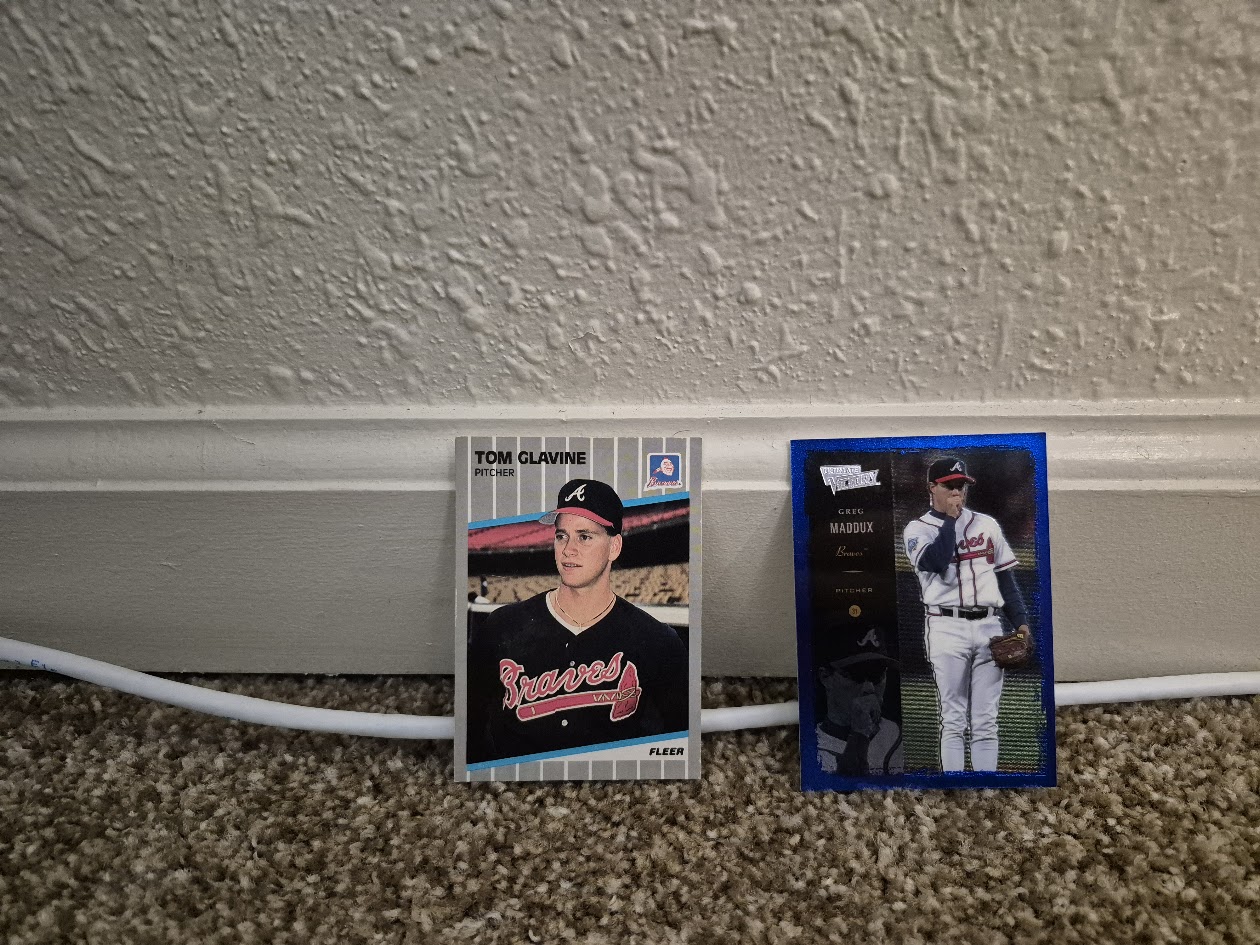
This remained the case in 1996, one year after the Braves triumphed over the Cleveland Indians for their first World Series title since moving to Atlanta. With three Hall of Famers in Tom Glavine, Greg Maddux and John Smoltz headlining the rotation, the Braves had three of the best pitchers in the sport all on their staff.
And while all three of those pitchers compiled stellar 1996 campaigns, with Smoltz ultimately winning the National League Cy Young Award, a couple other hurlers in the senior circuit posted incredible, oft-overlooked seasons.
Chief among these arms was righty Kevin Brown, who put up video game numbers in his first season in South Florida, previewing his efforts for the eventual World Series champions of 1997.
Here’s a look at how the real-life voting shook out for the 1996 NL Cy Young Award:

With wins reigning supreme in the 1990’s and 24 wins being a pretty ridiculous total even if you don’t like the statistic, it’s no surprise that Smoltz coasted to the award win, garnering 26 of 28 first-place votes.
Leading the NL in WAR, ERA, WHIP and ERA+ however, Kevin Brown received two first-place votes and remained a formidable option for the honor in 1996.
Nearly 30 years later, here’s a look at how I’d fill out the top five on my ballot for the 1996 NL Cy Young Award.
5. Tom Glavine, Atlanta Braves (No votes received)
Season stats: 5.9 WAR, 15-10, 2.98 ERA, 235.1 IP, 1 CG, 85 BB, 181 K, 147 ERA+, 1.305 WHIP
The lone inclusion on this list that did not receive any Cy Young votes in 1996, Glavine was the overlooked stud of Atlanta’s Hall of Fame trio that season, posting stellar numbers that were overshadowed by his two teammates.
Glavine was one of just five NL pitchers to post a sub-3 ERA in 1996, doing so in an MLB-leading 36 starts while hurling over 235 innings of work.
Though never remembered as a punch-out machine, Glavine still K’d 181 batters in 1996 while only allowing an impressive 14 home runs across his wide body of work.
While Glavine’s season was undoubtedly great, it was also weighed down by a more pedestrian second half, as the lefty held a 2.53 ERA and 9-5 record up until the All-Star break. Glavine’s WHIP jumped from 1.235 to 1.383, while his strikeout-to-walk ratio fell from 2.45 to 1.84 in the second half.
4. Hideo Nomo, Los Angeles Dodgers (No change)
Season stats: 4.7 WAR, 16-11, 3.19 ERA, 3 CG, 2 CGSHO, 228.1 IP, 85 BB, 234 K, 122 ERA+, 1.161 WHIP
Just one year removed from winning the NL Rookie of the Year award, Nomo returned in 1996 with another stellar campaign, finishing a deserved fourth-place in that season’s Cy Young award voting.
Nomo posted impressively durable and consistent numbers throughout the season, hurling over 228 innings that included a no-hitter in the midst of the playoff race on Sept. 17 against the Colorado Rockies.
Though Nomo was a high-walk, high-strikeout pitcher in 1996, his effectively wild repertoire also led to a 7.1 hits per nine innings ratio, the third-best mark in the National League.
For a team that went on to qualify for the postseason, Nomo’s excellent second half played a pivotal role in boosting the Dodgers, with The Tornado holding opponents to a paltry .193 batting average after the All-Star break, including an opponent OPS of .535 in September.
3. Greg Maddux, Atlanta Braves (+2)
Season stats: 7.2 WAR, 15-11, 2.72 ERA, 5 CG, 1 CGSHO, 245 IP, 28 BB, 172 K, 162 ERA+, 1.033 WHIP
On the heels of a career year and arguably one of the most illustrious pitching seasons of all-time, Greg Maddux posted a remarkable 1996 campaign when he had an impossible act to follow.
Posting a 2.72 ERA over the course of 245 innings and 35 starts, Maddux perhaps most impressively walked only 28 hitters the entire season – a mark even more mind-boggling when you consider 11 of those walks were intentional.
Maddux’s impeccable command still left him with the best walks per nine innings rate and strikeout-to-walk ratio in all of baseball, at 1.0 and 6.14, respectively.
While consistent the entire season, Maddux was especially must-watch baseball in August, compiling a 1.60 ERA over the course of six starts, surrendering just eight earned runs in 45 innings of work.
2. John Smoltz, Atlanta Braves (-1)
Season stats: 7.4 WAR, 24-8, 2.94 ERA, 6 CG, 2 CGSHO, 253.2 IP, 55 BB, 276 K, 149 ERA+, 1.001 WHIP
I don’t mean to frame Smoltz’s win of the Cy Young Award in 1996 to be egregious or undeserved – I think it’s fair to say that voters would remain split to a degree today if pitchers had seasons identical to Smoltz and Brown.
In addition to an objectively stellar 24 wins, Smoltz held his ERA under 3 in a hitter-dominated season, tossing six complete games all while leading the senior circuit in innings pitched.
Smoltz’s MLB-best FIP of 2.64 also suggests he may have performed even better with a stronger defense behind him, while also leading all of baseball in strikeouts and strikeouts per nine innings.
The right-hander was also immune to being dramatically affected by splits, posting near-identical numbers against both righties and lefties as well as at home and on the road.
Though there’s no doubt Smoltz was excellent in 1996, his placement as one of three Hall of Famers on the Braves pitching staff lessened both his pressure and value to his team, while also showing vulnerability with runners in scoring position.
With RISP in 1996, opponents still managed a .717 OPS with 14 extra-base hits when facing Smoltz.
1. Kevin Brown, Florida Marlins (+1)
Season stats: 7.9 WAR, 17-11, 1.89 ERA, 5 CG, 3 CGSHO, 233 IP, 33 BB, 159 K, 215 ERA+, 0.944 WHIP
Though the efforts didn’t end up resulting in a playoff bid, Kevin Brown’s first year in South Florida was nothing short of incredible, leading the league in a range of categories while posting a remarkably complete and impressive season.
In addition to being the MLB leader in ERA, shutouts, ERA+ and WHIP, Brown also led all of baseball with a miniscule 0.3 home runs per nine innings rate, surrendering just eight long balls over 233 innings of work.
While a FIP of nearly a run higher than his ERA at 2.88 suggests that Brown was somewhat the benefactor of good luck and defense, the figure remains stellar in a year that tilted so heavily towards hitters.
Opposing offenses were slammed into a brick wall all season long against Brown, as the right-hander yielded just a .262 OBP to hitters, a mark that shrunk further to .255 at home.
Though it should come as no surprise given his season ERA of 1.89, Brown held an ERA below two in four of the season’s six months, including a mark of 1.36 in June that saw the righty yield just six earned runs and two walks in 39.2 innings of work.
Although Brown and Smoltz’s seasons are comparable in many respects, Brown earns the top spot for me thanks to his dominance across advanced pitching metrics that were not available at the time.
Brown was the NL leader by a wide margin in adjusted pitching runs, adjusted pitching wins and base-out runs saved, three statistical categories where Smoltz was also bested by his teammate in Greg Maddux.
Brown also led all NL pitchers in win probability added, with his 6.0 easily besting Smoltz’s 4.4 WPA.
While Brown and Smoltz remain a clear top two today with a great argument to be made for both pitchers, Brown’s dominance in advanced metrics and particular value to his club give him the edge for me in these rankings.
Thank you for reading, as I’ll look to continue this series by moving on to 1997 with that year’s American League MVP race.

Leave a Reply