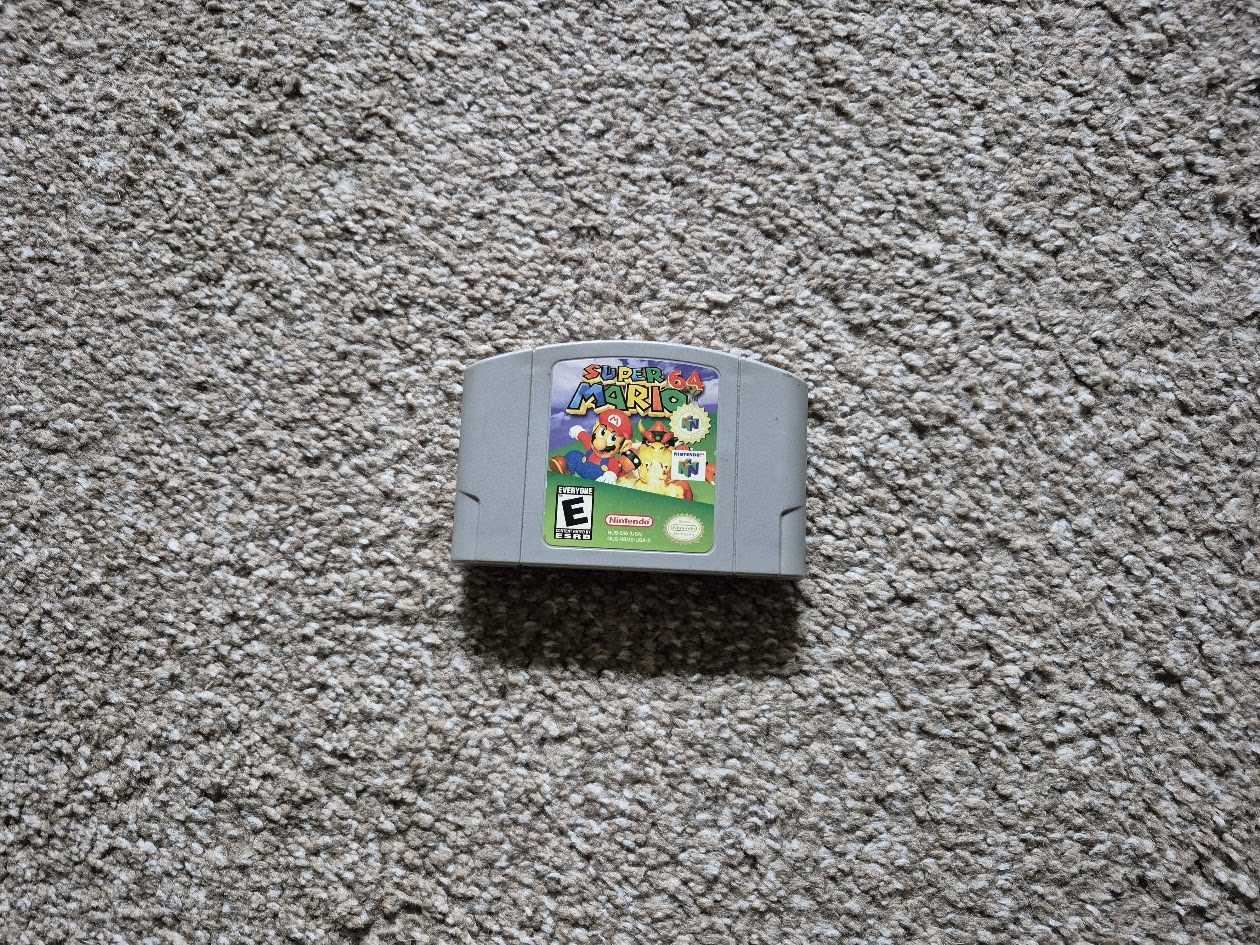
While Super Mario 64 was remastered alongside two other games in 2020, the all-time classic title deserves a more faithful upgrade.
Nostalgia continues to be king in the world of video games in the 2020’s, and that hasn’t changed at all as the calendar has flipped to November and another major title has hit the shelves.
While the gaming world is on the precipice of perhaps its first true monocultural moment with the impending release of Grand Theft Auto VI, old-time Nintendo diehards were given a treat for the ages with yet another remastering of The Legend of Zelda: Ocarina of Time.
Initially released for the Nintendo 64 in 1998 and widely regarded as one of the greatest games of all-time, Ocarina of Time has had a slew of re-releases since its original debut, spanning across several Nintendo consoles over the years.
Yet even after a port to the GameCube in 2003 and a 3D version of the game released for the 3DS in 2011, Ocarina of Time has received yet another revival – a fleshed-out remake of the original game with a slew of quality-of-life improvements that are largely designed to meet new gamers where they’re at.
The remake has received universal acclaim from video game critics, many of whom are reliving childhood memories from 28 years ago in a way that still makes the game feel brand-new – something I can relate to after playing Spyro Reignited Trilogy for the first time.
While Ocarina of Time is undoubtedly one of the greatest and most important video games of all-time, it was not the first game on the Nintendo 64 to introduce the sandbox-esque exploration that Mario and Zelda games began to develop a reputation for – with Super Mario 64 putting the console on the map upon its initial release in September 1996.
I was talking to a close friend of mine from college this week who was not acquainted with the mainline Mario and Zelda games as a kid – and he mentioned to me that it seemed a bit weird that a remake of this ilk had yet to be released for Super Mario 64, a watershed title in the history of video games.
Of course, it isn’t as if Super Mario 64 has been completely ignored by any means. A reimagined port of the game was released as Super Mario 64 DS in 2004 as a launch title for the system, while the game was remastered alongside Super Mario Sunshine and Super Mario Galaxy in September 2020 as part of Super Mario 3D All-Stars for the Switch.
While the latter compilation was highly anticipated across the gaming world as part of the series’ 35th anniversary, the games functioned much more as direct ports being emulated on the Switch rather than a unique, reimagined experience – something that has come to be expected out of remasters, dating back to the original Super Mario All-Stars.
With Super Mario 64 being the first true 3D platformer in many ways, there were a slew of issues that longtime players of the game know all too well – small drawbacks that couldn’t really be reasonably complained about at the time due to the nature of just how insanely impressive this game was. Of course, there would be a few kinks that needed to be ironed out.
The Nintendo 64 controller is rather polarzing to begin with, but the awkward control and camera scheme from the first game carried over into the 3D All-Stars remaster – with no custom button mapping and the lack of full camera control – the latter of which is a notable perk offered in the Ocarina of Time remake.
Even beyond the long-needed improvements to the game’s control and camera, the game also just feels like it’s in need of the graphical update that many other landmark games from its era received – with Super Mario 64 standing out as a landmark title without a full remake in the way that Ocarina of Time, Final Fantasy VII and the Crash Bandicoot/Spyro trilogies have received.
Of course, I would caution anyone into thinking this is an inevitability of any sort – especially as Nintendo has not released a new 3D Mario game since the debut of Super Mario Odyssey for the Switch in October 2017. With the Switch 2 already about to enter its third calendar year of availability, it doesn’t feel like Nintendo will put off a flagship 3D Mario release for that much longer – although in a world where AAA games simply take that much longer to make, waiting even more may just be the reality.
Nintendo has seemingly unlimited remaster and remake opportunities on their hands, with virtually anything being released prior to the Wii U’s debut in 2012 being eligible for a graphically upgraded re-release – making it perhaps more of a question as to why 3D All-Stars just didn’t serve that purpose in the first place – a compilation that was also criticized for not including Super Mario Galaxy 2.
In addition to an improved camera and refreshed graphics, there are a few other obvious improvements that could be introduced in a remade Super Mario 64, with the most obvious being the inclusion of Luigi – with his omission being the source of widespread infamous rumors during the late 1990’s.
Although fast travel abilities were removed in the Ocarina of Time remake due to its hampering on exploration, such a feature makes quite a bit more sense in Super Mario 64 – where the feeling of exploration is more prevalent within the levels themselves as opposed to the castle itself. Being able to move from individual level-to-level can create a more streamlined experience for players, especially for those later in the game who are likely to be hopping from level to level anyways.
Furthermore, this game’s score also serves as an interesting opportunity for a bit of a reimagination – although this isn’t quite as clear-cut. The N64 sound profile has developed quite a nostalgic association with many older millennial gamers, and it’s seen as a hallmark of the Super Mario 64 experience.
But this is Super Mario 64 we’re talking about – and the thought of having an updated, orchestral score for this game is incredibly tantalizing, especially when thinking of the game’s more memorable compositions such as Inside the Castle Walls and Dire, Dire Docks.
Outside of the inclusion of Luigi and perhaps a couple other playable characters as was the case in Super Mario 64 DS, I don’t think this game needs a ton of additional content during a remake – it merely just needs a faithful upscaling to what the game should like 30 years after its release.
There’s no telling if this will ever happen, or if it’ll come after a new 3D Super Mario game – but it’s clear that it wouldn’t be necessary to have this conversation if this was simply done right the first time around in 2020.
Leave a Reply