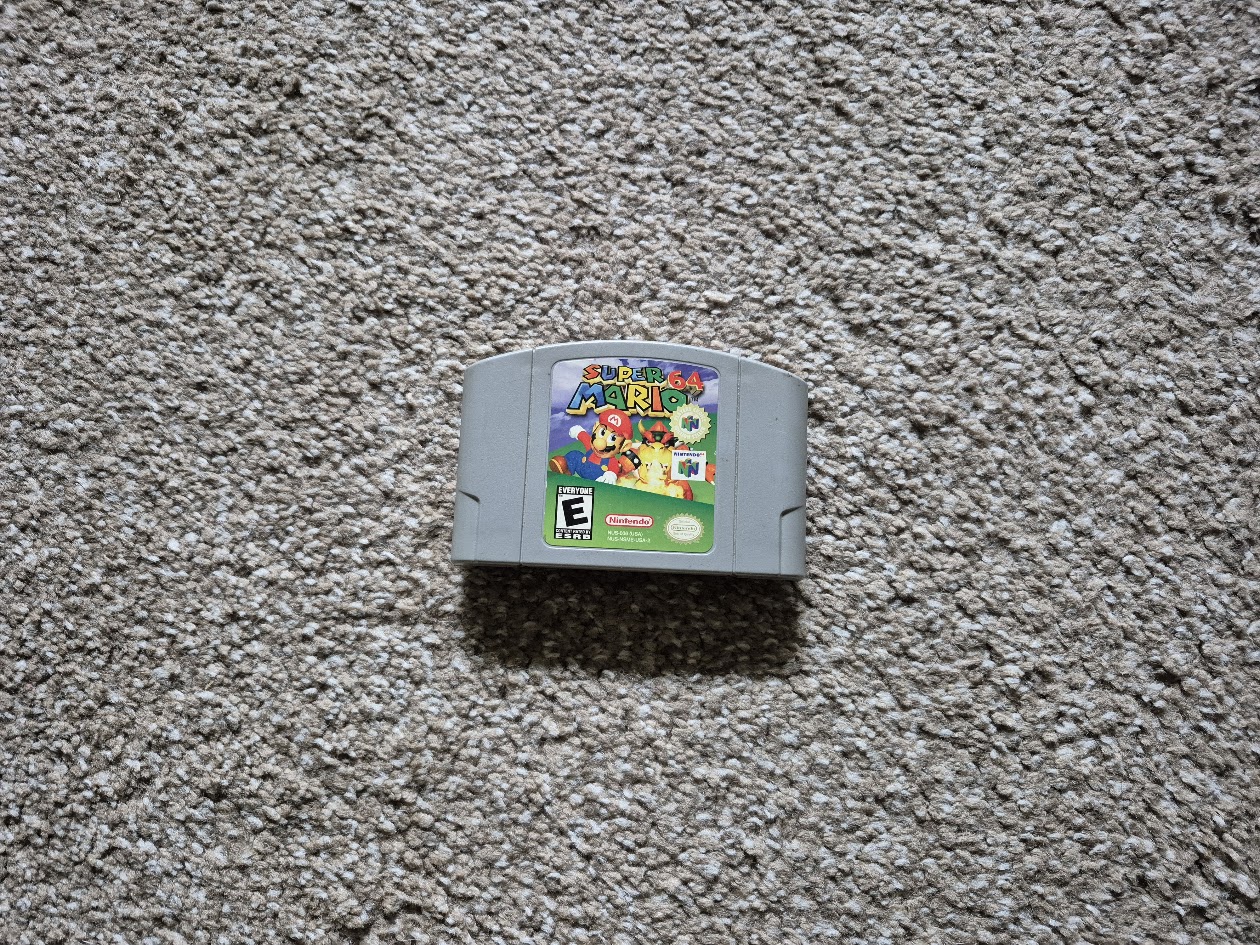
Lauded over the past three decades for virtually every aspect, Super Mario 64 remains a prevalent part of the gaming world – and the score is a big reason why.
Serving as the three-dimensional debut for the most recognizable mascot in all of video games, Super Mario 64 was an immediate smash hit upon its release in September 1996, spearheading sales of the Nintendo 64.
While the console itself went on to be vastly outperformed by the CD-utilizing Sony PlayStation, the Nintendo 64 still sold nearly 33 million units worldwide, largely thanks to the killer app that was Super Mario 64 – which stood out as the best-selling game of the fifth generation with over 11.9 million copies sold.
It was instantly clear to gamers at the time of SM64’s release that this was no ordinary video game, but one that would change the landscape of game development while making players rethink what was possible to do within the confines of a video game.
Beyond the 3D world that in and of itself was a dramatic step forward for gaming, players were immersed into a variety of different environments once entering Princess Peach’s Castle, which serves as the hubworld for the game.
While the castle itself offers players much more to explore than what could ever be imagined, the levels themselves serve as a new frontier for video games, immersing Mario in a variety of different sandbox environments with a mostly open-ended level structure.
These features earned vast amounts of critical acclaim and were cited as reasons that SM64 continues to be named as one of the greatest games of all-time by fans and publications alike. Yet one other aspect that was also heavily praised that I believe truly served as the game’s most flawless feature is its score.
Composed by Nintendo veteran Koji Kondo, the Super Mario series was far from a new endeavor – with Kondo being the mind behind the iconic themes heard in games from the series on the NES and SNES. Yet with the advancement to 64-bit hardware, much more was possible on all fronts within the game – music included.
After turning on the game, players are directed to a load/save screen with music that serves as an enticing appetizer to what is an incredible musical journey, featuring a quaint theme that evokes imagery of a pleasant summer morning.
That state of mind starts to dissipate as one begins the game, with Mario being placed outside of Peach’s Castle to start, being greeted by a pleasant atmosphere with the backdrop of eerie silence.
The silence is broken upon entrance into Peach’s Castle, which greets Mario with the iconic hubworld theme titled “Inside the Castle Walls.”
It’s hard to fully conceptualize how a simple, instrumental piece that lasts barely over two minutes can depict so many themes and emotions. The sound of royalty is immediately apparent, but as the piece progresses and as Mario explores the castle for the first few times, the music sonically shifts as well.
In addition to the grandiosity felt during the piano runs on the second half of the piece, I couldn’t help but feel a hint of uncertainty and eerieness from the music as well – only further exacerbated by the rather liminal atmosphere of the castle that was likely not intentional, and was simply a representation of the first endeavor into the completely new world that was 3D gaming.
Once Mario’s done getting his first taste of exploring what the castle has to offer inside, the game’s first level lives up to the standard previous mainline Super Mario games set when it comes to infectious, catchy music that is bound to get stuck in your head.
Opening with a boisterous hornline that seamlessly transitions into an unforgettable melody, Bob-Omb Battlefield saves the player any of the uneasiness that may have been felt in the first moments of the game by providing an upbeat soundtrack to the player’s first forrays into 3D level exploration.
With the significant jump in hardware capabilities from the SNES to the N64, the depth of the music in SM64 was far beyond what most were used to in video games up until that point – with the title expanding upon innovative strides made by Donkey Kong Country, an SNES game released in 1994 that was lauded for its soundtrack and inspired a corresponding series.
The result of the strengthened hardware is music with much more variation and color – the latter of which can be attributed to the game’s distinctive soundfont that has inspired a slew of amateur remixes with other music in recent years.
After completing the first couple of levels, Mario has the opportunity to explore the game’s first snow and water levels – with the latter featuring perhaps the game’s musical magnum opus.
It doesn’t hurt stating the obvious – the water themes from Super Mario Bros. and Super Mario Bros. 3 both capture the mood and essence of a water level, but Dire Dire Docks goes several steps further.
Once again perhaps taking inspiration from the acclaimed Aquatic Ambiance composition used for water levels in Donkey Kong Country, Dire Dire Docks is a moving, emotional whirlwind that is bound to make players stop in their tracks while in water levels to just sit and listen.
What’s meant to feel like a simple task as part of a video game that happens to involve water sounds much more like the start of a brave, dangerous expedition at sea to an unknown destination. Once again, Kondo’s work evokes and captures so many themes and emotions.
Everyone interprets music differently, and I don’t mean to speak for everybody. But when I hear Dire Dire Docks, it’s almost impossible to not feel the weight and emotion of the piece – one that equally captures the tranquility of the sea as well as the uncertainty and gravity of the task at hand. With a composition that feels just as much of a journey as the levels it accompanies, the ending of the piece provides a fitting, triumphant resolution with a poignant bridge melody before the theme restarts.
Kondo’s ability to perfectly capture the mood of a level extended to stages with vastly different themes, with the ominous, dark music of Big Boo’s Haunt adding greatly to the slight feeling of uneasiness players may have felt when walking around the castle.
With deep, atmospheric sounds in the back leading into agitated mallets runs, with the piece only ever hinting at an upcoming crescendo without ever reaching it. The unresolved form of the composition fits perfectly with the level, which feels exceptionally large and liminal with the ability to catch the player off-guard, as it does with the infamous jumpscare piano.
After defeating the first boss of the game, Mario gets his first forray into an underground level – which features an absolutely genius adaptation of the classic underground theme that dates back to the original Super Mario Bros.
Used in the Hazy Maze Cave and Wet Dry World levels, the theme begins with a percussive, mysterious melody before transitioning into a slowed-down version of the recognizable underground theme.
The slower tempo and more spacey instrumentation serves as the ideal match for the two levels, which are both among the larger stages in the game that greatly reward exploration by the player.
I always felt this piece was especially ideal when playing in Wet Dry World, a level that has infamously evoked feelings of uncertainty and liminality among many players. When moving to the smaller “town” section of the level, the quicker tempo and unresolved melody always made me feel a sense of anxious urgency – whether Kondo was aiming for these themes when composing is unknown, but in combination with its corresponding levels, those moods were established.
There are few games that have been dissected and litigated as much as SM64 has – with the game turning 30 this year, players across the world have spent the last three decades rummaging through the game’s code to find far-out objects, utilizing a cocktail of glitches to beat the game with 0 stars and even launching conspiracy theories aimed at the many people like me who did have nightmares after playing this game as a child.
Being a game that is truly impossible to replicate with advancements to an extent that we likely won’t see in video games again, every aspect of Super Mario 64 made it a title that changed the landscape of gaming forever.
For me at least, the music will always be a characteristic that sticks out. From getting lost exploring the castle to the building’s iconic theme to just pondering life when standing in a water-themed level, SM64 was a full reimagination of what was musically possible within video games.
These boundaries were further pushed two years later, with Kondo delivering another sensational score to go with The Legend of Zelda: Ocarina of Time.
Today, Super Mario games feature scores recorded by professional orchestras with dozens of pieces ranging from interpolations of past themes to new, anthemic compositions that go on to be associated with a specific game.
There are so many things that made Super Mario 64 one of the most famous games ever created – yet those that play it seem to all agree that the music continues to hold a special place in the memories and hearts of millions of players around the world, 30 years later.
Leave a Reply