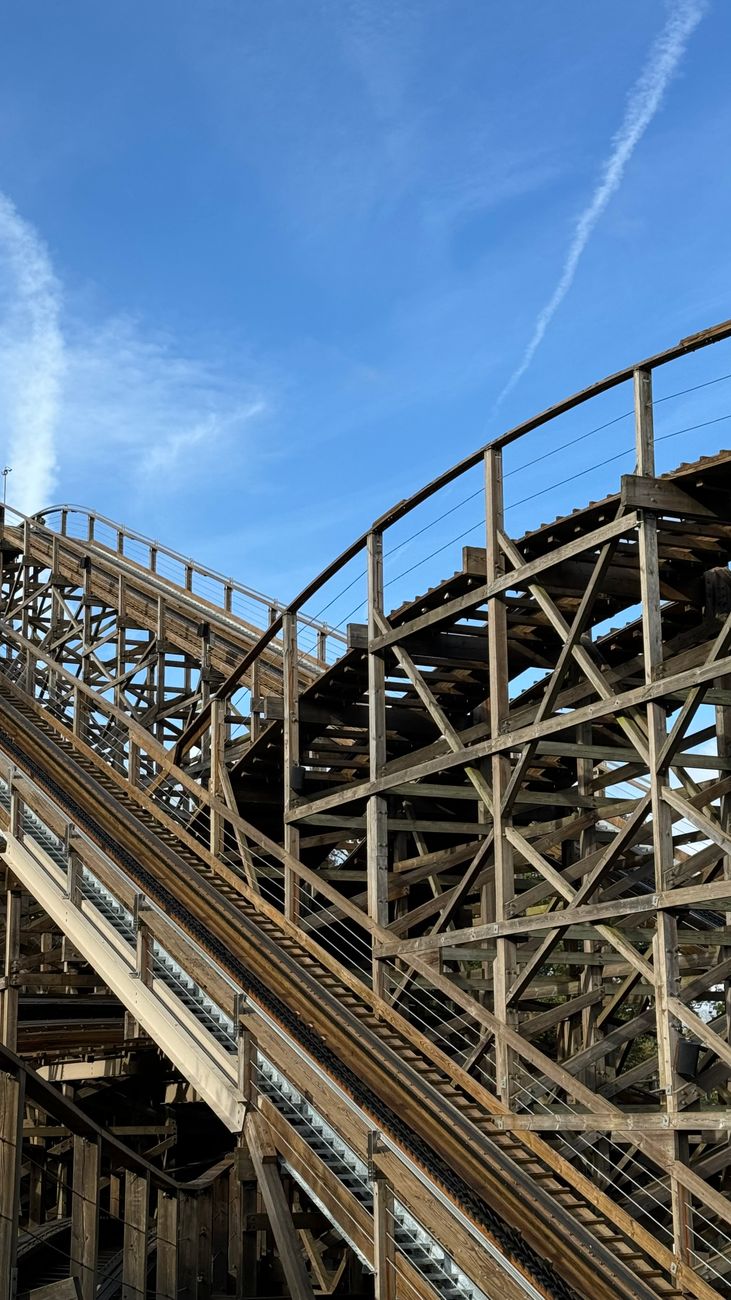
Six Flags officially announced the upcoming closure of the park on Friday, with the future of its nine operating roller coasters up in the air.
Even though it was news the entire coaster world was anticipating, it doesn’t make it any less sad.
On Friday, Six Flags officially announced that California’s Great America in Santa Clara will be closing after the 2027 season, with the company passing on a lease extension that would have kept the park open into the 2030’s.
The Bay Area park originally opened in 1976 under Marriott ownership alongside a sister park in Gurnee, Illinois – what is now known as Six Flags Great America. While the Gurnee property is a focus park for the Six Flags chain and has become of the premier regional theme parks in the world, California’s Great America has not gotten the same investment over the years – and now the park will prepare to close after its 52nd year in business.
The closure will leave a void for families of the South Bay who have made visiting the park a routine part of their summers, while also leaving the Bay Area with just one major amusement park – Six Flags Discovery Kingdom on the opposite side of the region in Vallejo.
Although a smaller park relative to many others in the Six Flags chain, California’s Great America still boasts a solid coaster lineup – in my opinion, a better one than that of Discovery Kingdom. Yet with just one season left of operation, Six Flags will have plenty of decisions to make when it comes to next steps for these coasters.
The closure of California’s Great America will mark the second time in three years that Six Flags will be shuttering a park, with Six Flags America in Maryland closing its gates for the final time in November 2025 – with only one roller coaster at that park being relocated since its closure.
Given Six Flags’ relatively uncertain finances amid a summer of bad PR, the upcoming closure will be an opportunity for the company to save some money – with the coasters themselves providing an extra opportunity to either bolster other parks in the chain or help recoup some money in a sale.
Of the nine roller coasters at California’s Great America, it’s reasonable to expect that most will not be relocated – with the rides likely being stripped for parts and scrapped due to their older age and limited options for another home.
Yet still, I don’t expect this to be the end of the road for all nine of the park’s coasters, and I think it’s reasonable to expect that certain components of these rides will continue to serve others throughout the chain in the future.
Below is a look at what I think may happen to California’s Great America’s coasters, ranging from a full-fledged relocation to being completely scrapped after Labor Day 2027:
Completely scrapped with few or little parts sent elsewhere
- Lucy’s Crabbie Cabbies
- Woodstock Express
- The Grizzly
These three coasters don’t have a whole lot to move elsewhere, and are also all a bit older and don’t have a ton of appeal to be sent to a new park.
Lucy’s Crabbie Cabbies is a very small, basic kiddie coaster with similar models that can be found at other regional theme parks across the country, while Woodstock Express is a junior coaster from Intamin that has been operating since 1987, likely being near the end of its service life anyways.
As for The Grizzly, a wooden coaster already viewed as among the worst of its kind in the country, it’s hard to see much more being done to expand its lifespan outside of a potential train relocation – with the ride itself a virtual lock to be scrapped.
Scrapped with several major parts saved
- Demon
- Patriot
These are two old coasters that are quite certain to not be relocated to another park, but they also contain several parts and components that can be used for other coasters within the Six Flags chain.
The closure of Demon may prove to be a boon for its Gurnee counterpart and other Arrow loopers left throughout the Six Flags chain, with the ride’s trains at the very least able to be moved for use on another similar ride – as other aspects of the ride may be useful for maintenance of the Gurnee Demon.
Similar to the now-defunct Firebird from Six Flags America, it’s hard to imagine the extremely tame stand-up-turned-floorless Patriot getting moved to another park – but its trains and other parts could come in use for the slew of other Bolliger & Mabillard floorless coasters throughout the chain.
Even though parts from these two rides are likely to survive, these coasters are every bit as certain to give their final rides on Labor Day 2027 as the previous three coasters were.
Sold and relocated to a smaller park
- Psycho Mouse
- Flight Deck
These are two very different rides, and I feel much more confident in the possibilities for Psycho Mouse than I do for the classic B&M invert in Flight Deck.
Although overlooked within California’s Great America, Psycho Mouse has a slew of factors working to its advantage when it comes to possible relocation. It’s a smaller ride with a relatively tiny land footprint and its price is likely approachable for many small parks – something bolstered by the fact that wild mouse coasters are already a popular addition for smaller theme parks across the world.
While I have a good deal of confidence that Psycho Mouse will find a new home at a smaller park, even if that’s far outside the United States, Flight Deck presents a much more interesting case.
Only the second inverted coaster ever and just the third coaster produced by Bolliger & Mabillard, Flight Deck will have operated for a whopping 35 seasons by the time of its closure on Labor Day next year – making it a tough candidate for relocation despite the crowd-pleasing nature of B&M inverts.
Even with its age, Dragon Challenge at Universal Islands of Adventure remains the only B&M invert to close – and that ride had its own unique challenges and issues not faced by conventional one-track inverted coasters.
Although Flight Deck is far superior to Kong, the Vekoma suspended looping coaster located across the bay at Six Flags Discovery Kingdom, it’s hard to see Six Flags removing a coaster from 1998 to replace it with a coaster from 1993 – even if the older ride is the noticeably superior one.
While this may very well end in trains and parts being scrapped to other parks for use on the chain’s other B&M inverts, I do think that Six Flags will try to sell this ride in an effort to fully capitalize on the financial potential of California’s Great America’s closure.
With that said, I wouldn’t expect to see Flight Deck at a Six Flags park or any park in the U.S. for that matter, with smaller parks in South America and Asia standing out as contenders to jump on adding a B&M invert at a bargain.
Likely to be relocated
- Gold Striker
- RailBlazer
In what comes as little surprise to most, I do think that the chain will try to find a way to save the park’s two headline attractions – the GCI woodie in Gold Striker, which I believe to be the best coaster in Northern California, as well as the single-rail RailBlazer from Rocky Mountain Construction.
RailBlazer is almost a surefire bet to be relocated. Not even 10 years old, this RMC Raptor is packed onto an incredibly tight plot of land and remains a model that most parks do not have. This coaster is a fantastic all-bark, no-bite offering, giving an incredibly intense ride despite relatively modest stats of just a 106-foot height and a top speed of 52 mph.
Just about any park in the Six Flags chain that doesn’t have an RMC Raptor could use RailBlazer, but I’d put my money on this coaster heading to either Kings Island or Carowinds – especially after Six Flags shocked the coaster world by announcing that ArieForce One would be headed to Six Flags Magic Mountain.
In addition to being the lone RMC coaster at either park, RailBlazer would help fill a void as a smaller but intense ride to add to its supporting lineup, with the fit at Kings Island feeling especially apparent if the park does proceed with the rumoured removal of Invertigo.
As for Gold Striker, things are a bit more complicated. Moving a wooden roller coaster is likely to be a more expensive process that would take much more planning than a relocation of RailBlazer, with significantly fewer options for where the coaster could be moved.
While I’d personally love for Gold Striker to move across the bay to Discovery Kingdom, that would likely require the removal of an existing ride – something that while I personally wouldn’t mind, would add additional costs to a process in which Six Flags is likely to try to save as much money as possible.
Still, Gold Striker feels just too good to flat-out get rid of. It’s only 13 years old, and has garnered a rave reception from coaster enthusiasts and the general public alike since it began operating in 2013. Wooden coasters are typically put on the backburner by parks, and this ride would serve as a top-notch wooden addition to just about anywhere it could be added to.
I think that with Gold Striker‘s positive reception, it feels hard to believe that Six Flags would throw out a potential cash cow, even if there’s not really a clear answer on where to move the coaster wtihin the company.
My off-the-wall prediction is that the coaster gets sold and relocated to Frontier City in Oklahoma City, a small western-themed amusement park that is operated by Six Flags but owned by Enchanted Parks, the company that purchased many of Six Flags’ smaller parks after the merger with Cedar Fair.
Not only would Gold Striker immediately become the headline attraction at Frontier City, it’s gold rush theming already fits well into the wild west theme of the park, likely saving costs on retheming in a potential relocation.
I’m not sure exactly what the state of the relationship between Six Flags and Enchanted Parks is after the sales, but this feels like a clear win-win for both sides – and I’m not sure how many other parks have the space and the money to add such a ride in the coming years.
Leave a Reply