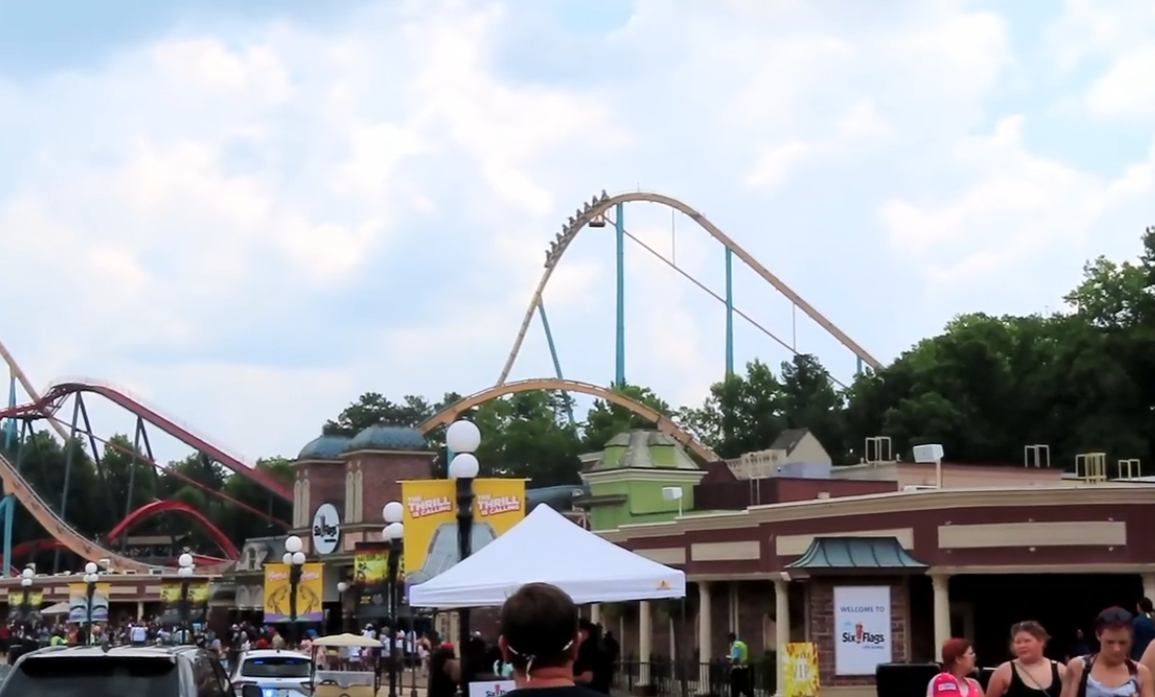
After an Atlanta man tragically lost his life on Goliath at Six Flags Over Georgia, enthusiasts and the general public alike are left asking themselves how this could ever be possible.
I don’t think it’s much of a secret, at least for those who have read my writing on this site before, but a large component to why (and likely many others) love roller coasters so much is that it’s an extremely thrilling and extremely safe way to have fun.
Many of the most fun times I’ve ever had in my life have come at amusement parks, getting a full day of riding new roller coasters for the first time while taking in those memories with loved ones that last a lifetime.
Since I started riding large roller coasters in June 2010, I’ve always been able to set aside my fear for big coasters thanks to the largely impeccable safety record they carry – especially at large regional and national amusement parks.
These coasters undergo rigorous inspection and testing before each day of service, routinely receive maintenance and include double-redundant safety restraints to ensure that riders are locked into their seats before the train is able to be dispatched from the station.
A quick look at the history of incidents at Six Flags parks would speak to this – when fatalities involving a roller coaster do occur, it’s almost always due to either a rider that entered a restricted area and was then struck by a moving train, or from a pre-existing medical condition that a rider was previously unaware of.
All of this makes what happened on Monday even more bone-chilling and inexplicable.
According to police and witness reports, a 42-year-old Atlanta man was ejected from the ride near the end of the coaster during a barrage of camelback hills – an incident that tragically occurred at the moment of the on-ride photo.
In the immediate aftermath of the incident, Six Flags shuttered operations on all of its B&M hypers and gigas that use clamshell restraints, and one can guarantee that those rides will remain closed until some findings are revealed.
This photo circulated just about everywhere on social media platforms in the immediate wake of the incident, and I unfortunately saw it before it was removed. The photo, while taken at an angle during a descent, appears to show the man’s restraint at a much more open position than every other rider’s – if not fully open.
Of all of the things that can go wrong on a roller coaster, this is supposed to be the thing that can’t happen.
Restraints on high-thrill coasters like Goliath are always double-redundant, with these specific restraints featuring at least two pins in a ratcheting pin system, where the restraint can move further down but is unable to move up when locked.
While I’m far from an expert in ride mechanics, I would highly recommend any and all of my readers to check out Coaster College’s YouTube channel, and in particular this video – where he breaks down the different kinds of ride restraints, when they’re required and how they work.
Although a failure of both pins at once is of course technically possible, it’s the kind of thing that has never happened before – giving this incident an extra layer of eerieness as it occurred on a beloved coaster model that has never had anything close to this happen before.
It ultimately isn’t helpful to speculate in the immediate aftermath as the coaster world anxiously awaits the findings of this investigation. A father lost his life in front of his family on a day that should have been about making memories that will last a lifetime – much like the memories I’ve been grateful to build over my years of riding roller coasters.
I personally have found it to be impossible to stop thinking about this since I got a text from my sister asking if I had seen what happened. Even for an enthusiast like myself, it’s hard to not have your faith in the safety of these rides shaken just a little – even considering that you are still much more likely to die in a car crash on the way to the park than you are on a roller coaster.
What should have been a joyous, care-free day turned into unimaginable tragedy for everyone at the park yesterday – and I greatly hope that those who bore witness to something so horrible are taking care of themselves today and in the coming months.
Furthermore, as I demonstrated clearly in my coaster rankings, these are my favorite kinds of coasters. My wife and I rode Goliath together in May 2024, and I’ve been on several hypers and gigas from Bolliger & Mabillard. Not only is B&M my favorite manufacturer, but their clamshell restraints used on Goliath and other similar rides are also my favorite restraints of any coaster. Their unparalleled feeling of comfort and safety made them my most trusted restraint – and having that confidence shattered in the most tragic of incidences makes it hard to not replay the dozens of times I’ve safely rode coasters just like this.
It would be misguided to say that I will never ride a roller coaster again, just as it would be misguided to swear off flying after the 2025 Potomac River mid-air collision, a tragedy that I covered during my time at NBC Chicago.
But I’d be lying if I said that the eventual findings of this investigation wouldn’t impact how I would see Six Flags in the future. Since its merger with Cedar Fair in July 2024, enthusiasts have been subject to a strange mix of park sell-offs, top-dollar investment into core parks and a slew of PR nightmares – with this tragedy coming on the heels of a bombardment of lawsuits alleging severe and fatal injuries on X2 at Six Flags Magic Mountain, a ride that is now permanently shuttered.
If this is a case of a full-blown restraint failure, then I don’t see how it could be anything but a maintenance issue – which would undoubtedly impact my confidence in Six Flags’ ability to maintain their coasters across the chain. If this is the case of a ride operator not diligently checking restraints or failing their duties in some other way, then it speaks to the embarrassingly low pay of park staff and a general disregard of safety – something that should come far and above anything and everything else at an amusement park.
My personal experience with ride operations at Six Flags Over Georgia matches what many others online have said – operations were incredibly slow, with attendants often seen not paying attention and/or on their phone, a stark difference to the operations seen at other parks even within the Six Flags chain.
I don’t know what caused this, and I’m not going to broadcast what I think may have until there’s an incident report and some concrete findings. But what I can say with a good deal of confidence is that this simply should never happen, and these coasters and restraints are designed for this to never happen. If this really was a well-maintained restraint somehow catastrophically failing, then we’ll confront what that means at the time of the finding – but it’s hard to imagine that negligence at some point down the line didn’t play a role in Monday’s heartbreaking tragedy.
Roller coasters remain an incredibly safe way to have fun, and I’m certain that I will ride plenty more in my life. While there are inherent risks to getting on any roller coaster, you’re supposed to feel safe and secure. There are no waivers signed, there are no safety presentations. The coasters are designed for the work to be done for you by the time you sit down and fasten your restraint.
However, negligence in a variety of ways can negate that sense of safety, and Six Flags will have to confront the public relations crisis and plummeting of guest confidence in their rides upon the release of the investigation’s findings.
Until then, the only thing that should be at the forefront of people’s minds is that a family was forever shattered on Monday during a time that was supposed to be about making the kinds of memories that show up in photo albums decades later. It’s unthinkable, and my heart hurts for everyone who had to witness that in what is normally one of the happiest places you could be.
It’s just impossible to not be absolutely floored by this.
R.I.P. Hassan Jihad Ibn Kariem
Leave a Reply