In a continuation of diving into amusement park history, today I take a look at four shuttered parks that I wish I could have visited while they were around.
While the past several years have featured significant investments into large amusement parks across the U.S. and even the opening of a few major parks, it hasn’t come without any hiccups throughout the industry.
It’s been over two years since the July 2024 merger between Six Flags and Cedar Fair, a move that created a regional theme park giant that suddenly had a bloated portfolio. The aftermath of the merger saw the new Six Flags Entertainment Corporation sell off numerous properties to Enchanted Parks, many of which were lower-performing parks within the chain.
Although these parks, such as Worlds of Fun, Michigan’s Adventure and Mid America Adventure (formerly Six Flags St. Louis) get to live on under different ownership, not every park was as lucky – with the chain opting to shutter Six Flags America at the end of the 2025 season.
This year saw more closures throughout the industry, with Fun Spot America Atlanta closing alongside ArieForce One back in August, while the Seattle area’s lone amusement park in Wild Waves closed its gates for good this year as well. This of course isn’t even to mention the likely impending closure of California’s Great America, which is likely to shutter for good after the 2027 operating season.
These closures had me thinking back to other amusement parks that have come and gone over the years, with many defunct parks simply being smaller parks that didn’t boast a wild lineup of attractions.
Still, a few major, significant parks have closed for good over the years, despite having the investment of major companies and being located in populated markets that have the ability to support a regional theme park.
With Six Flags facing a barrage of negative PR and financial dire straits, it remains to be seen how the company will manage its portfolio in the coming years – especially with a few more major investments on the way to the chain’s largest parks.
When it comes to parks that have closed their gates long ago, here’s a look at some of the destinations from yesteryear that I wish I got a chance to experience:
1. Geauga Lake (1887-2007) – Aurora, Ohio
This amusement park almost feels like the original Yankee Stadium of theme parks – a historic location that was an indelible part of American amusement history, Geauga Lake permanently closed in 2007 after operating for an incredible 120 seasons.
The park’s closure came on the heels of rapid changes of ownership and failed rapid growth near the turn of the century, changing what was a mainstay regional theme park for families into a fledgling location in a crowded market for theme parks.
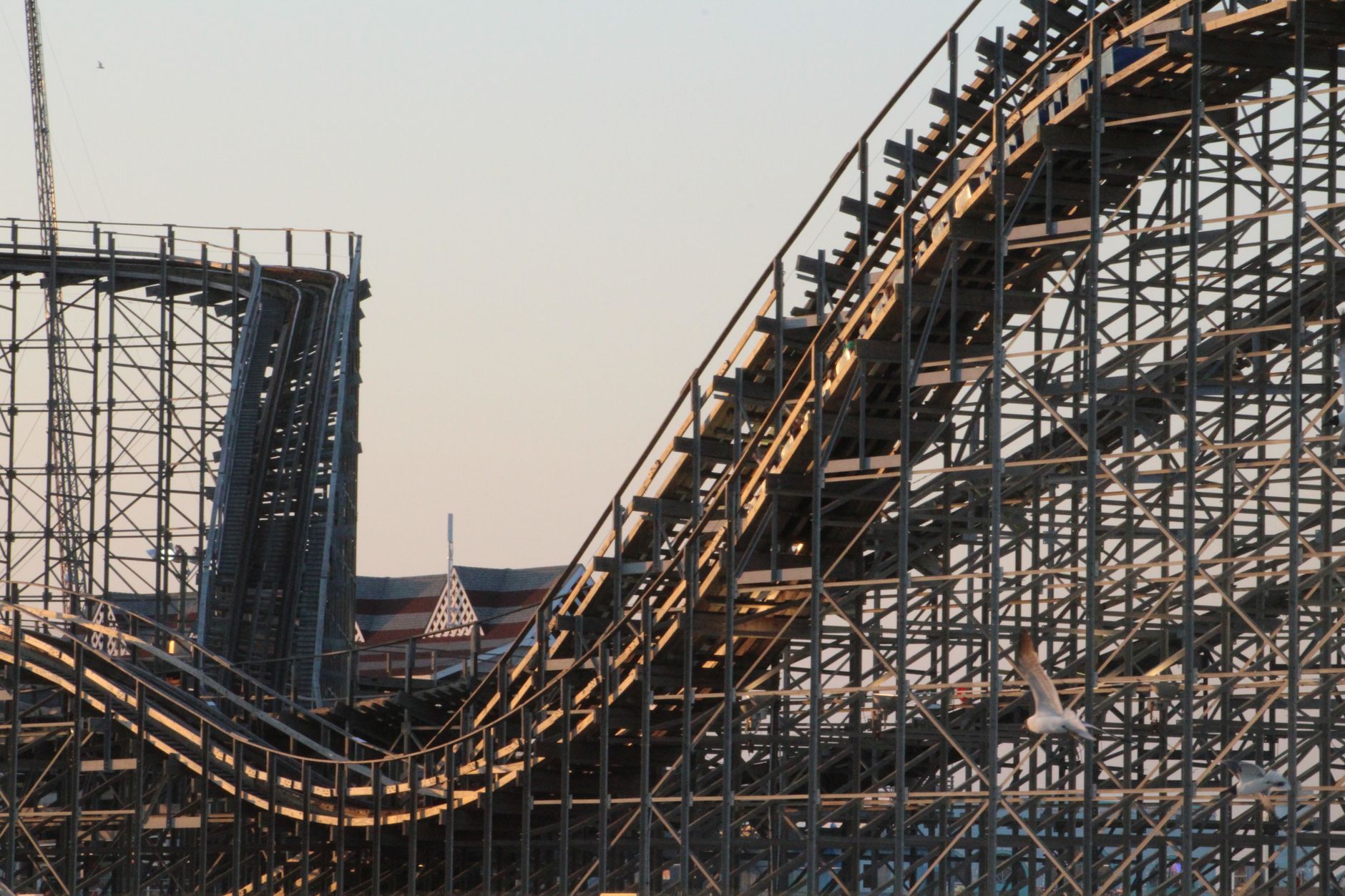
The most iconic attraction in the park was Big Dipper, a classic wooden roller coaster that opened in 1925 and operated until the park’s closure in 2007.
Despite having mostly tame attractions for much of its existence, the park had a wave of new thrill coasters in the late 1990’s and early 2000’s, which included a B&M floorless coaster, a Vekoma Flying Dutchman, an Intamin launched impulse coaster and a Vekoma SLC, all of which were added to the park between 1998 and 2001.
The park re-branded to Six Flags naming in 2000, being known as Six Flags Ohio for one year before operating as Six Flags Worlds of Adventure from 2001 to 2003, a move that coincided with the park’s combination with nearby SeaWorld Ohio.
Cedar Fair ultimately purchased the park in 2004 and renamed it to Geauga Lake & Wildwater Kingdom, which it would operate under until 2007.
This park couldn’t quite compete as a major theme park with Cedar Point and Kings Island, also both located in Ohio, making its growth and attempt to be a major park all the more baffling. Geauga Lake looked to be a great representation of what a classic theme park was, and there was no reason to turn it into something it was never meant to be.
Although I never visited the park, my wife, who is a Michigan native, did get the chance to see the park as a young child – memories that generations of Midwestern families made over the years.
Despite Geauga Lake closing in 2007, the associated water park in WildWater Kingdom continued to operate through the 2016 season. The area has since been redeveloped into a public park with a nearby Meijer store location.
2. Six Flags New Orleans (2000-2005) – New Orleans, Louisiana
An incredibly short-lived park, this location opened in 2000 as Jazzland and came under Six Flags ownership ahead of the 2003 season, when it was renamed to Six Flags New Orleans.
Today, this park is mostly known for the 20 years that it sat abandoned in the aftermath of Hurricane Katrina, with redevelopment projects repeatedly stalling as the damaged attractions sat on a desolate plot of land that saw nature reclaim the area, making it a very popular spot among urban explorers.
It’s fair to wonder how well this park would have done had Hurricane Katrina not happened, especially as it existed in an era when Six Flags was too large to adequately manage their massive portfolio.
Despite the insanely nasty summer climate, this park looks like it would have been a blast to visit, packing a decent punch when it comes to attractions – with a Batman clone, a Vekoma boomerang and a solid-looking out-and-back woodie in Mega Zeph.
The one salvaged coaster at the park was the Batman: The Ride clone – the final one to be added to a Six Flags park in 2004, this was removed from the New Orleans site in 2007 and now operates as Chupacabra at Six Flags Fiesta Texas.
The park’s final day of operation came on Aug. 21, 2005 – eight days before Hurricane Katrina made landfall in New Orleans. Initially planned to be a temporary closure, the park’s location in a low-lying area led to the grounds being buried in brackish floodwaters that reached depths of up to seven feet – leaving the park completely unsalvageable.

3. Old Chicago (1975-1980) – Bolingbrook, Illinois
As a kid growing up in the southwest suburbs of Chicago, I was used to it being an hour-long drive to get to Six Flags Great America in Gurnee – so it really blew my mind when I learned that there was a small park that was merely a 15-minute drive from my childhood home in Lemont.
Located in the Chicago suburb of Bolingbrook long before it exploded in population, Old Chicago served as a pioneer in the growth of indoor amusement parks, combining a shopping mall and amusement park into a single experience that was marketed towards families across the Chicago area.
Opening in 1975, this park featured three roller coasters – including the forgotten Chicago Loop, a double-corkscrew model from Arrow Dynamics that was the first inverting coaster in Illinois, beating out its future counterparts at Six Flags Great America.
More than anything else, Old Chicago was a victim of poor timing. What was then Marriott’s Great America opened in Gurnee in 1976, and immediately began to bite into the market that Old Chicago had worked to establish.
Location was the most significant factor playing to Old Chicago’s detriment. While Old Chicago was located in the still largely-undeveloped southwest suburbs, Great America was situated in Gurnee, a northern suburb that is approximately equidistant between Chicago and Milwaukee – opening up the park to another entire metropolitan area.
Old Chicago lasted for just six seasons, permanently closing in 1980. Despite its short lifespan, the park was clearly influential to shopping mall/amusement park hybrids we have seen since, such as Nickelodeon Universe at Mall of America and American Dream, as well as Galaxyland at the West Edmonton Mall.
The park’s legacy is honored by a street named for the park near its old location, with Old Chicago Drive located just blocks away from where two of my first jobs were located in south Bolingbrook.
4. Six Flags AstroWorld (1968-2005) – Houston, Texas
One of the earlier Six Flags parks, AstroWorld was a hallmark of theme parks in the American South beginning with its 1968 opening, anchoring a massive metropolitan area with a location nearby many of Houston’s largest tourist landmarks, including the Astrodome.
Themed after the city’s historic role in space exploration (while also coinciding with the name of MLB’s Houston Astros), AstroWorld was initially born as the brainchild of former Houston mayor Roy Hofheinz, with Six Flags taking over the park in 1978 – still early on in the company’s lifespan.
While AstroWorld never had the elite-level investment that some other parks in the chain got, it was clearly not the red-headed stepchild either. When it came to covering the bases for coaster enthusiasts, AstroWorld checked many of the boxes.
This park offered rare models such as an Intamin stand-up in Batman The Escape and TOGO’s pipeline in Ultra Twister while also hosting more mainstream models, like the Texas Cyclone woodie and Serial Thriller, a Vekoma suspended looping coaster.
Despite the park’s prestige and history, Serial Thriller was the final new coaster for the park in 1999 – and Six Flags was forced to confront the financial constraints brought upon by its ambitious purchase by Premier Parks. Citing poor attendance and parking conflicts with the nearby Reliant Stadium, home of the Houston Texans and other major events, Six Flags announced in September 2005 that the park would shutter after the season – with the news blindsiding longtime attendees of the park.
The demise of AstroWorld was remarkably swift, with the park closing for good on Oct. 30, 2005 and its demolition complete by mid-2006 – a far cry from the long-term abandonment seen with Six Flags New Orleans.
AstroWorld’s lifespan and sudden demise served as the inspiration for Travis Scott’s 2018 psychedelic rap album of the same name. Scott said he intended to make the album sound like “taking an amusement park away from kids,” which now stands as a universal experience for Houston-area youth of the mid-2000’s.
Leave a Reply