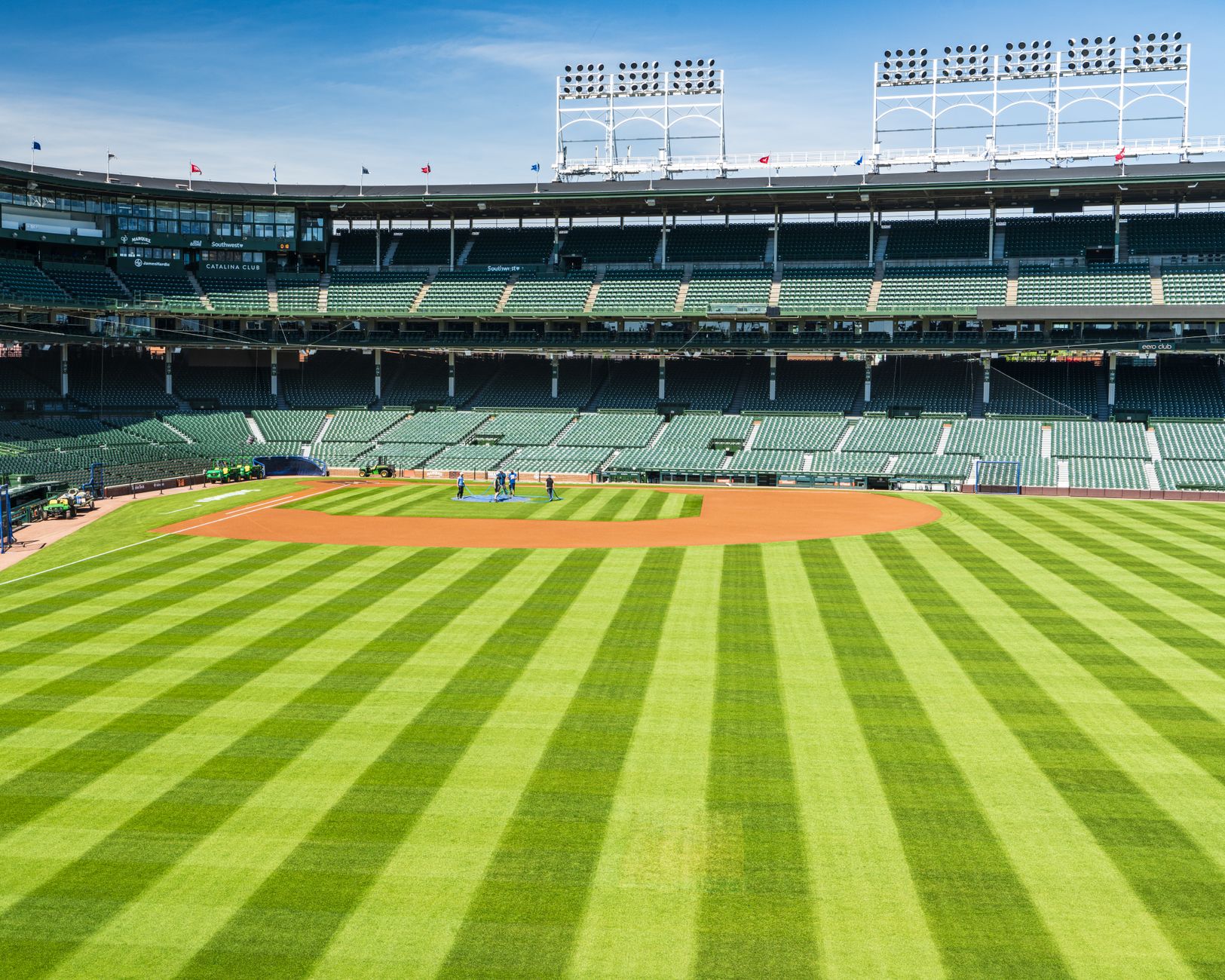
One year removed from being just five outs away from the World Series, the Chicago Cubs were a popular pick to finally break the Curse of the Billy Goat in 2004. In typical Cubs fashion, things fell apart.
Not long after the sun had risen on a typical weekend morning in late March 2004, I woke up and made my way downstairs to see the latest issue of Sports Illustrated had arrived to the house I grew up at in the Chicago suburbs.
It was spring break for myself and all of the other local elementary school students. I was in second grade, and I had a deep love for baseball. Despite being absolutely awful at the sport itself, I had been enamored by everything about watching and following the game since my father ignited my interest a few years earlier in 2001.
As I was getting ready to wake up at 4 a.m. in the coming days to catch the start of the 2004 MLB season in Japan between the Tampa Bay Devil Rays and New York Yankees, I started to look at the magazine sitting on our kitchen counter, and the prophecy that came along with it.

Just months removed from arguably the most heartbreaking losses in franchise history, the country’s most famous sports magazine was calling their shot. After having not won the World Series since 1908, after not having even been to the World Series since 1945, the wait would be no more for Cubs fans. 2004 was going to be the year.
I may have been just eight years old by the time the season started in 2004, but I was old enough to buy into the hype surrounding this Cubs team. After finishing 88-74 in 2003 with a team led by a young, high-octane pitching staff centered on Mark Prior, Kerry Wood and Carlos Zambrano, the Cubs clearly felt that they were on the doorstep of something big – and added aggressively in the offseason.
Damian Miller was replaced with Michael Barrett behind the plate, while the North Siders upgraded at first base by poaching Derrek Lee from the Florida Marlins, who broke the Cubs’ hearts just months earlier. The Cubs shored up their positional depth as well, picking up a pair of Todds (Walker and Hollandsworth) while solidifying their rotation by bringing back one of the greatest pitchers of all-time in Greg Maddux.
On paper, entering the season, this was a very scary baseball team. Having already led all of baseball in strikeouts in 2003, the Cubs added Greg Maddux to their pitching staff while greatly strengthening a lineup that stood out as the team’s most significant weakness.
What the Cubs didn’t fully anticipate was the extent to which their division rivals would improve as well.
After Chicago narrowly edged out the Houston Astros and St. Louis Cardinals for the division title in 2003, both teams returned greatly improved the following year. Houston poached from the Yankees to add Roger Clemens and Andy Pettitte to a great pitching staff already led by Roy Oswalt while St. Louis saw gargantuan steps forward for much of their lineup that wasn’t named Albert Pujols, who continued his elite level of play.
The Cardinals ultimately went on to compile a historically great regular season, finishing the campaign 105-57 while also boasting three of the top five votegetters in the NL MVP race, with Albert Pujols, Scott Rolen and Jim Edmonds finishing third, fourth and fifth, respectively.
Therefore, the Cubs were going to need a lot more than 88 wins to make it happen, and they started the season with a bit of an additional setback – the team was going to be without Mark Prior for the first two months of the season due to a nagging achilles injury.
Cubs fans were treated to their first moment of the season feeling like destiny just a few weeks after it began, on a warm Friday afternoon in April.
Facing the Cincinnati Reds at Wrigley Field with the wind blowing straight out to centerfield, both teams were in for a vintage NL Central slugfest that is typically reserved for the dog days of summer. Cincinnati picked up home runs from D’Angelo Jimenez, Ken Griffey Jr. and Wily Mo Peña, while the Cubs had long balls from Moises Alou, Aramis Ramirez and Todd Hollandsworth, the last of which was a pinch-hit blast that brought the Cubs back within one run in the eighth inning.
Trailing 10-9 in the ninth, Sammy Sosa and Moises Alou were set to lead off the inning. Magic ensued.
It’s hard to feel like moments of destiny happen in April, but it kind of felt like that on this Friday. In a classic division matchup that the Cubs felt overpowered in, a late rally led by the team’s biggest stars delivered a major victory – and made fans feel like maybe, just maybe, this really was the year.
Two days later, I attended my first game of the season with my dad in the newly opened sections of seats just behind home plate, and an equally intense slugfest was in-store.
While Cubs fans can affectionately remember this game for Sammy Sosa breaking Ernie Banks’ all-time franchise home run record, the North Siders came out on the wrong end of a slugfest on this unseasonably warm Sunday, just a day after blowing a ninth-inning lead to lose on Saturday.
Tied at 9-9 after nine innings, the Cubs went on to lose 11-10, with a two-run triple in the 10th inning from Juan Castro (who had a career bWAR of -5.4, mind you) ulimately proving to be the difference – before a warning track flyout from Derrek Lee ended the game in the bottom of the 10th.
Through the first two months of the season, the Cubs played at a slightly above .500 clip while generally staying within the mix in what was a very crowded NL Central to start the year, with the team holding a 27-25 record on June 4 as Mark Prior returned from injury against the Pittsburgh Pirates.
Despite a stellar performance from Prior, the Cubs blew a late lead to fall in the game 2-1, which at the time had pushed them into fifth place in the division, standing 4.5 games behind the Cincinnati Reds, who led at the time.
After a .500 May, the Cubs went on to go 15-12 in June, a month that included a gauntlet of division matchups – two series with the Cardinals and two with the Astros. Including games against Houston on May 31 and July 1, the Cubs went 10-7 against their two primary division rivals, with part of that being a four-game sweep of the Astros in Houston that made up part of a six-game winning streak.
The good vibes carried into July with the Cubs sweeping the crosstown rival Chicago White Sox at Wrigley Field to begin the month, leaving Independence Day weekend with a 46-35 record, just three games behind the Cardinals for first place in the division.
With the trade deadline approaching, the Cubs, Cardinals and Astros were all positioning themselves to add – even as the Astros entered play on July 5 in fifth place, seven games behind the Cardinals for top in the division.
By the end of July, the Cubs were 56-48 – now a sizable 10.5 games behind the Cardinals, who followed up a 19-9 June with an asinine 20-5 July, having built themselves enough of a cushion to essentially wrap up the NL Central at the deadline.
As far as the NL Wild Card was concerned, the Cubs stood just two games behind the San Diego Padres, while the Astros, who held a .500 record, were still six games back from the Friars. Yet deadline additions had the potential to change everything – and they would. It just didn’t exactly go how Cubs fans thought it would.
I’ll never forget being at home on July 31, 2004, hearing my dad enthusiastically announce that the Cubs had done the unthinkable by acquiring the top name on the trade market that season in Nomar Garciaparra. After being floated in trade talks ahead of the 2004 season, Garciaparra was moved by the also-contending Boston Red Sox in a four-team deal that involved the Minnesota Twins and Montreal Expos.
In the mix, the Cubs ended up with Garciaparra and outfield prospect Matt Murton, while Francis Beltran, Alex Gonzalez and Brendan Harris were shipped to Montreal. The Red Sox replaced Garciaparra with Orlando Cabrera at shortstop while also adding veteran Doug Mientkiewicz from the Twins, shoring up their infield ahead of the playoff push.
While acquiring Nomar felt like another moment of destiny for this team, the other clubs in the NL Central weren’t backing down at all. The Cardinals, unsatisfied by their massive division lead, picked up future Hall of Famer Larry Walker in a waiver-wire trade, while the Astros made what was ultimately the biggest splash of the summer earlier on, having picked up their own future Hall of Famer in Carlos Beltrán on a rental in late June, well ahead of the deadline.
Beltrán went on to have one of the most torrid three-month stretches of his incredible career, amassing 4.5 WAR in just 90 games in an Astros uniform, posting 17 doubles and 23 home runs with a .926 OPS.
Although it took a while for the Astros to pick up momentum from the trade, Beltrán eventually helped the team catch fire, as Houston finished the season on a 40-18 stretch that ultimately secured them the lone NL Wild Card spot.
So, how did things fall apart for the Cubs? Or did they even fall apart at all, and them missing the playoffs was simply the consequence of having two other incredible teams in their division?
As much as some fans may love making excuses, this Cubs team did fall apart – although you wouldn’t exactly know it if you went by the team’s monthly records.
August featured a few notable moments for the team, but none that stuck out more than Greg Maddux recording his 300th career win in San Francisco on Aug. 7, making history as the 22nd of now 24 pitchers to have reached the remarkable milestone that we will likely never see again in this sport.
While the Cubs generally took care of business against lesser opponents such as the Colorado Rockies and Milwaukee Brewers, the North Siders struggled in important games throughout the month – dropping two of three to San Diego while going 3-4 across two series against the Astros. By the time September rolled around, the Cubs found themselves in a statistical tie with the Giants for the playoff spot.
Throughout much of September, things were operating quite smoothly for the Cubs. They polished two separate sweeps of the Pirates, took three of four from the Reds in Cincinnati and split a tricky six games with the Marlins – leaving the team at an 87-66 record with a 1.5 game lead on the Wild Card spot after a 2-1 extra-inning win over the New York Mets on Sept. 24.
From that point on, the Cubs went just 2-7, dropping three games in extra innings and wasting a signature 16-strikeout performance from Mark Prior in the process as the Cubs opted to speedrun a September collapse. On Sept. 30, after dropping three of four to the Reds at Wrigley Field, the Cubs were a game behind both the Giants and Astros entering the final weekend of the season.
Their loss on Sept. 30 was perhaps the perfect encapsulation of the season and the general Cubs fan experience. Mark Prior fanned 16 Reds in what was the best performance of his brief MLB career, with the teams’ offense laughably dormant throughout. The North Siders left the bases loaded in the bottom of the 11th inning, fittingly before a two-out RBI double from Javier Valentin gave the Reds the lone run they needed to finish off the 2-1 win in the following inning.
The game is especially remembered by fans for color commentator Steve Stone’s brutally honest autopsy of the Cubs season near the end of the game that extended through the broadcast’s finish. Stone, in his final season calling games for the Cubs, eviscerated the team’s effort and performance in important games down the stretch while offering hefty criticism towards Cubs manager Dusty Baker.
The meat and potatoes of the pair’s pointed criticism begins at the 3:14:04 mark of the video, as they balance the emotions of watching such a promising season come crashing down in front of the fans who had waited the longest for something to cheer for.
The Cubs went on to drop two of three games to the Atlanta Braves to finish the season, though the drama with the club was far from over. After 13 years as a franchise hero on the North Side of Chicago, Sammy Sosa went out with an unceremonious and infamous exit, opting not to play in the team’s final game before leaving the ballpark prior to the game ending in a move that was often referenced as a prima donna moment by detractors of Sosa and the Cubs.
Ultimately, the 2004 Cubs were an exceptionally talented team that squandered the positive energy and potential the franchise had built over the preceding two years – and that isn’t even to mention the incredible individual performances that did not result in a postseason berth for the team.
In the final year of a three-year deal with the Cubs, Moises Alou was an absolute offensive monster in 2004, slugging 39 home runs with 106 RBI alongside a .919 OPS in what was his best season as a Cub by a good margin. In addition to Alou, Derrek Lee, Aramis Ramirez and Sammy Sosa all hit at least 32 home runs, proving that the Cubs did in fact greatly improve their lineup from 2003 to 2004.
Yet the holes that this team had showed up in the worst possible times throughout the season. Kerry Wood and Mark Prior both dealt with injuries throughout the year that kept them from having the full, dominant campaigns they had in 2003. It was, however, a breakout campaign for Carlos Zambrano, who posted a 2.75 ERA and a 16-8 record across 209.2 innings, good enough for a fifth-place finish in NL Cy Young Award voting.
Although the team improved offensively, the Cubs were noticeably lacking a bona fide leadoff hitter. While Corey Patterson was solid in his return from injury with 3.0 WAR, 24 home runs and 32 stolen bases, a .320 OBP from the leadoff spot, especially in the more offensively oriented game of 2004, left a lot to be desired.
It was hard not to feel incredibly dejected as a young kid having watched this collapse in front of me. Like many other Cubs fans, I too believed that this team had what it took to win the World Series – but baseball is cruelly unpredictable, and this was yet another year of the Cubs coming up on the wrong end of destiny.
My dad, who has ties to the Boston area, took me along on the Red Sox bandwagon in 2004 as another team with a lengthy World Series drought did break their curse, rallying back from a 3-0 deficit in the ALCS against the New York Yankees before sweeping the hated Cardinals in the World Series en route to their first title since 1918.
While it would be optimistic to think that more great things were on the horizon for the Cubs, 2004 marked the end of what was a two-season era of competitive baseball on the North Side of Chicago. In 2005, the Cubs dragged their feet to a 79-83 record that would have been much more ghastly if not for Derrek Lee putting up one of the greatest individual seasons in Cubs franchise history.
Oh yeah, and the fucking White Sox, of all teams, won the World Series in 2005. The final cherry on top to what ended up being a three-year long shit sundae for Cubs fans.
Obviously, in just over another decade, the Cubs would finally break the Curse of the Billy Goat in what was arguably the most incredible and consequential World Series in the sport’s history. The Cubs winning the World Series in 2016 was the greatest elation any fan could ever experience for their team, and it isn’t even close. Sorry Knicks fans, but 108 years is a whole lot longer than 53 – and fans felt every bit of that lift off the shoulders of the city of Chicago on Nov. 2, 2016.
Yet even a decade after the Cubs won it all, I still find myself looking back to that exciting Cubs team of 22 years ago that just completely disintegrated when it mattered most. There is a world out there where this Cubs team wins it all – where Wood and Prior stay healthy, where Nomar Garciaparra finds a second wind to his career, where they actually do come up with the big hit late in a game in September.
But that’s the nature, cruelty and beauty of sports all in one. There’s always a play or moment that can completely alter the direction of not just a player or a season, but of an entire franchise and how sports fans will remember them.
After 2016, the Cubs are no longer the Lovable Losers. They won it all, and have been generally competitive in most of the seasons since. They certainly aren’t in the top echelon of MLB teams when it comes to success, but sports fans today generally remember the 2016 Cubs for the significance of the victory and the triumph behind breaking a curse that lasted for generations.
Yet in a world where a line drive foul ball from Jason Kipnis in Game 7 of the World Series stays fair and has a bit more mustard on it, the Cubs would still be every bit of the losers they were up until winning it all on that evening.
And when it comes to the legacy of the Cubs of old being the lovable losers who always found a way to blow it no matter what, the 2004 team is every bit of that within a 162-game nutshell – a team seemingly prevented by destiny itself from reaching the promised land.
It’s why 22 years later, many fans still look back on that era from yesteryear and wonder to themselves what it would have been like if they had won it all then.
Thankfully, we have something to compare it to, that actually happened in real life. There is no need to wonder, or ask what if, about 2016 – which made every instant of the century-plus of heartbreak worth it for those of us who got to see it.
Ultimately, 2004 was just a 162-game slice of that 108-year long journey.
Leave a Reply