From the game’s tournament-legal stages to the most fun settings for multiplayer battles, here’s a look at the best stages from Super Smash Bros. Melee.
The third and final part of my Super Smash Bros. Melee stage rankings is here, with the list now getting into tournament-legal stages as well as some of my childhood favorites.
With Melee being among the games I have spent the most time on in my life, I figured that the game’s enduring popularity makes it a fun and meaningful one to continue to dive into all these years later – especially when viewing the game from a more casual lens.
In ranking every stage of the game, I hope to connect to and relate to experiences that a wide range of people had playing this game. While my wife and I play under the competitive ruleset that in turn has shaped my view of what stages are fun to play on, I also spent countless hours as a kid playing this game, fighting on wack stages with items turned all the way on.
Although this ranking does take the competitive ruleset into effect by factoring in which stages have the fewest hazards and are the easiest to engage in pure fighting in, I also try to take into account how most people enjoyed this game in its heyday – four-player free-for-all battles where the last thing on anybody’s mind was wavedashing and Smash DI.
Here’s a look at how my top ten stages shake out:
10. Lylat System: Corneria

A multiplayer classic and an updated stage from its N64 predecessor, Corneria sets players on top of a moving spaceship with the top of the ship serving as the primary platform.
The stage also includes some space on the ship’s tail to the right of the stage, a section that can favor more skilled players and high-tier characters by utilizing the wall to rack up combos that are either very hard or impossible to escape from.
Though there’s a little space on the bottom left on top of the ship’s lasers, they also provide an overpowering stage hazard while trapping most characters on that part of the ship.
9. 64 Past Stages: Yoshi’s Island

One of the three stages from the original Super Smash Bros. to make the transition over to Melee, Yoshi’s Island offers a mostly no-frills setting for battle, featuring a slanted bottom platform and three raised platforms all at a different height.
The stage is also essentially hazard-free, though clouds located off-stage can greatly favor characters with a good aerial moveset, as other characters with poor recovery are liable to get trapped on the clouds.
Similarly, the stage’s platform orientation also favors high jumpers and floaty characters, who can more easily move from platform-to-platform and therefore stall with projectiles or avoid combat entirely. Even with that said, the stage remains a significant improvement over many others in the game with more obvious hazards and drawbacks.
8. 64 Past Stages: Kongo Jungle

The second of three stages to be playable in both the N64 original and Melee, Kongo Jungle brings the same immersive theming and nostalgic jungle sunset atmosphere it provided in its predecessor.
This stage was tournament legal for doubles relatively recently, offering plenty of real estate on the stage’s main platform alongside four other floating platforms – two of which are angled on the side of the stage, with the other two rotating near the center. And not to worry – the life-saving barrel beneath the stage is still there.
Like others earlier on this list, this stage offers a clear advantage to characters like Peach and Jigglypuff, who can access the stage’s higher side platforms more easily and therefore use them to camp or avoid combat, leading to the stage eventually falling out of favor in tournaments.
7. 64 Past Stages: Dream Land

The only instance of a tournament-legal stage outside of the top six, I swear I didn’t mean to put all three 64 throwbacks one after another – but all things considered, this is where Dream Land ultimately falls in for me.
The lone tournament-legal stage from Smash 64, Dream Land comes back with the same setup – a main flat platform, three floating platforms arranged in a triangle over the center of the stage, and the wind from the Whispy Woods tree serving as a minor hazard on the stage.
We’ve reached the point of the list where there’s very little wrong with the remaining stages, with Dream Land serving as an ideal setting for both singles and doubles matches – although floaty characters have a slight advantage on the stage.
6. Hyrule: Temple

The largest stage in the game that has never been tournament-legal, I’m willing to admit that there’s some bias that comes into play when ranking this stage so high – especially considering the difficulty of KOs when battling at the bottom part of the stage.
But when it comes to just pure fun in a casual, multiplayer setting, Temple is everything that Melee is supposed to be: fast-paced battling, tons of movement, unpredictability and outright chaos.
The drawbacks to this stage are rather obvious and self-explanatory, but when playing with two or three other people, it can be incredibly easy to watch hours go by while playing matches on this stage.
5. Yoshi’s Island: Yoshi’s Story

The new Yoshi-themed stage to Melee, Yoshi’s Story provides a small, no-nonsense venue for fighting in one of the stage’s more minimalist, basic stages.
It’s not without its gimmicks however, with recurring Shy Guys floating in the center of the stage along with a rotating cloud beneath the main platform that can serve as a life-saver for characters angling to get back on the stage.
The stage’s drawbacks mostly revolve around its relatively close blast lines, which in turn serve as a major disadvantage for lighter, floatier characters like Peach and Jigglypuff. Conversely, characters like Marth and Fox thrive on the stage, with their high-powered moves benefited from the stage’s close blast lines, especially from a vertical standpoint.
4. Special Stages: Battlefield

The most neutral stage in the game, Battlefield is often a starter stage in Melee tournaments and is the best location for a pure fight.
With that said, I can’t quite consider it to be the finest stage in the game, mostly owing to its very simple design and lack of quirks, which serve as both a blessing and a curse when comparing it to other stages.
While other stages are certainly more memorable with more going on, the lack of hazards, even blast lines and lack of advantage for top-tier characters, Battlefield is hardly anybody’s favorite – but you’d be hard-pressed to find a Melee player that hates it.
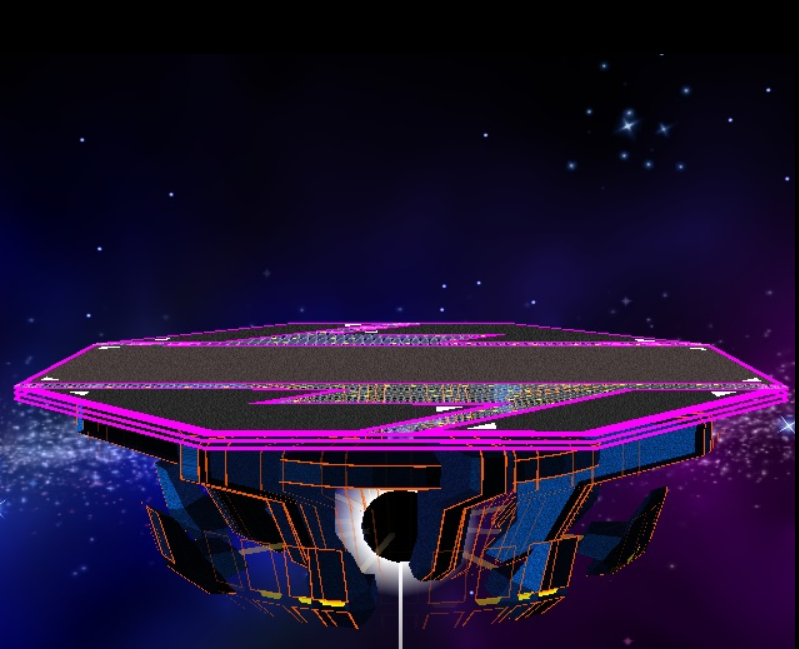
3. Special Stages: Final Destination

From its epic soundtrack to its grand backdrop that alternates throughout the battle, Final Destination has long been viewed as the setting for the most intense battles by casual players, a status it still holds to many professionals as well.
While Final Destination is hazard-free, its lack of platforms make for discernible advantages and disadvantages for multiple characters – favoring top-tier characters who rely on open space to rack up combos. This makes the stage a renowned favorite for Marth, Ice Climbers and Donkey Kong, while being known as a bad stage for Jigglypuff, Sheik and Yoshi.
Despite those inherent character differences, most casual players will not be affected by that – and therefore can enjoy FD for what it’s supposed to be – a basic stage that can fit equally well for singles and doubles matches.
2. Dream Land: Fountain of Dreams

One of my favorite stages in the game long before I was aware of the competitive scene, Fountain of Dreams is another stage that offers the best of both worlds to players – mixing an incredibly comforting and nostalgic environment with a setting conducive to a fair fight.
Fountain of Dreams is another hazard-free stage, with its one gimmick being the raising and lowering side platforms – a feature that is known for playing into Marth’s favor by allowing the tip of his sword more opportunity to land a hit.
The stage’s rather small size and large amount of space away from the main stage does favor characters with a strong horizontal recovery, making this a better stage for characters like Jigglypuff, Peach and Samus while also making it a rather weak stage for Captain Falcon and Falco.
1. Kanto: Pokemon Stadium

Ultimately, the best stage in the game to me has to be one that any and every player of the game can enjoy, and it’s hard to find a better poster child for that than Pokemon Stadium, arguably the most iconic stage of the entire series.
Its normal layout, a flat stage with two side platforms, provides perhaps the most neutral, fair fighting atmosphere in the entire game, with the stage’s four element-themed transitions providing plenty of twists and turns along with the biggest quirks and hazards seen on any tournament-legal stage.
The stage’s transitions keep things interesting for casual players looking to take advantage of the unique characteristics of each variation, while providing a challenge to professional players that they get to avoid on the other tournament-legal stages.
After nearly a quarter-century of this game being available, Pokemon Stadium is truly the perfect encapsulation of what Melee is all about.
Leave a Reply