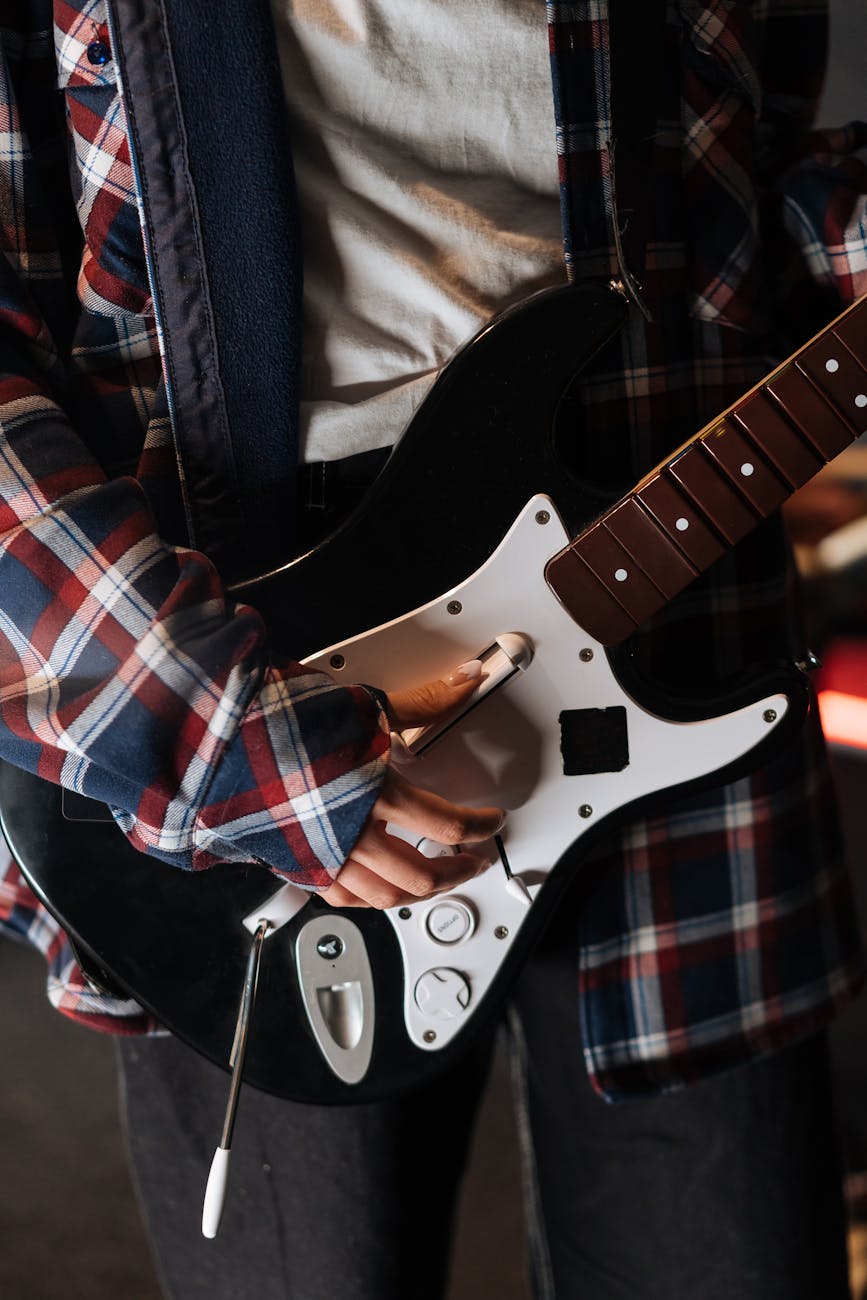
Nearly 20 years after Guitar Hero and Rock Band swept through the gaming world, is it feasible to see similar games returning to consoles in the future?
I’ve undoubtedly had several fixations on a variety of different video games in my life, ranging from Super Mario All-Stars from as early as I can remember to Half-Life 2: Deathmatch in the mid-2000’s at the height of the game’s popularity.
Yet one interest and fixation that always felt and still feels different from other games is that surrounding rhythm video games, which had their own era of dominance in the late 2000’s.
After originally being introduced to the concept through Dance Dance Revolution games released for the PlayStation 2, the release of the Donkey Konga games for the GameCube that incorporated a set of bongos as a peripheral controller further brought the worlds of music and video games together for me as a child.
The genre and my personal interest in it would blow up in 2005 with the release of Guitar Hero for the PlayStation 2, an influential title that undoubtedly changed the course of gaming in the public eye for the remainder of the decade.
Coming packaged with a guitar controller peripheral that includes a strum bar, whammy bar and five colored fret buttons, playing video games never looked as different or as interactive as it did when watching Guitar Hero be played for the first time.
The game’s release, while not apparent at the time, also started to redefine what communal gaming looked like as video games entered into a new generation of consoles. While a title like Wii Sports took the innovative lead in this regard, the Guitar Hero series was already planting the seeds to be a multiplayer powerhouse.
This became more apparent when Guitar Hero II hit the shelves in November 2006, coming packaged with another guitar controller peripheral while the game introduced a “Pro Face-Off” mode, allowing two players to directly compete against each other in the same song while both players have to complete the entirety of the notechart.
While initially released as a PlayStation 2 exclusive, Guitar Hero II was given an Xbox 360 release in April 2007, a version of the game that came with its own guitar controller peripheral as well as the opportunity to purchase additional songs as downloadable content, or DLC – a phenomenon that would greatly shape how rhythm games would be played in the following years.
The genre made a seamless transition to the seventh generation of video games in 2007, with that autumn seeing the releases of both Guitar Hero III: Legends of Rock as well as the eponymous debut installment of the Rock Band series. The year also saw the summer release of Guitar Hero Encore: Rocks the ’80s, the first spinoff title released in either series.
Although the two series would begin to grow a bit more synonymous with one another after this point, Rock Band hit the shelves with the distinct appeal of being a full band experience – introducing vocals and drums to the mix along with guitar and bass parts to turn what was a two-player, guitar controller-only concept into an immersive four-player tour.
Both titles still saw releases for the PlayStation 2, owing to the console’s unprecedented longevity, but the money was made with releases for the Xbox 360, PlayStation 3 and Wii, establishing the generation’s new consoles as the preeminent home of rhythm games.
Although one could argue the genre itself hit its peak in the fall of 2008, the Guitar Hero series arguably reached the height of its cultural impact in the wake of the third main installment’s release, punctuated by the unprecedented difficulty of Dragonforce’s Through the Fire and Flames on Expert difficulty.
After a busy 2007 for rhythm games, 2008 saw the release of the second spinoff title of the Guitar Hero series with Guitar Hero: Aerosmith, leading into the series’ full band debut in Guitar Hero: World Tour, released that fall – competing directly against Rock Band 2.
This was undoubtedly the beginning of the rampant saturation in the rhythm game world as several games tried to capitalize on the genre’s soaring popularity. With World Tour‘s three-drum, two-cymbal drumset differing from Rock Band‘s more straightforward four-drum configuration, gamers were forced to pick one or the other – or spend a lot of money on expensive controllers that take up a lot of space.
After being a huge fan of the Guitar Hero games up until this point, I received an Xbox 360 and Rock Band 2 as Christmas gifts in 2008 – which unceremoniously marked the end of my pursuit of Guitar Hero games.
The saturation of the genre only deepened in 2009, which made for exceptionally bad timing as the American economy was hemorrhaging jobs in the wake of the 2008 financial crisis, with unemployment reaching a high of around 10% in late 2009, a number that wouldn’t be eclipsed until the early days of the COVID-19 pandemic.

Despite deeply worsening economic conditions, 2009 was perhaps the busiest year for rhythm games yet. The year saw the release of three spinoff titles in the Guitar Hero series – Guitar Hero: Metallica, Guitar Hero: Smash Hits and Guitar Hero: Van Halen, the second of which brought the full band format to recognizable songs featured in previous games in the series. This culminated with the fall release of Guitar Hero 5, which similar to the two spinoff titles released in 2009, had an underwhelming commercial performance relative to earlier titles in the series.
This also occurred alongside the release of the more family-oriented spinoff Band Hero, as well as the debut of the short-lived hip-hop-flavored DJ Hero series and The Beatles: Rock Band, the latter of which was the first spinoff title in the Rock Band series. The year also saw the release Lego Rock Band, a family-friendly competitor to Band Hero.
As sales began to lag across all of the genre’s titles, 2010 served as the last year with a steady stream of releases. Both Green Day: Rock Band and Rock Band 3 saw releases, while the Guitar Hero series added DJ Hero 2 and Guitar Hero: Warriors of Rock, the former of which would be the final release in the series.
With the seventh generation nearing its end and sales declining across the genre due to a variety of factors, rhythm games began to fell out of favor with the larger gaming audience. This transition was fully solidified in the early years of the 2010’s, with the releases of AAA titles The Elder Scrolls V: Skyrim and Grand Theft Auto V capturing the bulk of the gaming audience. Poor sales of Warriors of Rock in 2010 led to the cancellation of a planned Guitar Hero sequel in 2011.
Following a hiatus of several years as the industry moved on the eighth generation of consoles, both the Rock Band and Guitar Hero series’ gave it another go in 2015, which saw the releases of both Rock Band 4 and Guitar Hero: Live for the Xbox One and PlayStation 4, with the latter title also getting a release on the Wii U.
While both games were released to mostly positive reception, a mix of underwhelming sales and a heavy emphasis on online content divided fans and greatly reduced the longevity of the titles. Although Rock Band 4 continued to receive DLC tracks through as recent as 2024, the “Guitar Hero TV” feature that provided additional tracks for Guitar Hero: Live was shuttered in December 2018, taking the game’s soundtrack from hundreds of songs to only the 42 tracks included on the game’s disc.
The relative failure of the series’ relaunches over a decade ago have led to an even more prolonged hiatus of the genre, with peripheral controllers in general appearing to largely fall out of favor with the general gaming audience.
In a modern gaming landscape where content is heavily concentrated online, even on physical discs, it’s hard to see how similar issues fans encountered with previous games wouldn’t repeat to an even more significant extent today, as software shutdowns often render features in older games both inaccessible and obsolete.
There’s also the obvious consideration that has to be made surrounding the price point of the games too, particularly when involving a full band setup. The original Rock Band full band set-up retailed for $169.99 at launch – a price that ballooned to $249.99 by the 2015 release of Rock Band 4.
With new consoles still routinely retailing at over $500, it’s hard to imagine a modern-day full band set-up selling for any less than $300 at release, providing another steep obstacle to the return of games like Guitar Hero and Rock Band.
While nostalgia is a powerful marketing tool that undoubtedly sells, especially in the world of gaming, it still has to deliver while not coming at too steep of a price. In a landscape that gives gamers the option to access rhythm games such as Clone Hero and Fortnite Festival with seemingly endless soundtracks, it’s hard to see how a traditional console release of Rock Band or Guitar Hero could adequately compete, especially as in-person communal gaming has largely fallen out of favor.
As a huge fan of the genre ever since it gained prevalence, I’ll continue to search for working controllers to continue playing and enjoying the games I loved so much as a kid – but I also won’t be holding my breath for a brand-new release.
Leave a Reply