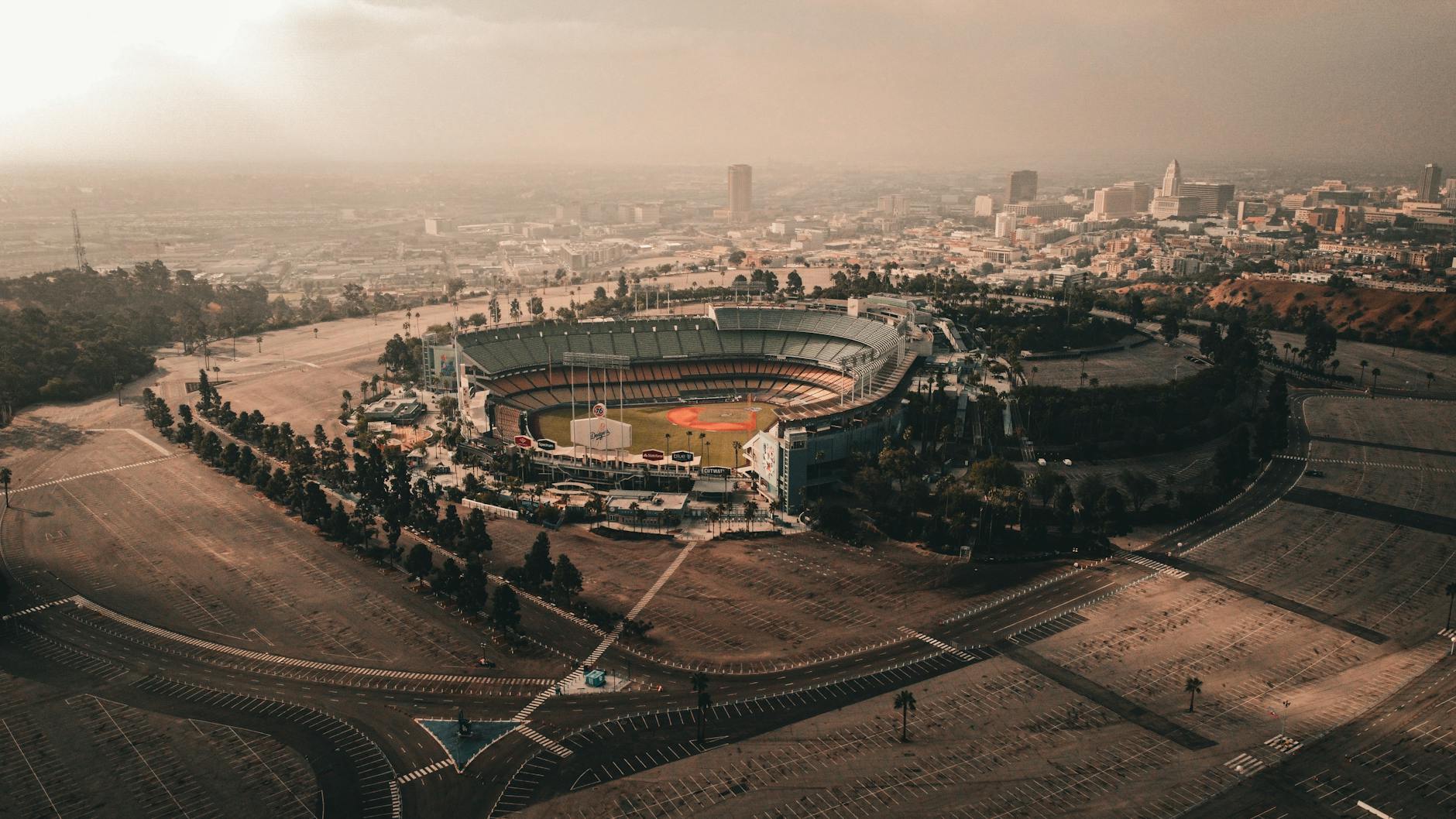
After a year of increased attendance, television ratings and global visibility, a lockout costing a significant amount of the 2027 MLB season would be devastating to the game of baseball.
“The Dodgers are ruining baseball.”
It’s been a common sentiment around MLB fans ever since the 2023-24 offseason, when the Los Angeles Dodgers inked both Shohei Ohtani and Yoshinobu Yamamoto to massive contracts, the former of which including a titanic portion of deferred money.
Since those signings, the Dodgers are 2-for-2 in the World Series, dispatching the New York Yankees in just five games in 2024 before outlasting the Toronto Blue Jays in a seven-game classic this season.
With just one year remaining on the current Collective Bargaining Agreement between MLB and the MLB Players’ Association, the sentiment that the Dodgers are ruining baseball is about to take center-stage in what will likely be the sport’s biggest labor dispute since the 1994-95 players’ strike.
At the center of the labor dispute will likely be the same issue that spearheaded the players’ strike over 30 years ago – owners pushing for a salary cap while players remain uniformly opposed.
With MLB remaining the lone league of the four major North American professional sports leagues to not have a salary cap, instead offering separate tiers of luxury taxes for high-spending teams, many fans have also demonstrated support for a salary cap while citing the Dodgers’ dynasty as proof that the sport is losing its competitive nature.
That, of course, would have to disregard the fact that the Dodgers are the first MLB team to repeat in 25 years – meanwhile the Florida Panthers just this year repeated as Stanley Cup champions, the Kansas City Chiefs had just won two Super Bowls in a row in 2022/2023 and the Golden State Warriors repeated as NBA champions less than a decade ago, winning three titles in four years from 2015 to 2018.
Despite the apparent disparity between the haves and have-nots in baseball, it remains the toughest sport to bounce back and go all the way in just a year after doing it – and the parity expands beyond just championships as well.
Though we’re only six seasons deep into the 2020’s as a decade, only four of MLB’s 30 teams have not made the playoffs yet this decade (Los Angeles Angels, Pittsburgh Pirates, Colorado Rockies, Washington Nationals).
Furthermore, for a sport that is supposedly “in ruin,” how could there possibly be so much positive momentum for the game right now?
After sustaining the lowest-ever ratings for the World Series in 2023 in a nightmare matchup for big markets between the Texas Rangers and Arizona Diamondbacks, the league has decisively bounced back the past two years.
The 2024 World Series between the Dodgers and Yankees saw the highest average viewership since the Astros-Dodgers matchup of 2017, with the 2025 World Series outperforming every other Fall Classic of the decade despite only featuring one American team.
Although average ratings were a bit higher for the marquee Los Angeles-New York matchup of 2024, this year’s classic Game 7 saw the highest ratings for any baseball game since Game 7 of the 2017 World Series, with preliminary data showing the game averaging just under 26 million viewers.
It’s also fair to believe that whatever the U.S. networks may have lost in television ratings due to the Blue Jays’ appearance in the World Series was likely more than made up for via the league’s exposure across Canada, with the entire country having rallied around the Jays for the duration of the playoff run.
Beyond creating scores of new fans across all parts of Canada, it also adds steam to potential expansion campaigns in both Montreal and Vancouver, the former of whom still yearn for the Montreal Expos, who played in the city from 1969 to 2004.
The improvement goes well beyond the television screen, with 17 of the league’s 30 teams also reporting year-over-year increases in attendance. Two of the teams that did not show improvements in total attendance, the Athletics and Tampa Bay Rays, played their home games at minor league stadiums.
There’s also no reason to believe this momentum will slow before the expiration of the CBA – after the 2023 World Baseball Classic was a rousing success that featured the game’s marquee American players for the first time, the star-studded event will return this spring for its sixth iteration.
While there will (and certainly should be) plenty of scrutiny and controversy surrounding Israel’s participation in the tournament amid the ongoing genocide being carried out by the apartheid state in the Gaza Strip, the event should still figure to be a slam dunk for MLB and baseball as a whole and a perfect segue into the 2026 season.
With both a Blue Jays World Series run and World Baseball Classic, the sport and league have been given a level of global exposure previously unforeseen. Lockout or not, that exposure is expected to persist with the return of baseball to the 2028 Summer Olympics in Los Angeles.
So how can this all be avoided when the two sides remain so far apart?
Salary floor, not salary cap
A novice fan would likely look at the Dodgers’ success of this decade along with big-market teams routinely signing the biggest names as evidence that the prominent teams simply hold too much sway and power over which way the league goes.
Yet it surely isn’t as simple as that – the Dodgers are far from the only team that spends a ton of money. While Los Angeles did sport MLB’s highest payroll in 2025, they were only marginally above the New York Mets, who finished the season with 83 wins and missed the postseason entirely.
Rounding out the top five were the Philadelphia Phillies, New York Yankees and Chicago Cubs, three teams that all fell short in the League Division Series this year. While the Blue Jays are no team to sneeze at financially with the game’s seventh-largest payroll, payroll doesn’t exactly equal success.
Take it from the Cleveland Guardians, who feverishly rallied in September to snatch the AL Central crown from the Detroit Tigers with a total payroll that’s 3.5x SMALLER than that of the Dodgers, ranking 26th in all of baseball.
The Milwaukee Brewers also excelled with frugality this year, utilizing an incredible core of homegrown young talent on both sides of the ball en route to a 97-win season, tied for the most in all of baseball. This was accomplished with the 18th-highest payroll in the game.
Flatly put, spending doesn’t equal success in baseball, no matter how much the Dodgers make it appear so – especially because the true reason for the Dodgers’ success lies in their player development, scouting and farm system, which allow the team to sustain an essentially unlimited amount of injuries each year.
Even after winning half of the World Series titles this decade, the Dodgers still have the best farm system in all of baseball. The Dodgers are simply what happens when expansive financial resources are combined with elite player development, whereas most teams have to figure one of those things out and hope for the best.
The gap between the haves and have-nots is made the largest by the teams that simply refuse to spend money – if anyone is ruining the sport, it is greedy billionaire owners who refuse to invest in their teams to provide fans and the city they call home with something fun to experience each summer.
It’s hard to find a better example of this than the absolute joke of an organization that is the Chicago White Sox, owned by one of the worst owners in professional sports history in Jerry Reinsdorf.
While the White Sox have always been a clear second-fiddle to the Cubs in Chicago, they are still a team that plays in the country’s third-largest market with a dedicated fanbase. Attendance may not reflect it, but as a Chicago-area native who grew up primarily around White Sox fans, there are plenty of committed fans who are yearning for something to cheer about.
Despite technically being a big-market team, the White Sox have historically refused to spend on free agents, with the five-year, $75 million deal Andrew Benintendi signed ahead of the 2023 season serving as the largest contract in franchise history. The only other team that has never spent at least $100 million on a contract is the Athletics, a franchise whose ownership famously never spent despite routinely fielding competitive teams before their eventual much-maligned exit from Oakland.
With that said, why are fans expressing anger at the Dodgers and other big-market teams for shelling out money for competitive players when the greedy ownership of their own teams is the primary reason other clubs can’t get a step on teams like the Dodgers?
A salary cap may stop the Dodgers from hemorrhaging every big-market name each offseason, but it certainly won’t make the owner of your favorite team give a fuck. A focus during this upcoming labor dispute must center around the implementation of a salary floor, serving as a way to prohibit the greediest owners of the sport from fielding minor league teams while pocketing all the cash.
When considering the total allocations of each team’s payroll, the Dodgers led all of baseball with just over $350 million in 2025 – while five teams didn’t even crack $100 million. The Miami Marlins, who remarkably finished the season with a decent 79-83 record, had under $68 million on the books in 2025.
A sport is simply not sustainable when the highest payroll is over five times larger than the smallest payroll in the league, and capping the spending of the few teams that actually demonstrate they care about putting a presentable product on the field is deflecting blame away from the true culprit – greed amongst ownership.
While this year’s heart-stopping seven-game World Series is proof that parity withstands just about everything in baseball, it’s hard not to wonder how enjoyable the sport and league would be if a small-market team’s only chance at success wasn’t hitting the lottery on draft picks and international free agents.
In a world where teams like the Pirates, Athletics, Rays and Marlins are forced to spend money on real major-league players each season, it’s easy to see how both fan interest and competitiveness would increase. Implement a salary cap, and the owners of most franchises will continue laughing their way to the bank while they keep cutting corners when it comes to players and the fan experience.
This coming year will likely test the forces of greed among many owners, as attendance only figures to improve while the game receives another global spotlight ahead of the season with the 2026 World Baseball Classic. With another season on the way that fans in all corners of the globe will be heavily anticipating, will the insistence on a salary cap be enough to throw what could be an entire season away amid the game’s most significant growth in decades?
If the answer is yes, there’s no telling what baseball will look like on the other side.
Leave a Reply