While music, film and television have long been afforded legitimacy and respect as a form of art, video games do not necessarily hold the same cultural reputation.
It feels like a universal experience among adults reminiscing on their childhoods to look back on the media they enjoyed as a childhood – the music, movies and television shows consumed as a kid have been building blocks of positive memories for what has now been generations of people.
While looking back on the video games I played as a child (and still play today for that matter) mean just as much, if not more to me than the movies and music I watched and listened to, it’s clear that my experience is not uncommon, but also far from universal.
In the 40 years since the release of Super Mario Bros. on the NES catapulted video gaming from a night out at the arcade to a leisure activity inside the home, games have escalated from a niche audience tilted towards children to a massive media form, with video games now a ubiquitous part of navigating a digital space.
With that said, they remain echelons away from the universality of television, music and movies, art forms that just about everyone consumes to some degree – it’s just a matter of what shows, movies and artists they prefer within those mediums.
“Do you play video games?” holds the same weight as “What kind of music do you listen to?” when conversing with someone you don’t know well – it’s expected that there’s a solid chance the person you’re talking to just doesn’t play video games, at least in any meaningful or comparable way to consumption of other media forms.
There’s a laundry list of reasons for this enduring divide – the price of video game consoles and video games itself serve as a barrier to many, especially for those wanting to keep up with new releases. Despite massive strides in recent years, the gaming world remains predominantly male, a phenomenon undoubtedly aided by the perception that gaming as a child is an inherently masculine activity.
Despite these differences in how much video games mean to different people, I’m perhaps unsurprisingly of the opinion that video games are an art form, a breathing, interactive one that has evolved more often than we can often realize.
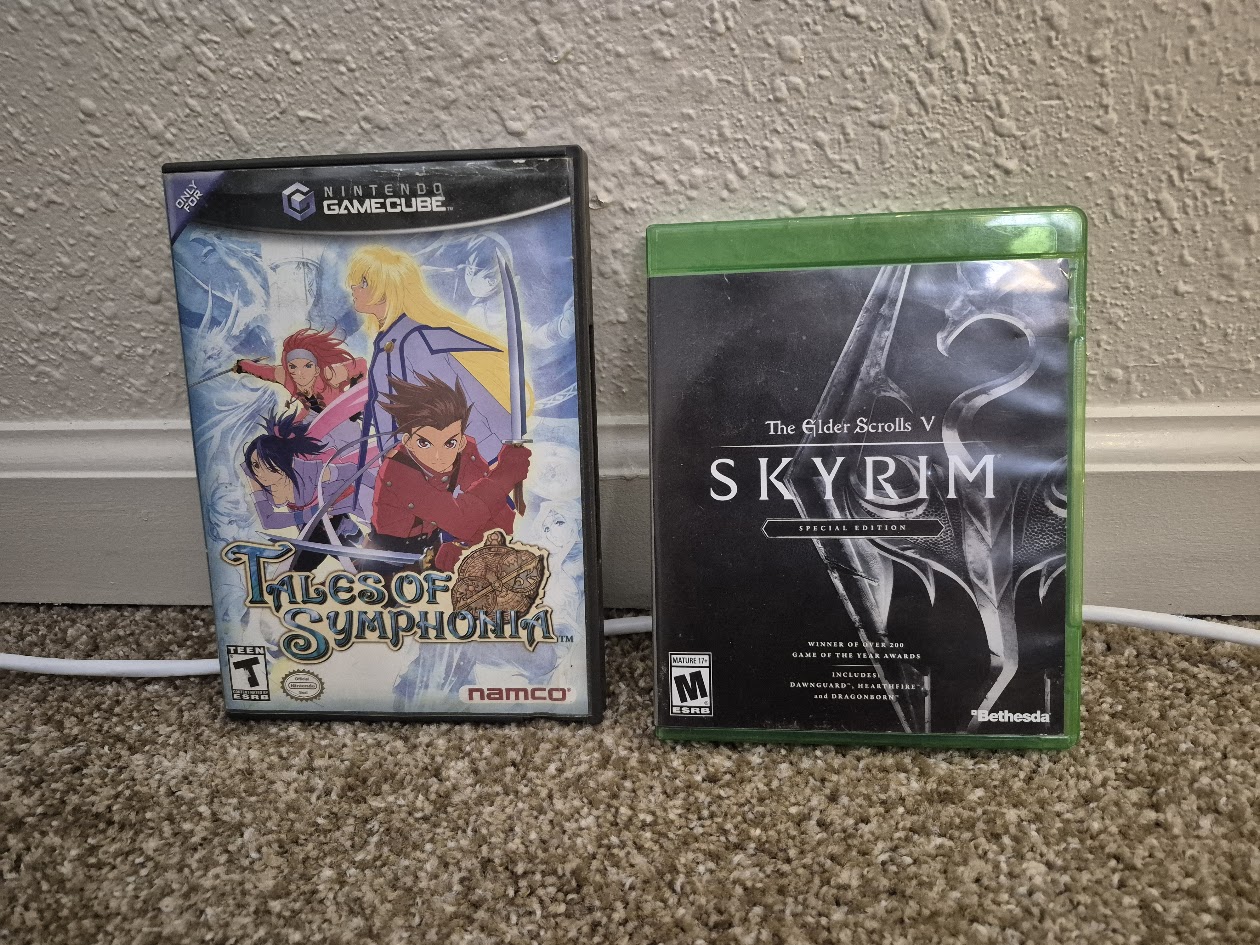
With over 450 physical video games in our collection, I want to take a look at four titles I’m greatly familiar with that I believe best exemplify the medium as an art form. These are games that I both love personally and have noticeable artistic contributions that help lift video games’ standing among media.
1. Super Mario Bros. 3 (NES)
Already my second mention of this game on here and perhaps my favorite game of all time, there’s no debating that Super Mario Bros. 3 was a revolutionary title in elevating the cultural standing of video games.
Though there’s plenty to love from an artistic standpoint here, namely the game taking on the concept of a stage play while spicing up the damsel-in-distress plot a little, the game’s greatest artistic contributions come through its introduction to overworlds.
In what has since become a standard feature of games across the genre spectrum, Super Mario Bros. 3 offered eight overworld maps that a player would navigate to reach all of the individual levels. This concept led to a flood of creativity, exemplified in the game through the uniquely themed overworlds a player encounters throughout the game.
The overworld themes further matched to the levels within each world, maintaining some common characteristics while mainly taking on the form of the world it belongs to, giving the video game more of a true journeylike feel than anything that had been released up until that point.
While Super Mario Bros. 3 remains a fairly simple game in retrospect, its contributions to the advancement of creativity in video games is undeniable, supplying plenty of building blocks for future Super Mario titles and games across the industry.
2. Grand Theft Auto III (PS2, XBOX, PC)
Released just weeks after the September 11 attacks, Grand Theft Auto III was immediately seen as a watershed release in video game history.
After two fifth-generation titles that didn’t particularly stand out in the crowded PlayStation rivalry, Grand Theft Auto III offered players one of the first true open-world gaming environments, with all of Liberty City (based on New York City) available to explore.
Beyond the game’s mind-boggling scope and detail, it also serves as a title that has helped define video games as a deeply interactive art form – the player is in control of where they explore and when, as well as how often, if at all, they want to follow the main plot of the game.
While the game’s primary plot chronicles the life of Liberty City crime from the perspective of a silent mercenary of the streets in the game’s protagonist, Claude, there’s plenty to do for those that want a detour.
Players can steal a taxi or ambulance and try their hand at a different line of work – hidden packages throughout the game’s world can be found and help Claude gain more weapons and armor – and what would a big city experience be like if you couldn’t take the train?
There’s no doubt that the Grand Theft Auto series has outdone itself in the years since as each game in the series offers exponentially more content, a characteristic that is certainly expected to persist with the upcoming release of Grand Theft Auto VI. Yet with open-world games remaining a standard of the modern day AAA game, it’s hard to not look at GTA III as the start to it all.
3. Tales of Symphonia (GC, PC)
While I think you could pick a number of prominent JRPGs to take this spot, I think Tales of Symphonia serves as a solid and simple example of what the genre and games within it have artistically contributed.
Released in Japan in 2003 and in North America the following year, Tales of Symphonia poses a fairly standard JRPG plot, with the player navigating a party ranging from two-to-eight members on a journey for world regeneration.
I admit I have a conscious bias towards this game, and likely wouldn’t hold it in quite as high regard as I do had I not played it shortly after its release as a young child. Yet even considering this, Tales of Symphonia certainly punched above its weight for a console severely lacking in the genre.
In addition to massive interactive overworlds and a plot that showcases character development across all party members throughout the course of the game, the game’s greatest artistic contribution is perhaps how it does that.
From essentially the very beginning of the game, players are typically pitted with two responses for Lloyd, the character controlled by the player, when interacting with other characters. How a player chooses to respond goes on to impact Lloyd’s relationship with his fellow party members throughout the game, culminating in a major, plot-altering moment towards the end of the story.
While the perception of video games to many may be a group of college-aged men wearing headsets playing Call of Duty, there are countless games that are similar to Tales of Symphonia in many regards – games that give you a set of characters and a storyline to follow, much in the same way a movie or TV show does.
4. The Elder Scrolls V: Skyrim (It’s come out on basically everything)
One of the most highly anticipated video games of all time, it’s easier to say 14 years later than it was on the release date that it was truly worth the hype and the wait.
It’s truly impossible to talk about all that Skyrim has to offer in a few paragraphs, but it’s unbelievably expansive world and scope make it a game that you will truly never run out of things to do in.
While a legendary open-world game like GTA III offered players plenty of freedom of movement, Skyrim began a trend still seen today of open-world games that are able to entirely reject linearity, offering players an immense degree of freedom.
And that’s perhaps what makes the game so artistic – it takes into account just about everything that you could imagine doing, and gives players quests and other paths to make it make sense. After completing the first quest of the game, players are free to roam and do whatever they want, almost a video game equivalent of an 18-year-old being dropped off at college for the first time.
While video games as an art form typically have to be approached by designing certain games for certain people, Skyrim is a rare case where there’s something for everyone just within the confines of the game – with years worth of user-created mods only expanding the limitless possibilities presented.
Gamers of all ages and genres remain waiting for the day The Elder Scrolls VI is released – yet it’s a fair bet that none of them are tired of Skyrim yet.
Leave a Reply