After previously looking at my favorite restraints used on coasters, I’ll now dive into a few that legitimately detract from the ride experience.
When riding a roller coaster, there are a litany of factors that play into how much myself or any other rider enjoys a given attraction.
Some of these characteristics are quite obvious, such as the elements on the coaster itself or the row and seat that you choose or are assigned to, while weather, ride operations and locker policies are all entirely out of the control of guests.
Although I’m sure most members of the general public that attend amusement parks hardly ever think about it, coaster enthusiasts spend a good deal of time paying attention to restraints, a necessary feature on roller coasters that greatly impacts how much a given rider enjoys the ride.
With countless coaster models and scores of different manufacturers, you will likely encounter numerous unique restraints during a visit to a major amusement park, varying greatly depending on the intensity of the ride, the manufacturer and the elements the coaster subjects riders to.
Still, there are plenty of commonalities that can be noticed among similar coasters and models that are found at many major theme parks. For example, many full-size wooden coasters will include a seatbelt and individual ratcheting lap bar today, whereas the hyper and gigacoasters produced by Bolliger & Mabillard all include a bulky clamshell-shaped lap bar.
Restraints have undoubtedly come a long way, dating back to the single-position lap bars you may still find on old Arrow mine trains and classic wooden coasters like Phoenix at Knoebels. Similarly, early inverting coasters also often contain outdated restraints – in this case with hefty over-the-shoulder restraints covered in thick, hard padding.
Today, most standard inverting coasters simply feature a lap bar with an additional leg restraint, while models like the dive and wing coaster from B&M now include an over-the-shoulder vest restraint, which was designed to reduce the head-banging issue that many older restraints of its kind would present.
To me, a good restraint is one that strikes the perfect balance between safety and comfort, making riders feel secure while also allowing guests to feel the full extent of the coaster’s elements. It’s why the B&M clamshell restraints are my absolute favorite – giving riders a tight, secure fit while also giving plenty of room on the interior of the restraint for guests to feel the classic airtime moments that B&M hypers are known for.
On the other hand, bad restraints are those that actively detract from the ride experience, making guests feel constricted and/or uncomfortable while also taking away from the thrill of the coaster’s elements.
Although I never feel unsafe with these restraints, I, like most others, personally prefer a head-banging free ride that doesn’t turn exciting moments into painful ones.
Below is a look at my three least favorite roller coaster restraints, listed in no particular order:
1. Vekoma over-the-shoulder restraints
Despite racking up 102 credits, I still have somehow never been on a traditional Vekoma suspended looping coaster, derisively nicknamed “hang-and-bangs” by enthusiasts due to their rough nature and cumbersome restraints.
While I’ve still yet to ride an SLC, I did get the full hang-and-bang experience in June 2024 at Kings Island thanks to Invertigo, an inverted version of their Boomerang model that can be found at dozens of parks across the world.
These restraints are absolutely massive, featuring two grab bars at the base of the harness while also including padding near the headrest – which undoubtedly only makes the headbanging worse on these rides.
In addition to the almost-guaranteed pinballing of your head, the restraints themselves are generally uncomfortable, with their large, curved nature being more constricted than other similar restraints.
I didn’t ever think a roller coaster restraint would remind me of the original Duke Xbox controller, but this does – large, uncomfortable and aesthetically abrasive, these restraints are a pain in the ass.
Thankfully, some Vekoma SLCs have received new trains and vest restraints – but you’ll still encounter these behemoths at several parks.
2. Premier Rides comfort collars
Don’t be fooled by its name, there is absolutely nothing comfortable about these flimsy over-the-shoulder restraints that can be found on some inverting Premier Rides coasters.
My lone experience with these restraints came on West Coast Racers, a personal top-20 ride for me that serves as an excellent supporting coaster in the stacked lineup of Six Flags Magic Mountain. Although the ride itself is absolutely fantastic and a must-do if you’re visiting, don’t be expecting the most comfortable experience.
These restraints feature a basic lap bar with the thin collar-like over-the-shoulder restraint being fastened to the lap bar. The “comfort collars” are extremely light and flappy, making them both a pain in the ass to fasten and unlock, slowing down ride operations on a coaster that already has abysmal capacity.
Beyond them being a pain to put on, they’re also pretty uncomfortable, putting an undue amount of stress on your shoulders and lower neck during the tight turns on a ride that would have been completely fine with a lap bar.
These restraints are even more puzzling as another Premier Rides launch coaster in the park, Full Throttle, forgoes the comfort collars in favor of a U-shaped lap bar with leg restraints. While I’d be lying if I said that was my favorite restraint ever, it is significantly more comfortable and practical than the discomfort collars used on West Coast Racers and some other Premier attractions.
3. Arrow Dynamics over-the-shoulder restraints
Similar to the complains with the Vekoma SLC harnesses, these over-the-shoulder restraints are hefty and uncomfortable and accompany rides that are also fairly rough to begin with, requiring a good deal of defensive riding.
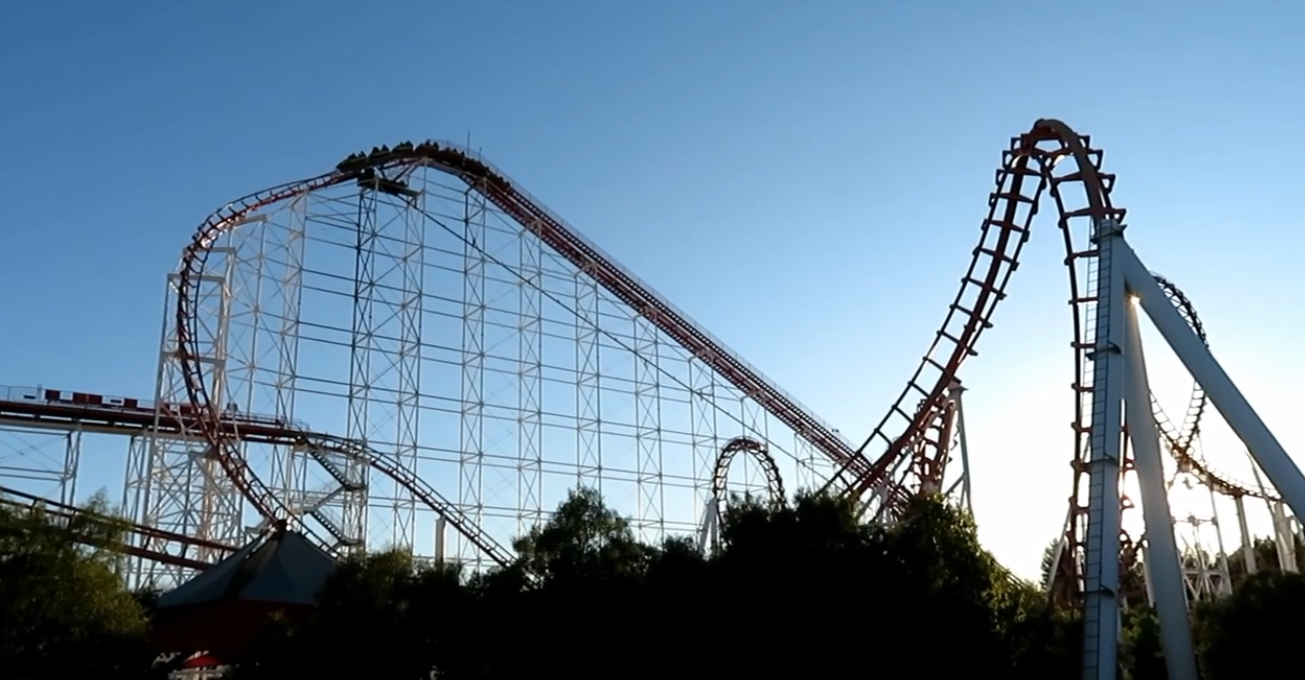
While Arrow’s restraints on smaller loopers are a bit less bulky and don’t pose as much of a problem when it comes to headbanging, the harnesses used on a mega-looper like Viper at Six Flags Magic Mountain add another degree of discomfort to what can be a challenging ride experience for many.
I will say that I absolutely love Viper – I think it’s a criminally underrated coaster and represents an era from yesteryear in coaster history, remaining the only coaster of its kind in the U.S. Still, the general public isn’t expecting to get their ass kicked on a ride, and there’s a good chance you’ll get your ass kicked on Viper if you don’t know what’s coming.
With the coaster featuring a slew of sharp, abrupt turns and rather jolty inversions, it takes a conceited effort to avoid headbanging on this one – often taking a delicate balance of keeping your head back for most of the ride while tilting it forward during corkscrews and the batwing to avoid bumping your head on the harness.
I’d love to see this ride get vest restraints to help improve what is such a great, classic coaster – but I think it’s much more likely that the attraction would just get removed entirely, especially considering the permanent closure of X2, its next-door neighbor.
Leave a Reply