As many teams transitioned away from multi-purpose stadiums to baseball-specific venues in the past several decades, here’s a look back at the 15 now-defunct ballparks that were in action since 2000.
For any dedicated baseball fans that love traveling across the country to visit new ballparks, it certainly isn’t news that the vast majority of MLB stadiums are really, really nice.
With each ballpark containing its own unique characteristics and idiosyncracies while teams find their own way to integrate the stadium into its surrounding area, a baseball game at any of the league’s 30 different ballparks is guaranteed to be a novel experience.
Although many fans are eager to point out the domed Tropicana Field as the worst stadium in baseball (I still haven’t been, so I have no comment), it should be worth noting that not all that long ago, MLB didn’t have anywhere near the depth it currently has when it comes to quality ballparks.
Serving as a relic of a past era, many teams previously played in large, multi-purpose stadiums that were designed to host both NFL and MLB teams. These stadiums were nicknamed “cookie cutters” for their circular design and similar characteristics, and were often located further away from city centers and surrounded by expansive parking lots.
Beginning in the 1990’s, these stadiums began to fall out of favor with both fans and teams themselves, who were consistently staring down expensive maintenance costs, scores of empty seats in areas extremely far away from the action and a lack of distinguishing features that many baseball-specific stadiums prided themselves on.
Beginning with the opening of Oriole Park at Camden Yards in 1992, teams that called multi-purpose stadiums home began to abandon ship in favor of new, baseball-specific stadiums that are often located within the downtown areas of cities.
Between 1992 and 2024, every team that had previously called a cookie-cutter stadium home had moved on to a different park, with the Athletics being the final team to both play in a multi-purpose stadium and to share a stadium with an NFL team – as they shared the Oakland Coliseum with the then-Oakland Raiders until 2019.
Overall, there have been 15 ballparks that were used on a permanent basis since 2000 that are no longer in action – many of which were multi-purpose stadiums:
- Yankee Stadium I – New York Yankees
- Hubert H. Humphrey Metrodome – Minnesota Twins
- Rangers Ballpark in Arlington – Texas Rangers
- Oakland Coliseum – Oakland Athletics
- Turner Field – Atlanta Braves
- Veterans Stadium – Philadelphia Phillies
- Pro Player Stadium – Florida Marlins
- RFK Stadium – Washington Nationals
- Shea Stadium – New York Mets
- County Stadium – Milwaukee Brewers
- Three Rivers Stadium – Pittsburgh Pirates
- Busch Memorial Stadium – St. Louis Cardinals
- Riverfront Stadium – Cincinnati Reds
- San Diego Stadium – San Diego Padres
- Olympic Stadium – Montreal Expos
Just missing the cut on this list was Candlestick Park and Tiger Stadium, both of which went out of use for baseball following the 1999 season by the San Francisco Giants and Detroit Tigers, respectively.
I have only personally visited two of these 15 ballparks, meaning that these rankings are predominantly derived from photos, videos, anecdotes and my personal knowledge on the ballpark and its history. Therefore, this isn’t a perfect list by any means, and I would love to hear more from fans who have visited more of these stadiums.
15. RFK Stadium – Washington, D.C.
Washington Redskins: 1961-1996
Washington Senators: 1962-1971
Washington Nationals: 2005-2007
A monstrous eyesore that served as the first of its kind as well as one of the last of its kind, RFK Stadium was a massive multi-purpose stadium in the southeast quadrant of Washington, D.C., serving two tenures as a home ballpark in MLB.
After first serving as the home of the Washington Senators from 1962-1971 (who went on to become the Texas Rangers), RFK Stadium saw a brief period of revival in the mid-2000’s after the Montreal Expos relocated to D.C. and became the Nationals.
This three-season tenure showed just how much RFK Stadium was out-of-date, especially as most contemporaries around the league had since moved on to baseball-specific stadiums.
While all cookie cutter stadiums look lifeless to a degree, RFK Stadium took that to another level – with the vast majority of its seats being ridiculously far away from the field. Nowhere is this more obvious than the outfield seating, none of which is in realistic home run territory.
Coupled with a team that wasn’t very competitive and smaller crowds, RFK Stadium lives on as an afterthought after its three-year stint as home of the Nationals – with most fans remembering the park as the home stadium of Alfonso Soriano in 2006 during his 40-40 campaign.
14. Three Rivers Stadium – Pittsburgh, Pa.
Pittsburgh Steelers, Pittsburgh Pirates (1970-2000)
A multi-purpose stadium that served as the home of both the Steelers and the Pirates for its entire lifespan, Three Rivers Stadium was one of the more cavernous cookie cutters of its era – which is certainly saying something.
While it’s rather difficult to rank the different multi-purpose stadiums, Three Rivers comes up on the back end due to its seemingly empty atmosphere with very little inside connecting the stadium to Pittsburgh – something the Pirates improved vastly on with their move to PNC Park.
Similar to other cookie cutters on this list, Three Rivers Stadium was very large and oftentimes empty, accompanied by a fledgling franchise and seating that is mostly quite far away from game action.
Of course, the Pirates arguably went from worst-to-first after moving into PNC Park for the 2001 season – the stadium that is now the highest on my current bucket list.
13. Veterans Stadium – Philadelphia, Pa.
Philadelphia Eagles: 1971-2002
Philadelphia Phillies: 1971-2003
Located across the state of Pennsylvania was another longtime cookie cutter stadium, with Veterans Stadium serving as the home of both the Eagles and the Phillies for over three decades.
Similar to other stadiums of its kind, Veterans Stadium was extremely large and circular, with much of the ballpark’s seating coming in the cavernous upper deck, similarly far away from the action as was the case in other multi-purpose stadiums.
Also similar to the two aforementioned ballparks, outfield seating was a noticeable drawback at Veterans Stadium, with fans mostly out of the reach of home run balls across the length of the outfield – with only seats along the first- and third-base lines truly seeming to be close to game action.
While the stadium itself was largely forgettable for fans and players alike, the playing surface unfortunately was not. According to a 2023 report from the Philadelphia Inquirer, AstroTurf used at the stadium during the 1970’s and 1980’s was strongly linked to PFAS, also known as forever chemicals.
In the years since the stadium’s closure, six former Phillies that played at Veterans Stadium have since died of glioblastoma, the most aggressive and common form of brain cancer.
12. Olympic Stadium – Montreal, QC
Montreal Expos: 1977-2004
The primary home of the Montreal Expos for much of the team’s history in Canada, Olympic Stadium initially opened in 1976 as the main venue for the 1976 Summer Olympics, later taking over as the full-time home of the Expos the following season.
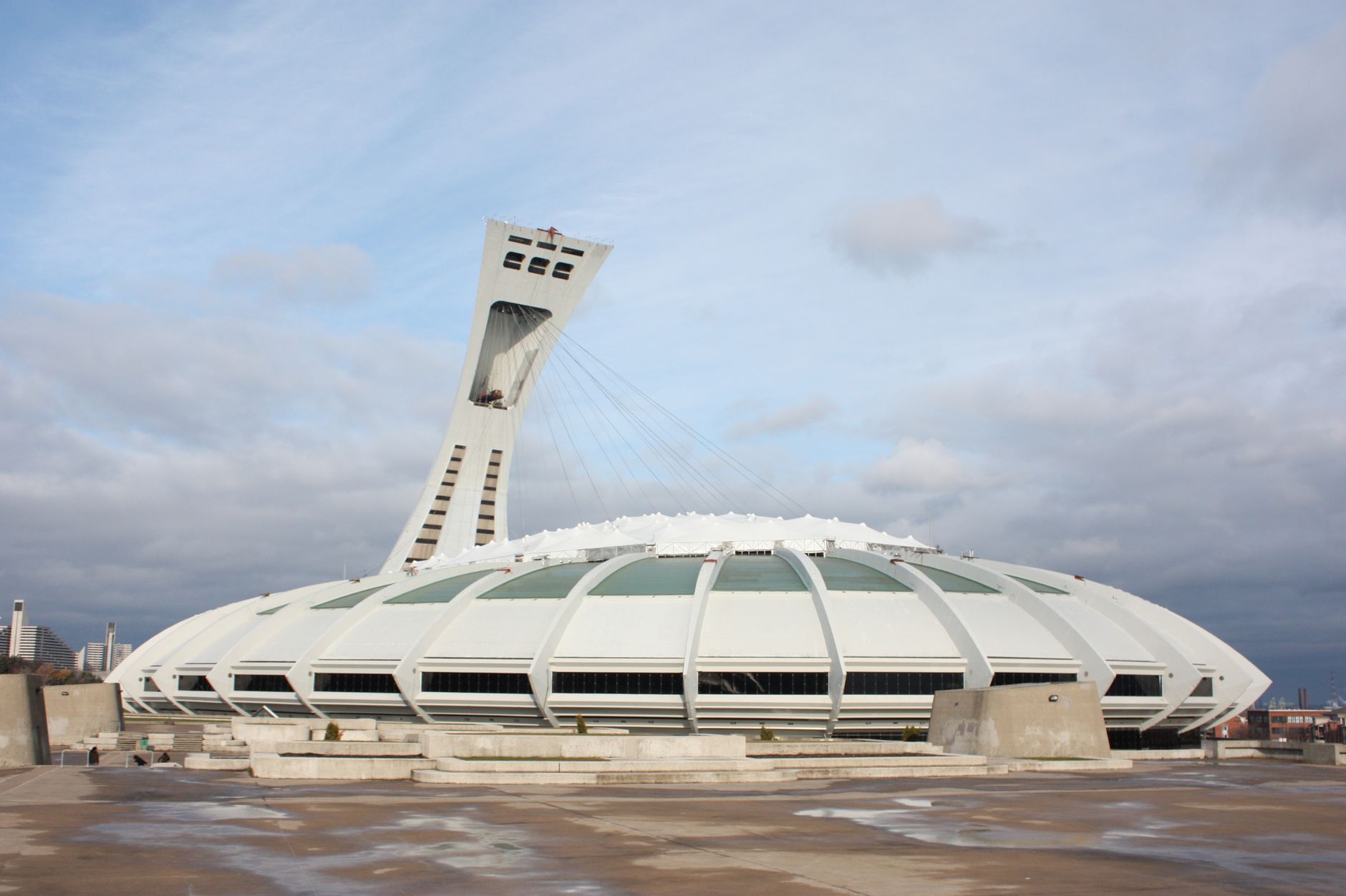
A massive, largely empty and confusing structure, Olympic Stadium was initially designed with a retractable roof that was meant to be opened and closed with cables attached to a large tower that skies over the top of the stadium.
This feature was ultimately never in use for MLB games, with the stadium’s configuration and seating layout turning out to be a consistent drawback for the ballpark. While most seats were far away from the playing surface in a matter that was similar to other multi-purpose stadiums, seats at Olympic Stadium were even further back than fellow cookie cutters due to the larger playing surface required in Canadian football.
This made most games at Olympic Stadium feel incredibly empty and dead, with countless empty seats and poor sightlines throughout.
Still, it feels like there was some element of charm to this ballpark – whether its the ties to the 1976 Summer Olympics, the atypical yellow seats that adorned the park throughout or the unique exterior that immediately set itself aside from other parks.
Olympic Stadium may very well have been a worse ballpark than the stadiums ranked below it – but it was certainly more unique.
11. Riverfront Stadium – Cincinnati, OH
Cincinnati Bengals: 1970-1999
Cincinnati Reds: 1970-2002
Yet another multi-purpose stadium in the Midwest, Riverfront Stadium served as the longtime home of the Bengals and Reds in Cincinnati, sitting near the Ohio River and the state’s boundary with Kentucky.
Perhaps a slight step above some of its cookie cutter contemporaries, Riverfront Stadium’s infield seating wasn’t quite as far away from the field as it was in other similar ballparks, at least allowing a good portion of fans to not feel as if they were miles away from the action.
Although the park still seemed like it was mostly lifeless in its original configuration, Riverfront Stadium (then Cinergy Field) received a bit of a boost at the end of its lifespan thanks to a conversion to a baseball-only format after the Bengals vacated the venue.
Because Great American Ball Park was being constructed directly next to Riverfront Stadium, many of the outfield seats were removed ahead of the 2001 season – allowing for an open view in the outfield and an atypical high center-field wall that both served as a batter’s eye and prevented easy home runs over a short fence.

Although this view wasn’t full of beauty by any means as construction equipment dominated the horizon for most games, it allowed the stadium to actually feel integrated with its surroundings for the first time – something fans at other similar venues never got to experience.
10. San Diego Stadium – San Diego, Calif.
San Diego Chargers: 1967-2016
San Diego Padres: 1969-2003
One of the cookie cutters that remained in use long after it was done for baseball, San Diego Stadium served as the home of the Padres for the first 34 years of the team’s existence – with the Friars sharing the park with the NFL’s Chargers for the entire time.
Though affected by the same drawbacks that other mutli-purpose stadiums had, San Diego Stadium did have the incredible benefit of…being in San Diego, providing picturesque mountain views to fans in the upper deck to perhaps compensate for how far they were from game action.
While some of these views were later compromised with upper deck expansion, San Diego Stadium maintained some level of a unique feeling in the park, even if that was only on virtue of its location and more unconventional exterior appearance.

The move away from San Diego Stadium was another one of the league’s most noticeable glow-ups, with the Padres moving into the widely-acclaimed Petco Park beginning in the 2004 season.
9. Pro Player Stadium – Miami Gardens, Fla.
Miami Dolphins: 1987-present
Florida Marlins: 1993-2011
Although not exactly a cookie cutter, this massive multi-purpose stadium served as the home of the Florida Marlins for the first 18 years of their franchise history before undergoing a massive renovation to improve the stadium to its current form as an NFL-specific facility.
During its baseball days, Pro Player Stadium was known for its vibrantly colored seats, brutal outdoor summer climate for baseball and seating that was mostly pretty far away from the field.
The massive capacity did allow the Marlins to pack the stadium with over 65,000 fans during the team’s pair of World Series appearances (and wins) in 1997 and 2003 – finally making use of seats that sat vacant the vast majority of the time.
While this park seemed lifeless and empty as many of its contemporaries did, there was at least an element of novelty to Pro Player Stadium – with the colors and theming throughout the park making it clear to fans that they were indeed in South Florida and nowhere else.
8. Hubert H. Humphrey Metrodome – Minneapolis, Minn.
Minnesota Vikings: 1982-2013
Minnesota Twins: 1982-2009
The longtime home of both the Vikings and Twins that served as the host of the biggest moments in Minnesota baseball history, the Metrodome was unique as both a dome and a multi-purpose stadium.
Featuring an air-supported roof that only had one other counterpart in professional sports (Pontiac Silverdome), the Metrodome looked and (must have) felt completely different from other domed stadiums at the time, with a fluffy white ceiling above serving as an interesting sight for fans and a flyball nightmare for players.
Although seating is typically an issue in multi-purpose stadiums, the Metrodome was among the better parks in this regard, with left field outfield seating on top of home run territory with most infield seats lying relatively close to game action.
The idiosyncracies within the park were plentiful, ranging from the hockey-like plexiglas that prevented easy home runs in left field earlier in the stadium’s lifespan to the towering folded-up football seats in right field, often leaving fans and visiting players confused as to what exactly constituted a home run.
Furthermore, from both hearing personal anecdotes and watching competitive Twins teams on TV at this stadium as a child, I have no doubt that this place could get fucking loud – a stark difference to the vast majority of multi-purpose stadiums that feel as if they vacuum energy out of the venue.
The Twins fielded two championship teams and several competitive campaigns during their time at the dome, making history in the building that fans will affectionately remember forever – even if they all like Target Field a lot more today.
Leave a Reply