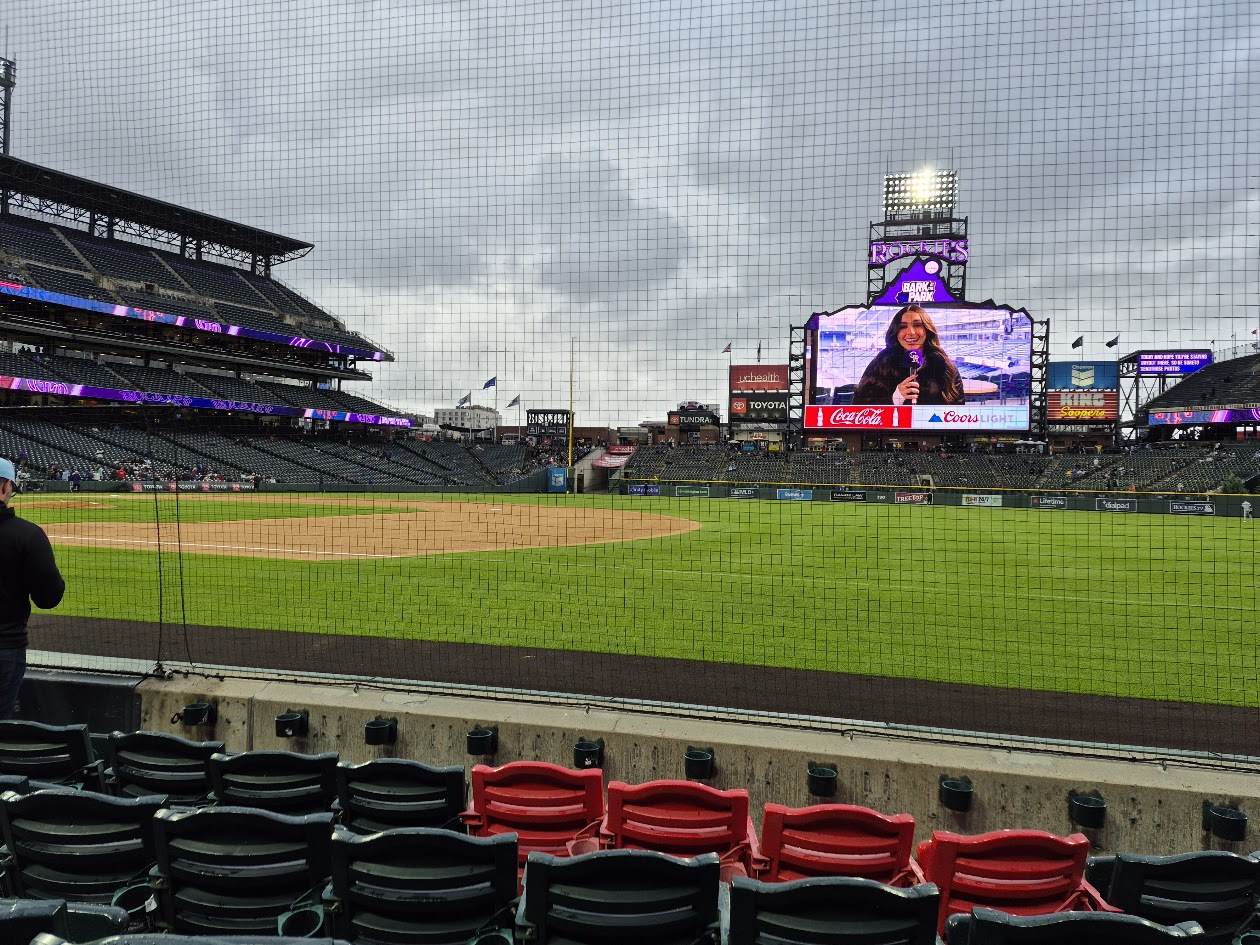
Although not viewed as a prime achievement for a hitter as it once was, a batting title remains a lofty accolade with many of the sport’s greatest hitters of all-time accomplishing the feat.
It’s no secret to either the casual or diehard baseball fan that batting average simply doesn’t matter to teams, players, fans and media members in the way that it once did.
For generations of the sport’s history leading all the way up into my childhood, a hitter’s batting average was the predominant way he would be judged. Sure, no team would ever pass up on lofty power production, but across the board, a full-time player hitting .250 or above was probably secure in his roster spot.
Despite the average league batting average tanking from .266 in 2004 to just .244 in 2026, the numbers behind a player’s batting average matter much more – with front offices finally realizing that a player like Neifi Pérez was not at all offensively valuable despite having a batting average well above .200 at all times.
While the increased usage of sabermetrics certainly impacted how hitters play the game, the answer to the decreased reliance on batting average is a good deal simpler than the convoluted advanced metrics that throw off the casual fan.
Despite being meme’d into oblivion in the 2011 film Moneyball, there simply is a lot of truth to the change in approach for front offices. A player’s ability to simply get on base began to be viewed as more important than their batting average alone, with an increased emphasis on patience at the plate and knowledge of the strike zone.
This undoubtedly led to the widespread adoption of OPS, or on-base percentage plus slugging, as the predominant way to measure a hitter’s productivity. Ignoring their batting average alone, OPS is a basic statistic that takes the more important things into account – is the player getting on-base often, and how much damage are they doing each time they get on base?
Although I certainly agree that OPS is a much more valuable tool than batting average when it comes to evaluating a hitter’s performance, I remain a sucker for the contact hitter who is able to post a .300 batting average.
Despite an overall decreased importance on the stat across the game, there is something to be said about the value of a player who seldom strikes out while having an unmatched penchant for contact, constantly putting the ball in play and putting pressure on the opposing team’s defense.
It’s what makes the flat-swinging Luis Arraez one of my favorite players across the league, with an aversion to strikeouts that hasn’t been seen in the big leagues since Tony Gwynn. Although Arraez’s career OPS of .781 is viewed as a bit above average, his career .318 batting average makes him the active MLB leader by a healthy margin, with the infielder carving his own path in a league full of uppercut swingers.
That kind of unique career trajectory has made Arraez a three-time batting champion before his 30th birthday, with the veteran in the mix to maybe add another one this year, with his .326 average currently nine points behind Otto Lopez of the Miami Marlins for the NL lead.
Though the accolade may not mean what it once did, here’s a look at the last time each team had a player win the batting title – an award that sees two winners each year, one for both the American League and National League. The Arizona Diamondbacks remain the only club that has never had a player take the accolade home.
*This list will not include seasons in which the winner played with more than one team.
- New York Yankees: 2025, Aaron Judge, .331
- Philadelphia Phillies: 2025, Trea Turner, .304
- Kansas City Royals: 2024, Bobby Witt Jr., .332
- Tampa Bay Rays: 2023, Yandy Díaz, .330
- Miami Marlins: 2023, Luis Arraez, .354
- Minnesota Twins: 2022, Luis Arraez, .316
- New York Mets: 2022, Jeff McNeil, .326
- Houston Astros: 2021, Yuli Gurriel, .319
- Washington Nationals: 2020, Juan Soto, .351
- Chicago White Sox: 2019, Tim Anderson, .335
- Milwaukee Brewers: 2019, Christian Yelich, .329
- Boston Red Sox: 2018, Mookie Betts, .346
- Colorado Rockies: 2017, Charlie Blackmon, .331
- Detroit Tigers: 2015, Miguel Cabrera, .338
- San Francisco Giants: 2012, Buster Posey, .336
- Texas Rangers: 2010, Josh Hamilton, .359
- Atlanta Braves: 2008, Chipper Jones, .364
- Pittsburgh Pirates: 2006, Freddy Sanchez, .344
- Chicago Cubs: 2005, Derrek Lee, .335
- Seattle Mariners: 2004, Ichiro Suzuki, .372
- St. Louis Cardinals: 2003, Albert Pujols, .359
- San Diego Padres: 1997, Tony Gwynn, .372
- Toronto Blue Jays: 1993, John Olerud, .363
- Cincinnati Reds: 1973, Pete Rose, .338
- Los Angeles Angels: 1970, Alex Johnson, .329
- Baltimore Orioles: 1966, Frank Robinson, .316
- Los Angeles Dodgers: 1963, Tommy Davis, .326
- Cleveland Guardians: 1954, Bobby Ávila, .341
- Athletics: 1952, Ferris Fain, .327
Leave a Reply