With the wheels in motion to expand the NBA to 32 teams with clubs in Las Vegas and Seattle, here’s a look at a few other cities I think could support a franchise.
Throughout the last 20 years, it’s hard to find a topic that has ebbed and flowed as much as expansion in the NBA – unless we’re talking about MLB expansion, of course.
The NBA has been set at 30 teams since the start of the 2004-05 season, when the then-Charlotte Bobcats debuted as the league’s 30th team, two seasons after the original Charlotte Hornets left town for New Orleans.
In the time since, the league has only seen a little reshuffling, beginning with the still-controversial relocation of the Seattle SuperSonics to Oklahoma City, where they became the Thunder for the 2008-09 season. Just a few seasons later at the start of the 2012-13 season, the New Jersey Nets moved across the river into the Barclays Center to become the Brooklyn Nets, bringing a new look for a team that still has yet to truly find their footing with New Yorkers.
Since then, teams have stayed put in their cities, sans a move across the bay from Oakland to San Francisco for the Golden State Warriors in 2019. Despite lengthy efforts and discussions to relocate the Sacramento Kings throughout the late 2000’s and early 2010’s, a dedicated local effort forced the sale of the franchise to a Vivek Randive-led group, leading to the construction of the Golden 1 Center, which opened in 2016.
Today, NBA Commissioner Adam Silver has stated on several occasions that he foresees the league expanding to Seattle and Las Vegas, with the league hoping to come to some sort of decision on expansion by the end of this year.
Although Seattle and Las Vegas appear as certainties for the league to expand to, there are more places to look beyond the two western cities – especially as the NBA continues to expand its global presence with reported hopes of starting an overseas franchise that would coincide with the reintroduction of commercial supersonic flights.
As basketball continues to grow in popularity both stateside and overseas, there will certainly be more opportunities to expand the league in the future – here’s where the NBA could look next:
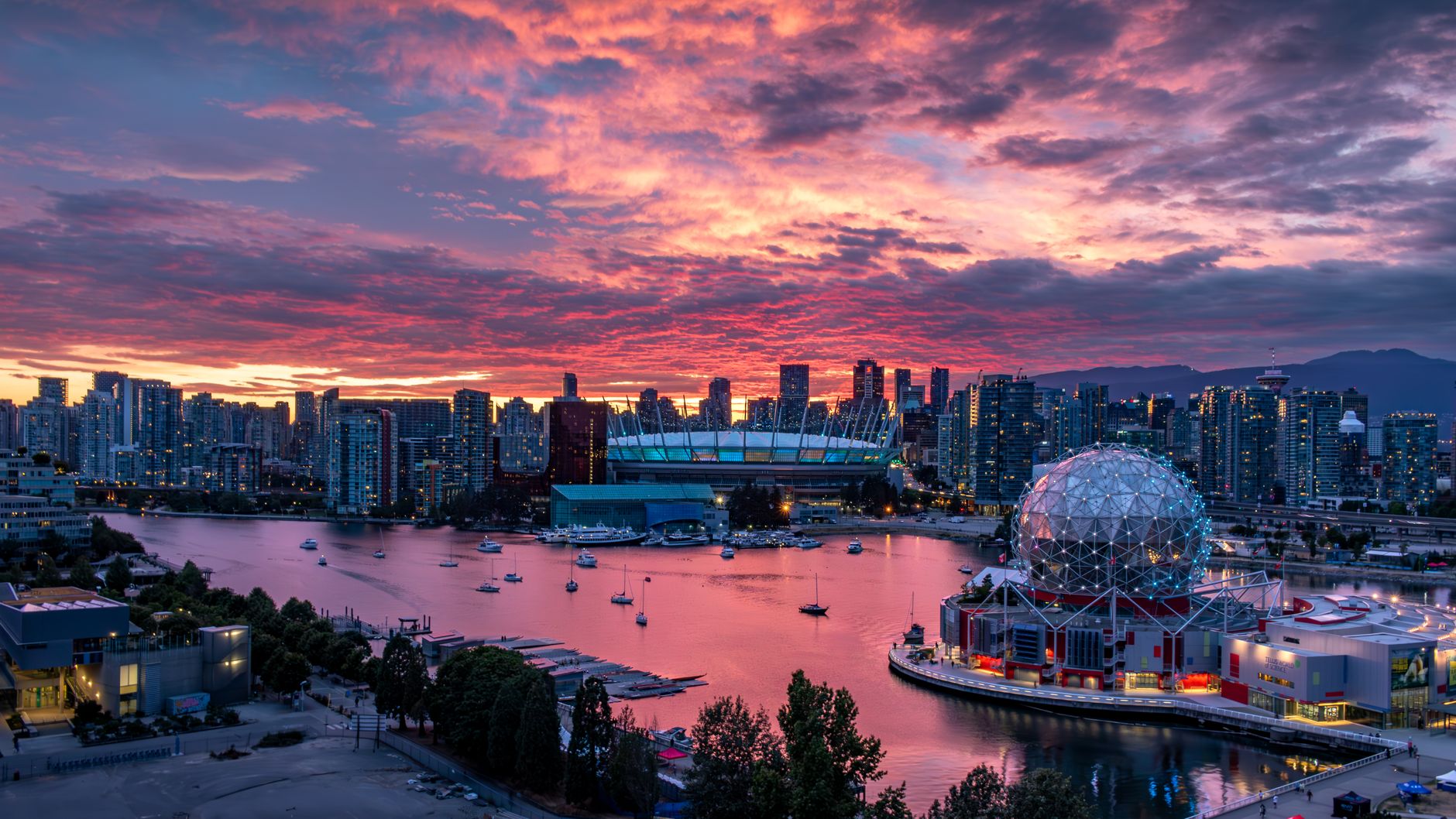
1. Vancouver, British Columbia
Perhaps the most obvious selection, Vancouver of course already had their shot with an NBA team, earning the Grizzlies in 1995 as part of the league’s maiden forray into Canada, with the Toronto Raptors added the same season as well.
Despite beloved uniforms and recognizable players such as Bryant “Big Country” Reeves, Shareef Abdur-Rahim and Mike Bibby, the Grizzlies lasted all of six seasons in Vancouver, leaving for Memphis after the 2000-01 season.
While the Raptors drafted future Hall of Famers Tracy McGrady and Vince Carter in the ’90s, the Grizzlies simply never got anything going during their time in Vancouver, topping out at 23 wins in their final season north of the border.
The writing on the wall for the Grizzlies’ relocation came in the aftermath of the 1999 NBA Draft, which saw Vancouver select Steve Francis with the second overall pick. Francis publicly declared that he would not play for the franchise, listing concerns over the distance from his home in Maryland and Canadian taxes. Francis was eventually traded to the Houston Rockets before ever suiting up for the Grizzlies, with the team leaving the city just two seasons later.
With the international growth of the game since and Vancouver’s status as a cosmopolitan metropolis with diaspora communities from around the world, basketball would have a much better opportunity to succeed in today’s Vancouver than it did a quarter-century ago.
In addition to natural rivalries with Seattle and Toronto, the team has an open opportunity to represent all of western Canada, with today’s players across the board likely to be more open to playing in Vancouver. I mean, after all, many of them seem to be okay with living in Milwaukee or Oklahoma City.
2. Kansas City, Missouri
A city that constantly comes up in NBA/NHL expansion discussions due to having an arena ready for a team to move in to, Kansas City remains largely overlooked in the winter sports, only briefly serving as the home of NHL’s Kansas City Scouts from 1974 to 1976.
While I’m not on board with the idea of Kansas City getting an NHL team, an NBA team makes plenty of sense – especially when considering the rich basketball history just a short drive away surrounding the programs of Kansas, Kansas State and Wichita State.
Furthermore, there remains a noticeable void in the state of Missouri for basketball, which doesn’t match up with how popular the sport is within the state. Having lived in Missouri for four years from 2014-2018, basketball still felt just as popular as hockey, despite not having a singular fanbase while the St. Louis Blues have a rabid group of supporters that span across Missouri.
In many ways, Kansas City isn’t the sexiest destination. Its climate can range from arctic chill in the winter to swampy, humid misery in the summer, and the city itself, while still growing, is not exploding in population at the rate many cities in the American Sun Belt are.
Yet still, Kansas City feels like the safest choice for expansion. Maybe nobody outside of Missouri and Kansas would be all that excited, but I have a hard time seeing a team there just completely flop knowing how much the area loves basketball.
3. Honolulu, Hawaii
Okay, I know what you’re thinking. Just try to hear me out a little bit on this one.
Obviously, there are major barriers to having a team in Hawaii, travel being chief among them. Yet for a league that has stated their intention to eventually expand overseas, what better way to try the logistics of it all out than to have a team in Honolulu.
Despite its incredibly remote location, Honolulu maintains a population of nearly 351,000 people, ranking 55th among all U.S. cities while serving as the anchor of a state with a population north of 1.43 million.
With Hawaii being mostly uncharted territory for professional sports, it’s a fair assumption to believe that the team would instantly have a very supportive fanbase and unique culture and gameday experience surrounding the team. Additionally, Honolulu is fertile ground for further expansion of the game, owing to its large Asian and Polynesian population that could help raise the sport’s popularity in a part of the world that it hasn’t fully taken off in yet.
With that said, the difficulties are plentiful. Scheduling would have to be done in blocks, likely leading to the longest road trips and homestands of any team in the league, with specific days off likely having to be worked in around other teams’ travel to Hawaii.
Beyond that, there’s market size and time difference. While Honolulu has the 55th-largest population of any American city, its media market ranks 69th – one spot below Green Bay, currently the smallest market in all of professional sports. Though it’s fair to believe that sports fans across all of Hawaii would be enamored with the club, there simply isn’t as high of a ceiling there as there is in literally any other media market.
The time difference with much of the continental U.S. would serve as an additional barrier. With the state not observing daylight saving time, Hawaii is six hours behind the east coast during daylight time, creating a five-hour difference during much of the NBA regular season. This alone makes road games difficult to watch for fans in Hawaii while providing the same complication to national broadcasters and fans of other teams when visiting the state.
Still, these are all issues that would be multiplied in magnitude shall the league ever decide to expand overseas. Honolulu can serve as a test drive for these ideas while also bringing pro sports to a part of the country and world that has only seldom gotten a chance to see it all with their own eyes. It’s far from a guaranteed success, but it’s the kind of risk the league has clearly already thought about in a different context.
Leave a Reply