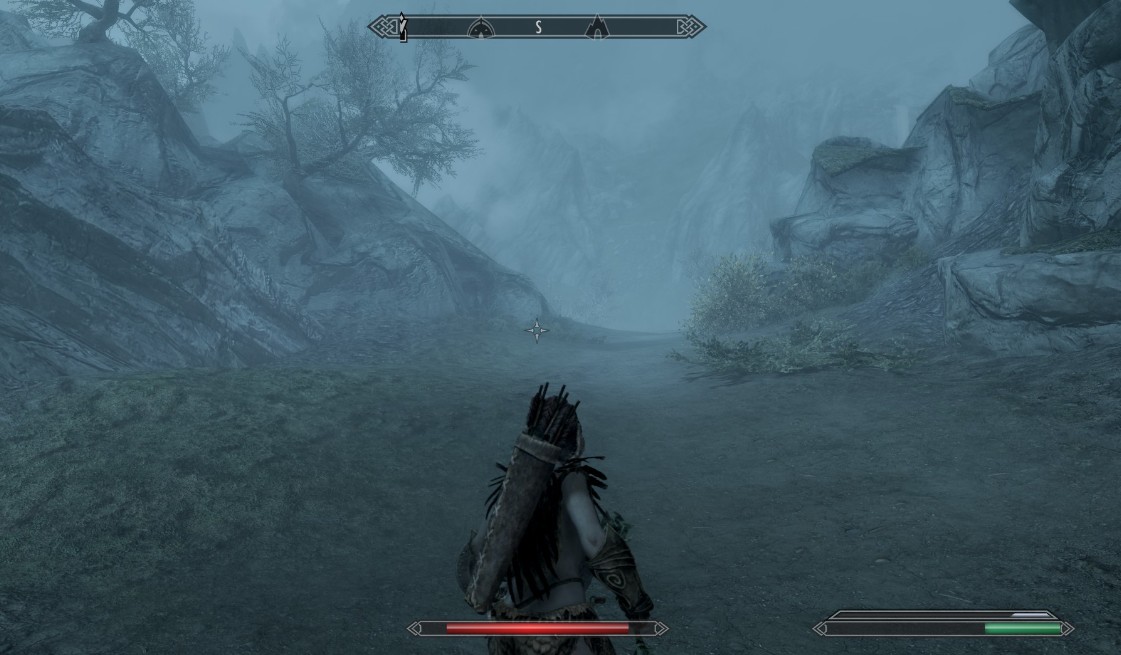
Legendary open-world RPG The Elder Scrolls V: Skyrim turns 15 this year – and continues to leave behind an unmistakable legacy.
I’m sure it’s been easy to tell for my readers that I’ve spent the last couple of months or so entirely fixated on sports.
That’s certainly not a novel phenomenon, as I view the mid-spring as the best time of year on the sports calendar – getting a yearly opportunity to disassociate while the NBA and Stanley Cup Playoffs go on and the MLB season gets going in its early stages.
Yet with the NBA and NHL postseasons winding down, I found myself looking to get into one of our many video games once again – and it didn’t take my wife and I long to break out The Elder Scrolls V: Skyrim.
I’d like to preface this by saying that when it comes to Skyrim, I’m both a casual player and am also relatively inexperienced. I am not among the millions of people who has been playing the game since its fitting Nov. 11, 2011 release, nor am I someone that has completed the game in a traditional sense with knowledge on all of the game’s secrets and idiosyncracies.
Although I wasn’t jumping on the game immediately after its release, it was certainly impossible to avoid its presence when the game first came out. With hype and anticipation that rivaled that of a new Marvel movie, Skyrim swept through the gaming world unlike any other release of the 2010’s to that point – building off of the immense popularity the series received with The Elder Scrolls IV: Oblivion upon its 2006 release.
For the first nine years of the game’s existence, I was merely aware of it – curious about what it would be like to play it, with a suspicion that I would be hopelessly addicted if I ever picked the game up. But for a good chunk of time, I simply never did.
Skyrim was released during my sophomore year of high school, at a time when I was deeply involved with extracurricular activities while spending most of my free time digging in on baseball and hockey. More than at any other point in my life, video games were simply an afterthought, and I didn’t feel the desire to pick up the game everyone was playing and talking about.
In the first years of the game’s lifespan, Skyrim built the ubiquitous reputation it holds to this day – inspiring memes that transcended the gaming world while its numerous ports have made it one of the most accessible high-budget AAA titles ever released.
During lockdowns associated with the COVID-19 pandemic in the spring of 2020, I finally buckled to the curiosity and decided to buy Skyrim, initially downloading it on my then-awful PC to give it a shot. Within a few weeks, I had picked up copies for the Xbox 360 and PlayStation 3, and my wife and I were both getting acquainted with the title for the first time.
After around a half hour of playing the game, it became immediately clear to me why Skyrim is placed on a pedestal by so many – why it’s been ported over and over again and how much it has influenced the plethora of open-world action RPGs that have been released since.
Perhaps the most alluring part of playing Skyrim is how limitlessly customizable your gameplay experience is. Sure, there’s a main storyline that features a wide range of quests that will improve your character and progress you through a more conventional storyline – but for me at least, the true appeal of the game comes with the fact that you never have to do any of that shit. You can just play the game and do whatever you want!
Sure, this concept isn’t entirely novel – the minds of gamers first exploded at the sandbox environments introduced in titles like Super Mario 64 and The Legend of Zelda: Ocarina of Time before getting a taste of a true open-world atmosphere in Grand Theft Auto III, released in 2001. Yet with all of those games, your will to chart your own path is limited by the confines of the game – you can only get so far or improve your character so much without following the game’s primary storyline.
Following the opening quest of Skyrim, the world is truly your oyster – you can do as little or as many quests as you want, follow the main storyline if you so wish, simply explore the world and stumble through the game’s many dungeons – or even embark on a life of crime if that’s your prerogative.
It’s this trait to Skyrim, along with its nonexistent level cap, breathtaking beauty in its scenery and music and the potential to truly play forever that makes it not only an incredibly fun experience that’s aged impeccably well, but also a landmark release in the history of games that changed the course of how high-budget titles are developed.
In the decade and a half since Skyrim’s release, a large chunk of AAA games are of the action RPG variety – with developers eager to show off the depth and detail of new worlds, characters and dungeons that trace their inspiration back to Skyrim and its predecessor in Oblivion.
Whether it’s Baldur’s Gate 3, Elden Ring, The Witcher 3: Wild Hunt or No Man’s Sky, their traits and their popularity can be traced back to Skyrim to an extent – which helped break the trend of the most popular, high-dollar games being first-person shooters and sports simulations that would quickly be deemed obsolete.
For a game like Skyrim, there is no obsolence – planned or not. It has endured for 15 years and will continue to endure for as long as people play video games because there will always be something to accomplish and explore within the game’s confines. This is made even more true by the dizzying collection of mods that can be downloaded for the game, which range from small quality of life improvements to full-blown reimaginations of Skyrim and its dungeons – further keeping players glued to the title after all of these years.
For my wife and I, our introduction of the game in 2020 served as the first of a series of phases we have gone through involving Skyrim – having played separate files on the PC, PS3, Xbox 360 and Xbox One over the course of the past six years.
For those who couldn’t tell, we’re both deep into another Skyrim fixation right now. After our finnicky Xbox One failed to start our file with dozens of hours on it, we simply continued our files on our PCs that haven’t been touched in years.
If it had been any other game, the failure of it to start on the console I was intending to play it on would mean me forgetting about it for at least another few months, likely feeling frustrated over not being able to dive into the game I was thinking about.
When it came to Skyrim? I simply installed it back on my PC and was deep into my fixation with the game within 30 minutes – about how long it took for me to realize how great the game was my first time through.
Simultaneously playing the game next to my wife on separate files helped to exemplify Skyrim’s unique greatness in real-time – my wife and I play the game incredibly differently! While my wife prioritizes storyline quests, joining guilds and spending most of her time in cities, I mostly prefer to chart a more exploratory path – spending lots of time on crafting skills and in dungeons while putting most quests on the back-burner.
It leaves me fairly confident that although Skyrim is far more intimidating and complex than titles that are marketed for casual and hardcore gamers alike, just about anybody can lose themselves in this game once they figure out what it is within the world that makes it a rewarding, enjoyable experience.
Some gamers have expressed their annoyance at the repeated re-releases of Skyrim all while fans anxiously await the long-anticipated release of The Elder Scrolls VI, which is still without a targeted release date.
While I can’t blame anyone for seeing the re-releases as low-effort money grabs, I’m personally totally fine with Skyrim being ported to the Switch 2, the Xbox Series X or hell, even a refrigerator for all I care. If the re-release gives a new, unfamiliar player a chance to explore and experience this game – I think it’s worth it.
In a world that feels more perilous and uncertain with each passing day, the appetite for escapism continues to grow after its initial spike during COVID-19 pandemic lockdowns. People want something to dive deep into that isn’t a constant reminder of the things we see and are forced to take in during our everyday lives.
Skyrim tends to ebb and flow between a quaint, tranquil playing experience to fast-paced and stressful – mirroring what many of us may experience in a given day of normal life. While this balance is often an uneasy one in real life, it provides an engaging experience that makes the escapism feel all the more authentic.
Skyrim isn’t designed to be an easy game for all, but rather a title in which you as the player have to find ways to make it both easy and enjoyable for yourself. It offers a kind of customization that most of us probably wish we had in our day-to-day lives – just like Skyrim, we can chart our own paths and lead whatever life we feel like living – but whether that journey is an easy or enjoyable one is often left up in the air.
The unique experience of leading your own journey in Skyrim is having the ability to get the best of both worlds – explore and see new and unique things while still finding ways to keep the difficulty and risk in check. It’s the type of control that we often seek and don’t find in our day-to-day lives, which makes Skyrim’s escapism feel all the more timely and therapeutic.
I have no idea where the gaming world will head in the next few decades, other than a somewhat certain suspicion that physical games will become an artifact of the past. I don’t know what kinds of games will capture the minds and hearts of children and adolescents in the coming years, or even how long home consoles will persist.
What I am confident in, however, is that somehow and some way, people will still be playing this damn game.
Leave a Reply