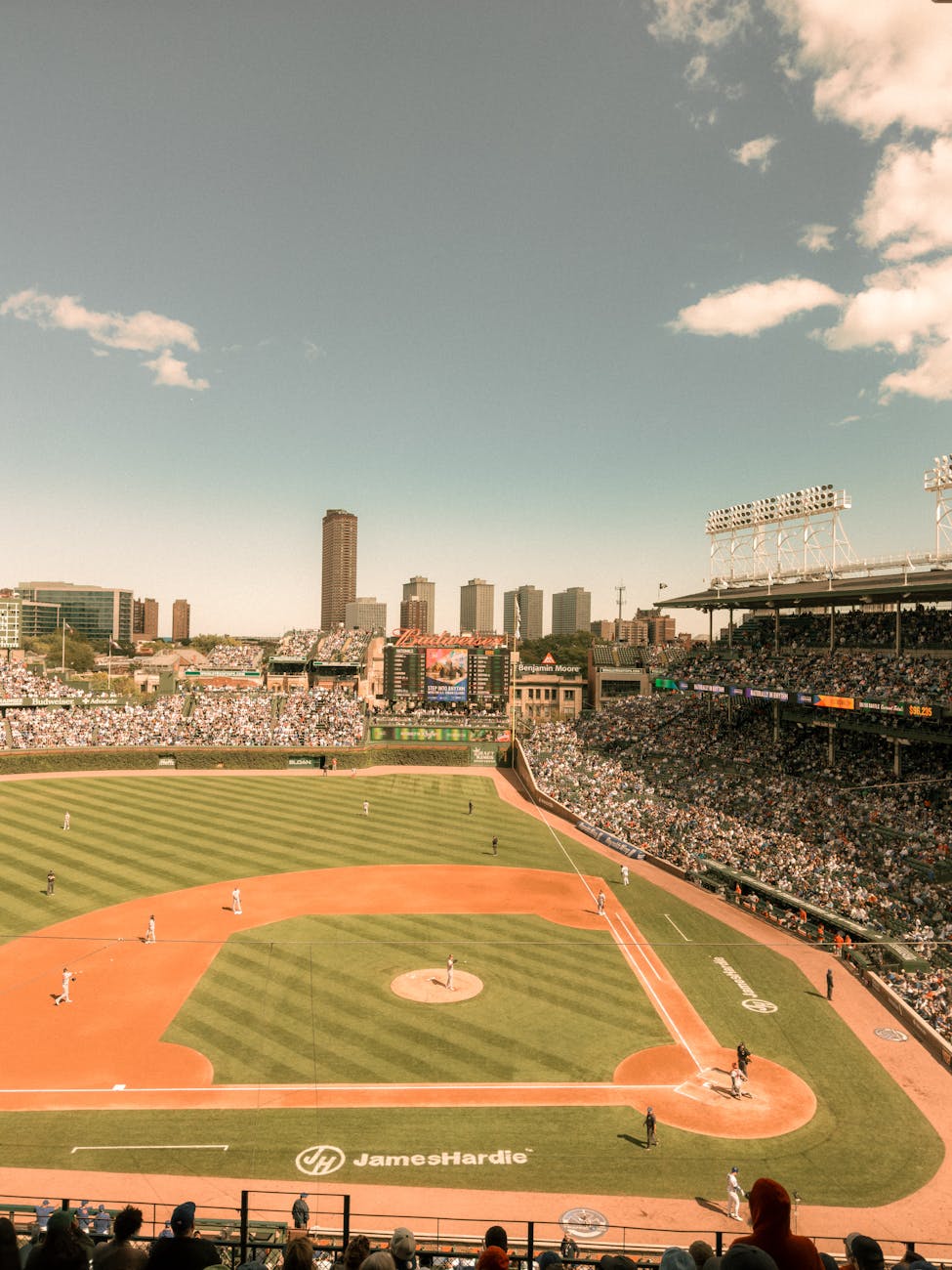
With a decimated pitching staff and perhaps the most demanding division in baseball, the Cubs are in a more perilous position than their record suggests.
Fans and players alike often try to remind themselves throughout the course of a 162-game MLB season that one shouldn’t fly too high when things are going well or sink into oblivion when they are not.
In 2026, the Chicago Cubs are putting this conventional wisdom to perhaps its greatest challenge yet.
Although the calendar only reads May 26, the Cubs have embarked on a season of soaring highs and crushing lows through the first two months of the season, somehow compiling two separate 10-game winning streaks before becoming mired in a deep slump that has seen the team lose nine straight contests.
In that time, what was once a solid lead in the NL Central has now turned to a 3.5 game deficit that also leaves the Cubs entirely out of the National League playoff picture, sitting a half-game behind the Arizona Diamondbacks for the final Wild Card spot.
Though the Cubs still hold a 29-25 record, it would be a mistake to believe everything will naturally even itself out, especially in a division that includes the Milwaukee Brewers and St. Louis Cardinals making the most out of young players with a wide range of talent still on the way.
While the trade deadline is still two months away and much can change in that period of time, the Cubs must consider other factors outside of the team’s record and standing in the division and Wild Card races – as the club’s future looks quite different than their division rivals.
The first, most obvious factor outside of the Cubs’ current record that should convince the front office to at least consider the possibility of selling at the deadline is the club’s dire lack of pitching – in both the starting rotation and the bullpen.
Cubs fans’ high hopes for the starting rotation were crushed virtually as soon as the season began, with second-year starter Cade Horton likely out of action until the back half of 2027 at the soonest after undergoing Tommy John surgery.
The setbacks have hit elsewhere in the rotation, with offseason acquisition Edward Cabrera and Matthew Boyd both currently spending time on the injured list while Jameson Taillon has pitched to disastrous results in the final year of his four-year contract, posting a 5.20 ERA with an MLB-worst 17 home runs allowed in just 55.1 innings.
The rotation’s lone bright spot, Shota Imanaga, has greatly struggled over his last two starts, allowing a whopping 15 earned runs in just 10.1 innings of work. The two rough outings have plunged the entire Cubs starting rotation to an ERA+ below the league-average mark of 100 – as spot starter Colin Rea has posted a 4.83 ERA and 77 ERA+ through 11 games and eight starts.
This of course doesn’t even mention the extended absence of former All-Star Justin Steele, who suffered an injury setback last month that will keep him out of action until the second half of the season at the earliest.
When rolling, the Cubs appeared to be one of the more prominent teams to be in the market for an elite starter, a mixture of abysmal luck and poor performances from expected contributors have left the North Siders’ pitching staff in a treacherous state.
I have all the confidence in the world that this Cubs lineup, stacked with veterans and high-dollar players, will figure it out and get rolling once again after appearing to be mostly anemic over the past two weeks. Yet this doesn’t change the extensive damage done to the team’s pitching staff, which is far beyond what a front office could reasonably hope to patch up at the trade deadline.
Before injuries and the immense struggles of Taillon, Rea and Imanaga, the Cubs looked as if they would need just one or two starters to form at least a serviceable postseason rotation. Yet as things stand now, the Cubs would likely need to acquire an entire starting rotation – which they aren’t anywhere close to being able to do with the team’s incredibly limited prospect capital.
Having a lackluster farm system doesn’t at all mean a team’s season or even future is doomed – but there are some extra factors that should have Cubs fans a little concerned on where things are headed beyond 2026 for the NL Central.
Despite having a few high-ceiling prospects scattered throughout the minor league system, the Cubs’ farm currently ranks 23rd in MLB – more importantly a distant fifth when it comes to teams in the NL Central.
While the Cubs are mostly reliant on veteran players with a hint of youth at some positions, their division rivals are stacked with young talent – while having plenty more on the way.
As if being hounded by Jackson Chourio, Jacob Misiorowski, Kyle Harrison and Brice Turang wasn’t enough, the Brewers also possess the top farm system in all of baseball – with the game’s top prospect in Jesús Made likely approaching his MLB debut within the next year.
To make matters worse, the farm systems of the Pittsburgh Pirates and St. Louis Cardinals rank third and fourth in all of baseball, respectively, leaving the Cubs at a significant deficit for young talent when three of their division rivals have hordes of high-ceiling prospects waiting in the wings.
For a club with a farm system that’s already mostly wiped out after trading away Owen Caissie to the Miami Marlins this offseason, there isn’t a whole lot of capital to trade with if the Cubs are indeed looking to buy to shore up their rotation at the deadline.
Any effort to buy this July would almost certainly have to include a package centered around second-year big leaguer Matt Shaw, who has undoubtedly increased his value on the field by spending some time in right field – a fitting position for a player that spoke at a Turning Point USA event this offseason.
Though Shaw is also currently on the injured list, he’s expected back in plenty of time for the trade deadline with a good deal of upside both offensively and defensively.
Beyond Shaw, the options are not so plentiful. The Cubs could shop their top pitching prospect in Jaxon Wiggins, though I would think that’s unlikely considering the organization’s lack of arms and the injuries Wiggins is dealing with himself. Outfielder Kevin Alcántara could also serve as a possible trade chip, but given the impending free agency of Ian Happ and Seiya Suzuki, more playing time likely awaits Alcántara on the other side of this season.
Which perfectly exemplifies why the Cubs should at least consider selling at the deadline, especially if things continue to unravel for a team that appears to be on a 2021-like trajectory. They simply have so much more to sell from the big-league roster than they do from their farm system.
The aforementioned Happ and Suzuki serve as the two most obvious trade chips. Both are on expiring deals and could fit with a wide variety of contenders in different roles. While Happ has exclusively played as a leftfielder for much of the 2020’s, his previous role as a utility player could make him more valuable to teams hoping to add some depth.
While Happ has been mired in an extended slump, the switch-hitter still has 10 home runs and a .348 on-base percentage with a career-long reputation for consistency, helping to even out whatever value is lost by a tougher start to the season this year.
As for Suzuki, the rightfielder/designated hitter has never made it a secret regarding what kind of player he is. You’re bound to get plenty of power and strikeouts with serviceable defense in the outfield, but unlike Happ, there are a few more warning signs beneath Suzuki’s struggles this year.
While he remains an above-average hitter, Suzuki has seen a precipitous drop in his hard-hit rate this year, falling from a stellar 48.7% all the way to a career-low mark of 40.8%. For a player that gets much of his power by virtue of hitting the ball extremely hard, a continued slump could lessen interest among some teams who could be looking to acquire Suzuki as a rental.
The Cubs also have a bit of gravy on their hands with the resurgent campaign of Michael Conforto, who stands out as an obvious trade chip given his reclamation project status heading into the year and extensive postseason experience.
Though he’s likely to regress, Conforto is still sporting a 155 OPS+ with 11 of his 19 hits going for extra bases so far in 2026. Whether as part of a package or in a smaller deal, Conforto is a certainty to draw interest throughout the league if the Cubs do move to sell.
Any improvement down the stretch from Taillon, Imanaga and Rea could also deem them as trade chips, as all three pitchers are slated to hit the free agency market upon the conclusion of this season. This would of course require the Cubs to fully throw in the towel on 2026, but given the state of the club’s pitching staff, it would take a miracle both in terms of injury recovery and performance to build a rotation capable of winning a playoff series.
That’s perhaps where the tough realism of where the Cubs stand at this point of the season comes in. The record may not be ugly, and a 3.5 game deficit in late May of all times is more than insurmountable. But when looking at a farm system that is miles behind the rest of the division and a pitching staff that has been stripped for parts, it’s very hard to see how the Cubs arms can piece together a strong competitor to the Brewers, let alone the Los Angeles Dodgers and Atlanta Braves.
Selling at the trade deadline this season would be a wildly unpopular decision for many fans and would signify a complete failure of a season – but failing to acquire anything for impending free agents while the team already has a lackluster farm system could spell years of unbridled mediocrity for a franchise that should want to make the most of having Dansby Swanson, Pete Crow-Armstrong, Alex Bregman and Nico Hoerner locked down for multiple years.
Getting what the team can for soon-to-be free agents would be much more of a retool than a rebuild – though the Cubs may be confined to the latter option if they trade remaining prospect capital for a futile attempt at a run in 2026.
Maybe I’m wrong. Hell, I hope I am. But with three of the five NL Central teams carrying loads of young talent with much more on the horizon, the Cubs are going to need more than the guys currently on the roster and in the farm system to compete with their rivals for the coming years.
Leave a Reply