Though known in recent years as a mediocre division, the NFC South is one of just two NFL divisions to send all four of its teams to the Super Bowl in the past 30 years.
The NFL playoffs are nearly underway, which means it’s time for another rewind through some gut-wrenching losses.
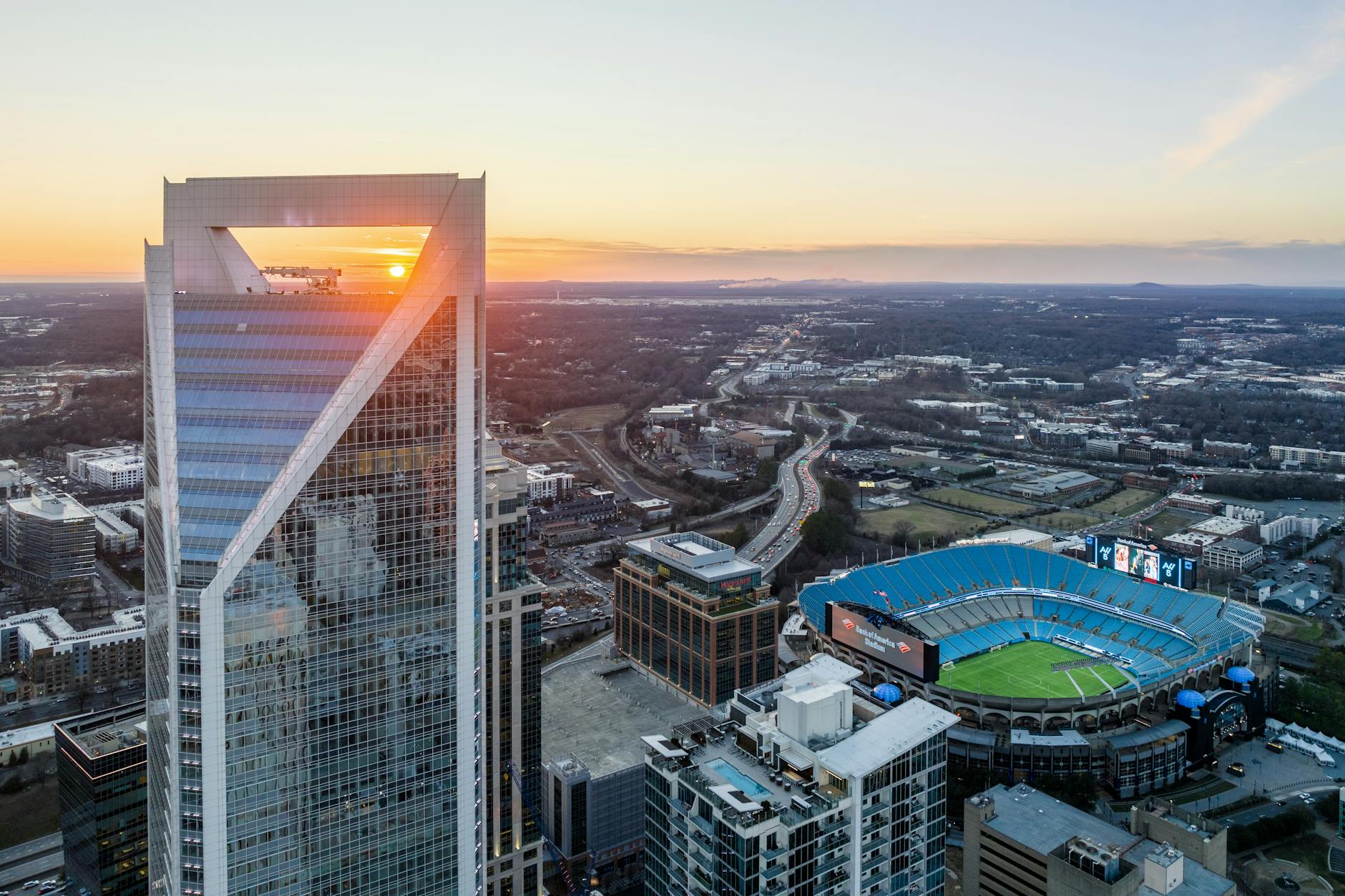
Today’s spotlight goes to the NFC South, a division that has garnered headlines this season thanks to an unremarkable tie for first place involving three teams with an 8-9 record – with the Carolina Panthers being the team to get to play postseason football.
Despite the recent mediocrity the division has become known for, the NFC South does have a rich history of recent success, with all four of its teams having made at least one trip to the Super Bowl in the past three decades, with the Buccaneers and Saints coming out as winners on at least one occasion.
With plenty of postseason opportunities to go around between the four teams, all four clubs have had their fair share of heartbreakers, two of which are routinely listed among the most painful losses in recent NFL history.
The division is also a bit of a forgotten one by NFL standards – while there is a long-standing, bitter rivalry between the Atlanta Falcons and New Orleans Saints, the two teams that were the league’s lone Deep South teams for several years, the division doesn’t garner the attention that the NFC North and AFC East do, among others.
With the postseason getting underway Saturday, here’s a look at the toughest loss for each NFC South club over the past 30 years:
Atlanta Falcons: Super Bowl LI (34-28 loss to New England Patriots)
Honorable mentions: 2012 NFC Championship Game, 2004 NFC Championship Game, Super Bowl XXXIII
Do I really need to elaborate?
One of the worst single-game collapses in professional sports history, it looked to be a forgone conclusion that the Falcons would finally exorcise their demons, holding an unthinkable 28-3 lead over Tom Brady and the New England Patriots midway through the third quarter.
It was a 6-yard touchdown reception from Tevin Coleman that appeared to seal the deal for the Falcons with 8:31 left in the third quarter, but there’s always plenty of time left for Tom Brady. Surely enough, Brady would lead the Pats down the field on the next possession, converting for a touchdown after taking up well over six valuable minutes of gametime.
Though the touchdown appeared to bring the Pats a step closer, a missed extra point and failed onside kick afterwards appeared to dash New England’s hopes once again. Down 19 points with roughly a quarter of play to go and the Falcons in excellent field position, it seemed that this was indeed it for the Patriots.
However, it’s really just when the miscues began for Atlanta, starting with a slew of penalties on that possession that pushed the Falcons from the New England 32-yard line all the way back to their own 44-yard line, necessitating a punt when the Dirty Birds appeared well suited to at least kick a field goal.
Getting the ball back near the start of the fourth quarter, Brady would take around five minutes to bring the Patriots to the Atlanta 10-yard line, with an ensuing sack pushing the Pats back five yards and forcing a Stephen Gostkowski field goal, which connected to put the Patriots within 16 points – technically making this a two-score game.
This is likely when the nightmares of Atlanta fans began to came to life, demons that felt even more real just over a minute later when New England defensive tackle Alan Branch recovered a Matt Ryan fumble.
Now with the ball at the Atlanta 25-yard line, it took Brady and the Patriots five plays to convert on a touchdown, succeeding on the ensuing two-point conversion to make it a 28-20 game. Nerves for Atlanta fans, however, appeared to be alleviated early on the next drive.
After a 39-yard completion to Devonta Freeman and a 27-yard connection with Julio Jones, Ryan and the Falcons were suddenly at the New England 22-yard line, with a perfect chance to kick a field goal to put the Patriots down two scores once again with under five minutes left in the game. Then, true disaster began to strike.
After Freeman lost a yard on a carry, Ryan was sacked by Patriots edge rusher Trey Flowers, pushing the Falcons back to the Patriots’ 35-yard line. On the next play, a 9-yard completion was negated by a holding penalty that sent Atlanta back to the New England 45-yard line, once again necessitating a punt when a field goal looked inevitable.
Now a one-score game with 3:30 left, Brady drove the Patriots 91 yards in just over two-and-a-half minutes on a touchdown drive, one that included a mind-boggling catch from Julian Edelman that became emblematic of the Pats’ triumphant comeback.
After a successful two-point conversion, the Patriots had suddenly tied the game, scoring 25 unanswered points since the 2:12 mark of the third quarter. After failing to get something going on a short drive after New England tied the game, the Super Bowl went to overtime for the first time ever.
To the surprise of literally no one in the world, the Patriots won the coin toss, electing to receive the ball ahead of a 75-yard touchdown drive that concluded with a 2-yard Super Bowl-clinching touchdown run from James White.
The Falcons, who have never won the Super Bowl, have only made it back to the playoffs once since 2016 – losing in the NFC Divisional Round the following season. As for the Patriots, Brady would go on to play two more Super Bowls in New England, losing in 2017 before winning the following season. While Brady and the Pats parted ways after the 2019 season, Brady would win his seventh and final Super Bowl in 2020 as a member of the Tampa Bay Buccaneers.
Carolina Panthers: Super Bowl XXXVIII (32-29 loss to New England Patriots)
Honorable mentions: Super Bowl 50, 2005 NFC Championship Game, 2008 NFC Divisional Round, 2017 NFC Wild Card Game
Set to play their first postseason game since the 2017 NFC Wild Card Game when Cam Newton was still the signal caller, the Panthers have plenty of playoff disappointment in their history – with their loss in Super Bowl XXXVIII standing above the rest.
Coming off an 11-5 season in 2003 and playoff wins against the Dallas Cowboys, St. Louis Rams and Philadelphia Eagles, the Panthers proved to be more than a formidable match for the 14-2 Patriots that had seamlessly cruised through the season.
After a scoreless first quarter, both offenses exploded late in the second quarter, beginning with a 5-yard connection from Tom Brady to Deion Branch with just over three minutes left in the first half. Carolina would answer back with a feverish touchdown drive of their own, with Jake Delhomme connecting on a 39-yard home run pass to Steve Smith to tie the game at 7 with 1:14 remaining in the frame.
That was somehow still enough time for yet another Patriots touchdown drive, largely thanks to a 52-yard connection from Brady to Branch that later set up a 5-yard touchdown pass to David Givens, putting New England back ahead 14-7. With 23 seconds left and one timeout remaining however, Delhomme and the Panthers had enough to set up John Kasay for a 50-yard field goal, making the score 14-10 in favor of the Patriots at halftime.
Following a scoreless third quarter, both offenses found their groove once again in the game’s final frame. It was the Patriots who struck first in the fourth quarter, scoring just seven seconds into the period with a 2-yard Antowain Smith touchdown run that capped off a 71-yard touchdown drive.
Now leading 21-10, it took Carolina just over two minutes on their ensuing drive to find the end zone, with a 33-yard touchdown run from DeShaun Foster putting the Panthers within five points. Delhomme failed to connect with wide receiver Muhsin Muhammad on a two-point conversion, leaving the score 21-16 in favor of the Patriots.
Getting the ball back with a chance to make it a two-score game, Brady and the Patriots drove all the way to the Carolina 9-yard line before Brady was intercepted by Reggie Howard in the end zone, giving Carolina the ball back deep in their own territory after a short return.
Just a few plays later, Delhomme found Muhsin Muhammad for an 85-yard touchdown connection, though a failed two-point conversion left the Panthers with a narrow 22-21 lead. Taking nearly four minutes on the following drive, Brady successfully brought the Patriots 68 yards down the field, eventually finding Mike Vrabel in the end zone for a one-yard touchdown pass after Vrabel reported as an eligible receiver. A successful run from Kevin Faulk on the two-point conversion attempt gave the Patriots a symmetrical seven-point lead, ahead by a score of 29-22.
With just over two minutes left in the game, Delhomme led the Panthers on a triumphant 80-yard touchdown drive, only using one timeout before finding Ricky Proehl in the end zone from 10 yards out to tie up the game with just 1:13 remaining in regulation – which was still more than enough time for Brady and the Pats.
After things were made easier by Kasay’s kickoff going out of bounds, Brady brought the Patriots 37 yards down the field to the Carolina 23-yard line, allowing Adam Vinatieri to seal the championship with a 41-yard field goal.
The Patriots would go on to win the Super Bowl over the Philadelphia Eagles the following season, while the Panthers missed the playoffs in 2004 before making a run to the NFC Championship Game in 2005.
New Orleans Saints: 2018 NFC Championship Game (26-23 loss to Los Angeles Rams)
Honorable mentions: 2006 NFC Championship Game, 2011 NFC Divisional Round, 2010 NFC Wild Card Game
While Saints fans will forever treasure their Super Bowl title in 2009, many are still seething over the NOLA No-Call that occurred nine years later.
Among the last great New Orleans teams led by all-time great quarterback Drew Brees, the Saints were a force to be reckoned with in 2018, going 13-3 in the regular season and holding the NFC’s top seed in the postseason.
Facing a young Jared Goff and the Rams, it was the Saints who struck early and often, following up two first quarter Wil Lutz field goals with a 5-yard touchdown pass from Brees to Garrett Griffin, putting the Saints up 13-0 after the first quarter.
The following period saw Los Angeles bounce back, with an early Greg Zuerlein field goal followed up by a 6-yard Todd Gurley touchdown run just before the end of the half, cutting the Saints 13-point lead to 13-10 at halftime.
After forcing a punt on the first Rams drive of the second half, the Saints answered back with a 71-yard touchdown drive that concluded with Brees finding Taysom Hill in the end zone from two yards out, putting New Orleans up 20-10.
Goff and the Rams responded with a 75-yard touchdown drive of their own, with Tyler Higbee catching a 1-yard pass from Goff with just over three minutes left in the third quarter, once again bringing the Rams to within a field goal.
After exchanging punts to start the fourth quarter, the Rams defense continued to hold serve before Goff was able to drive the Rams down the field to set up Zuerlein for a game-tying 24-yard field goal.
The game would gain its notoriety on the following New Orleans drive, which saw Brees take the Saints down the field seemingly with a chance to run out the clock and end the game, as the Rams held just one timeout with New Orleans in the red zone and less than two minutes remaining.
Aiming for a final first down that would make that possible while set up at the Los Angeles 13-yard line, Brees floated a pass towards the sideline inside the 5-yard line towards Tommylee Lewis, who was absolutely clobbered by Rams cornerback Nickell Robey-Coleman. Though it appeared to be perhaps the most obvious pass interference call an official could make, there were no flags thrown – leading to a 4th down and field goal for the Saints as opposed to a first down with a chance to run the clock down and kick the field goal as time expires.
While Lutz connected on the 31-yard field goal to give New Orleans a 23-20 lead, the Rams had a timeout and 1:45 to get into field goal range, something Goff and the Rams were able to do as Zuerlein went on to kick a game-tying 48-yard field goal with 19 seconds left in regulation, which went on to force overtime.
In what is perhaps a forgotten layer of pain to this loss, the Saints actually won the coin toss – with New Orleans getting a first down thanks to a pass interference call before Brees was intercepted by Rams safety John Johnson at the Los Angeles 46-yard line.
From there, the Rams gained a measly 15 yards before Zuerlein was forced to attempt a 57-yard field goal for the win on a 4th & 7, a kick he absolutely nailed as the Rams completed the comeback and won 26-23.
The Rams went on to lose to the New England Patriots two weeks later in a rather forgettable Super Bowl, while Brees and the Saints would not get this close again. New Orleans returned to the postseason in each of the next two seasons, but were eliminated in the Wild Card Round and Divisional Round, respectively, having not been back to the playoffs since Brees retired after the 2020 season.
Tampa Bay Buccaneers: 2021 NFC Divisional Round (30-27 loss to Los Angeles Rams)
Honorable mentions: 1999 NFC Championship Game, 2024 NFC Wild Card Game, 2023 NFC Divisional Round
In what was the final showing of unmatched greatness from Tom Brady in the postseason, an incredible comeback fell just short in what was an incredible game between two heavyweight quarterbacks.
Coming in fresh off a Wild Card Round win over the Philadelphia Eagles while holding the status of defending champions, the Buccaneers appeared well suited to take down the upstart Rams, who were in their first year of Matthew Stafford as their quarterback.
It was Los Angeles to make noise early in this one, striking first on a 26-yard field goal from Matt Gay before Stafford found Kendall Blanton in the end zone later in the frame to give the Rams an early 10-0 advantage.
A 45-yard field goal from Ryan Succop with 32 seconds left in the period put the Bucs within a touchdown, but the Rams had plenty more to add on in the second quarter. This happened almost instantly with Stafford making a home run connection to Cooper Kupp for a 75-yard touchdown less than a minute into the quarter, putting the Rams up 17-3.
After solid defense and a missed field goal from Succop, the Rams added on once again later in the second quarter, with a 40-yard field goal from Matt Gay giving Los Angeles a 20-3 lead. After exchanging punts to start the second half, an electric 33-yard punt return from Brandon Powell set the Rams up at the Tampa Bay 28-yard line on their next drive, with Stafford converting on a 1-yard touchdown run just a few minutes later to put the Rams up 27-3.
Facing a deficit just one point smaller than the one he famously overcame in Super Bowl LI, Brady and the Bucs got to work, initially answering back with a 31-yard field goal from Succop with just over three minutes left in the third quarter, making the score 27-6.
Tampa Bay got a shot in the arm on the first play from scrimmage on the ensuing Rams drive, with Kupp fumbling after catching a pass from Stafford, with Bucaneers cornerback Sean Murphy-Bunting scooping the ball up and returning it for 10 yards to set Brady up at the Los Angeles 30-yard line.
In a seven-play touchdown drive that took up just over two minutes, it was Tampa Bay running back Leonard Fournette to find the end zone from a yard out, getting the Bucs back within two scores. After forcing a Los Angeles punt on a drive that carried over into the start of the fourth quarter, the two teams exchanged fumbles on back-to-back plays, with the Buccaneers narrowly avoiding what would have likely been a fatal disaster.
The plays ultimately seemed inconsequential after Brady failed to convert on a 4th & 14 to keep the drive alive, though the Rams tossed Tampa Bay a lifeline around six minutes later with Gay missing a 47-yard field goal that would have put Los Angeles up by three scores.
Yet despite taking the Bucs as far as the Los Angeles 28-yard line, Brady once again failed to convert on a 4th down to keep the Tampa Bay possession alive, resulting in a turnover on downs with just 4:31 left in the game.
Still fighting for a chance, the Tampa Bay defense held serve as the Bucs used all three of their timeouts to force a punt and get the ball back once again with 3:56 remaining in the game. Brady wasted no time on this drive, taking just three plays to get 77 yards and a touchdown to bring Tampa Bay back within seven points with 3:20 left in regulation.
Just two plays into the following Los Angeles drive, running back Cam Akers lost a fumble that was recovered by Tampa Bay defensive tackle Ndamukong Suh, all of a sudden putting Tampa Bay deep into Los Angeles territory on the right side of the two-minute warning.
Seven plays later, Leonard Fournette found an opening and marched into the end zone from nine yards out, with the following extra point from Succop tying the game at 27, with 42 seconds somehow still on the clock.
Ultimately, the Buccaneers somehow came back too soon, with Stafford and the Rams utilizing their one remaining timeout on a feverish drive that included 64 passing yards to Cooper Kupp. After finding Kupp on a 44-yard home run pass with just 27 seconds remaining, Stafford iconically sprinted to the line of scrimmage, spiking the ball at the Tampa Bay 12-yard line with just five seconds left in the game.
Matt Gay went on to drill the 30-yard field goal as time expired, fending off the incredible Brady-led Buccaneers comeback to win 30-27 and advance to the NFC Championship Game.
Though Brady announced his retirement after the 2021 season, he later backed off the announcement and returned to play his 23rd and final year in the NFL, in which the Buccaneers went 8-9 en route to a loss in the NFC Wild Card Game to the Dallas Cowboys.
The Rams went on to narrowly defeat the rival San Francisco 49ers in the NFC Championship Game the following week before winning a nailbiter of a Super Bowl over the Cincinnati Bengals at their home stadium another two weeks later.
Leave a Reply